
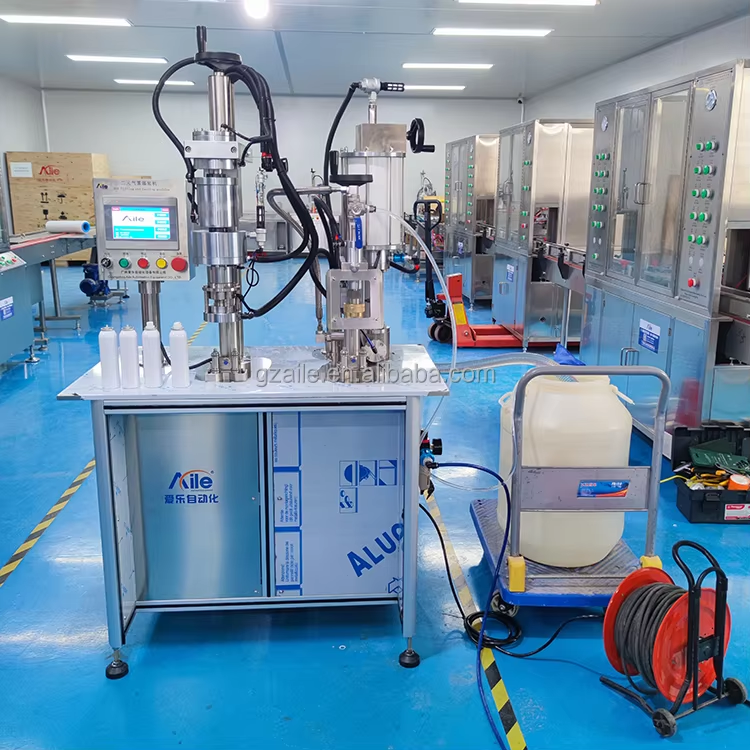
Corrosion-Resistant Materials for Acidic Liquid Filling Machines
Why 316L Stainless Steel, PVDF, and PTFE Are Critical for Acid Compatibility
What materials we choose makes all the difference when it comes to how long liquid filling machines last and whether they stay safe while dealing with acidic substances. Most engineers go with 316L stainless steel for parts that come into contact with nitric and sulfuric acids at concentrations around 50% and normal room temps according to ASTM standards. This particular grade has lower carbon content which helps prevent problems caused by chlorides. The surface forms a protective layer of chromium oxide that works well against oxidizing chemicals, though it won't hold up against really strong fluorinated stuff or reducing agents. When working with hydrofluoric acid or needing extreme purity levels like in semiconductor manufacturing wet benches, PVDF becomes the material of choice because it doesn't react chemically and maintains strength even when heated to about 135 degrees Celsius. PTFE coatings are another good option since they basically resist everything from seeping through to corroding away, which is why they're so popular for surfaces where things need to slide off easily without leaving behind traces, especially important in pharmaceutical applications where contamination must be avoided at all costs. Using these different materials together helps prevent issues like pitting, cracks from stress, and cross-contamination between batches, something manufacturers absolutely have to worry about if they want to meet regulations and keep their production running smoothly day after day.
Viton vs. Kalrez Seals: Selecting the Right Elastomer for High-Concentration Acids
According to the Chemical Processing Journal from 2023, worn out seals are responsible for roughly 42% of unexpected shutdowns in equipment handling acids. Materials known as fluoroelastomers, including brands like Viton®, offer good value when resisting nitric acid at temperatures under 70 degrees Celsius and can handle moderate levels of sulfuric acid too. These properties make them suitable for quite a few standard industrial applications. But when things get really tough, perfluoroelastomers step in. Take Kalrez® for instance. These materials hold up remarkably well even in concentrations over 98% sulfuric acid and can operate continuously at temperatures exceeding 327°C. That kind of durability makes these materials essential components in systems involving hot filling processes, fuming acid environments, or those requiring steam sanitation. What sets these apart?
- Swelling resistance: Kalrez exhibits <10% volume change in ketones and strong oxidizers; Viton shows progressive swelling and hardening under similar exposure
- Permeation control: Perfluoroelastomers reduce acid vapor transmission by up to 90% versus standard elastomers, critical for containment integrity
-
Service life: Kalrez delivers up to 8× longer operational life in oxidizing environments, though at a 3–5× higher initial cost
Select Kalrez for mission-critical, high-risk applications; reserve Viton for lower-concentration, ambient-temperature duties where lifecycle cost analysis supports its use.
Design Principles That Prevent Corrosion-Induced Failure in Liquid Filling Machines
Fully Sealed Drive Systems and Isolated Electronics for Hazardous Environments
Filling machines designed to resist corrosion often feature drive systems that are completely sealed off from the outside world. These seals protect critical components like motors, gearboxes, and bearings against harmful fumes and accidental chemical splashes which tend to be where most failures happen in places with strong acids around. For the electronic parts, manufacturers typically put them inside special enclosures rated IP66 that maintain internal pressure while being flushed with something like nitrogen gas. This keeps corrosive vapors out and stops problems caused when moisture builds up inside leading to electrical shorts or corroded connections. Equipment built this way stays operational longer between breakdowns. Industry reports suggest maintenance expenses drop about 40 percent for these machines working in environments with sulfuric or nitric acid present compared to older models not built with such protection measures.
Non-Contact and Bottom-Up Filling to Eliminate Splashing, Foaming, and Acid Vapor Release
Modern dispensing systems work by avoiding direct surface contact which helps stop aerosols from forming and vapors escaping into the air. When using bottom-up filling techniques, the nozzles go below the liquid's surface level before any flow starts this stops splashes, foam creation, and keeps reactive substances such as hydrogen peroxide or certain organic acids from getting airborne. With particularly volatile materials or those with low surface tension, vacuum assisted methods pull the liquid upwards without needing to immerse the nozzle at all. Tests done in 2022 showed these approaches cut down vapor emissions by around three quarters in areas where there's lots of chloride present. Beyond making workplaces safer for people operating equipment, these advanced techniques also mean less residue builds up on machinery surfaces. That translates to fewer cleanings needed overall and significantly lowers the chances of different materials mixing together accidentally during production runs.
Integrated Safety Mechanisms in Anti-Corrosion Liquid Filling Machines
Dual-Seal Valves and Pressure-Compensated Fill Heads for Leak Prevention
When working with concentrated acids like hydrochloric, sulfuric, or phosphoric, leaks can be catastrophic which is why redundancy matters so much. Dual seal valves feature both a main PTFE lined seal plus a backup Viton gasket. This creates a safety net for containment. If the first line of defense starts breaking down from chemical exposure, the second layer kicks in to keep things contained. Tests show this setup cuts spill risks by about 92 percent compared to regular single seal systems according to Chemical Processing Journal last year. Another important component is pressure compensated fill heads. These devices constantly tweak internal backpressure while dispensing materials. They handle changes in viscosity and temperature fluctuations automatically. The result? More stable flow rates without those sudden pressure spikes that lead to messy splashes, noisy valves, or damaged seals. Putting all these elements together gives manufacturers a much safer handling solution overall.
- Zero measurable vapor release during nitric acid transfer
- ±0.2% volumetric fill accuracy for volatile solvents
- Full functionality across pH 0.5–14, validated per ASTM D1384 corrosion testing
This level of containment meets OSHA’s Process Safety Management (PSM) requirements and supports IEC 61511-compliant safety instrumented systems.
Automation and Containment Strategies to Reduce Human Exposure
Closed-Loop Ventilation and Acid Fume Scrubbing Integration
There's no getting around automated containment when dealing with dangerous acidic vapors in industrial settings. Most facilities use closed loop ventilation systems with those special negative pressure hoods right at the filling stations where fumes tend to escape. The air collected from these areas goes through scrubbers that either contain caustic materials like sodium hydroxide or have specially treated filters inside them. These systems effectively neutralize harmful substances such as hydrochloric acid, hydrogen fluoride, nitrate compounds, and sulfur dioxide before sending clean air back into circulation. Tests show these scrubber systems remove over ninety five percent of typical industrial acids, which brings worker exposure levels well below what OSHA considers acceptable limits. The whole process runs automatically according to set protocols even during fast production cycles, so there's no need for constant manual monitoring. This kind of automation supports the ALARP principle in safety management, keeping risks as low as possible given current technology and practices.
FAQ
What is the best material for filling machines handling acidic liquids?
The best materials depend on the acidic concentration and operating conditions. 316L stainless steel is often used for moderate concentrations, while PVDF and PTFE are suitable for high-temperature or extreme purity applications.
How do Viton and Kalrez seals differ?
Viton seals are suited for moderate concentrations and temperatures, while Kalrez seals are designed for high concentrations and temperatures, offering better resistance to swelling and permeation.
What design principles help prevent corrosion in liquid filling machines?
Sealed drive systems, isolated electronics, non-contact filling techniques, and dual-seal valves help prevent corrosion and leakage, enhancing machine durability and safety.
How can human exposure to acidic vapors be minimized?
Using closed-loop ventilation systems and integrating acid fume scrubbers can significantly reduce human exposure to harmful vapors.