
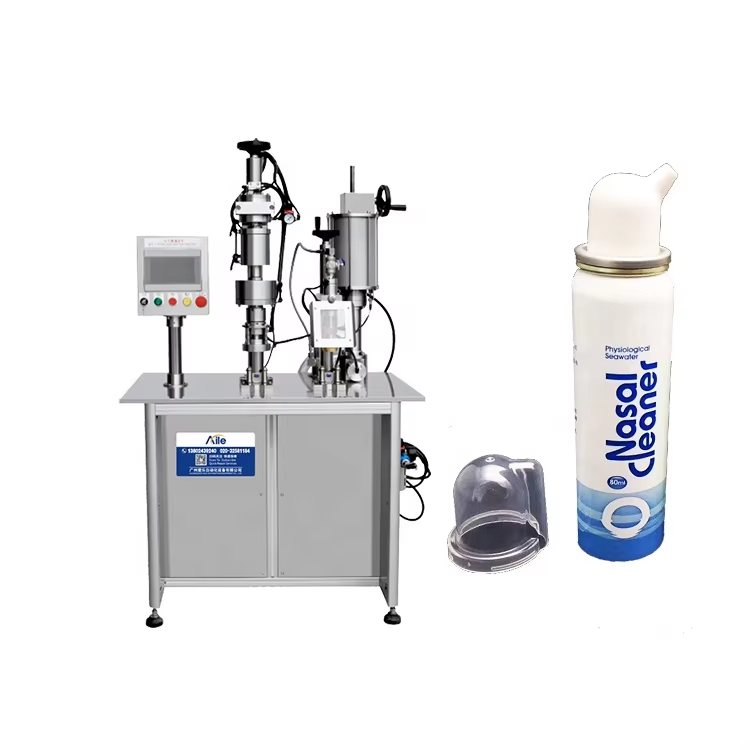
Why Rotary Aerosol Filling Machines Deliver Superior Production Speed
Continuous rotary motion vs. stop-start linear indexing: mechanical efficiency gains
The rotary type aerosol filling machines work without stopping between cycles because they keep moving all the time, which is different from those linear systems where everything stops and starts again each time. The constant motion actually cuts down on energy usage somewhere around 20 to 25 percent and also means less wear and tear on the machinery over time. When there are no those annoying idle periods that come with indexed movement, the whole process just goes faster. Manufacturers get more products out for every bit of resources they put into production, making these rotary designs pretty attractive for businesses looking to boost efficiency while saving money in the long run.
Throughput benchmarks: 300–600 cans/min vs. 60–150 cans/min in linear aerosol filling machines
Industry-validated throughput data shows rotary aerosol fillers consistently deliver 300–600 cans per minute—up to four times the rate of linear alternatives, which max out at 60–150 cans per minute. This performance gap arises from the rotary architecture’s ability to process multiple cans simultaneously in fluid, synchronized motion.
| Machine Type | Throughput Range (cans/min) |
|---|---|
| Rotary Aerosol Filler | 300–600 |
| Linear Aerosol Filler | 60–150 |
Such throughput enables rapid response to demand spikes while preserving fill consistency—a decisive advantage in fast-moving consumer goods (FMCG) markets where scalability and quality must coexist.
Integrated Automation for Real-Time Speed and Precision Optimization
Single-dwell station synchronization: filling, valve insertion, and crimping in one rotation
The rotary aerosol filler design really boosts both speed and accuracy since it handles filling, inserts valves, and performs crimping all during one stop in the rotation cycle. Traditional linear systems need separate steps for each process, which creates those annoying pauses between operations. With the rotary system's all-in-one approach, manufacturers can save around 40% on their overall cycle time. The machines rely on precision cams to keep everything aligned down to the micron level across different stations. This maintains good seals and accurate fill weights even when running at top speeds over 500 cans per minute. Another big plus is how little time products spend exposed during transfers. This helps prevent valuable propellants from escaping, something absolutely necessary if companies want to maintain fill tolerances within that tight ±0.5 gram range.
AI-driven pressure and fill-volume calibration cutting start-up waste by up to 42%
Sensors embedded in the system keep track of various real time factors like how thick the liquid is, what temperature it's at, and pressure levels too. All this information gets sent to smart algorithms that tweak things like how much product goes into each container and the strength needed for sealing everything up, all happening super fast in just milliseconds. The whole setup works as kind of feedback loop that handles differences between batches and adapts when surroundings change around it. This cuts down on wasted material during initial production phases by roughly 40 something percent compared with old fashioned manual adjustments. What happens is these systems spot problems early enough so they can fix them before bad products actually get made, which means companies don't end up throwing away dozens upon dozens of sample containers every day. As a result, most operations maintain about plus or minus 0.3 percent accuracy when filling containers no matter what sort of ingredients they're working with or what kind of weather conditions exist at any given moment.
| Calibration Method | Waste Reduction | Accuracy Tolerance | Adjustment Speed |
|---|---|---|---|
| AI-Driven System | Up to 42% | ±0.3% | <50 milliseconds |
| Manual Calibration | 0–15% | ±1.2% | 5–15 minutes |
Scalable Design: Modular Expansion Without Production Interruption
Hot-swappable turret modules for seamless capacity upgrades
The rotary aerosol filler machines come with these modular turret designs that let facilities scale up production without major disruptions. These hot swap modules basically plug right in during regular maintenance periods, so there's no need to completely shut down operations when expanding capacity. Most plants start around 200 cans per minute and can gradually ramp up to over 400 cans per minute during peak seasons without tearing apart their whole setup. According to plant managers we've talked to, these systems respond about 30 percent quicker when demand spikes compared to traditional fixed setups, which saves them hundreds of thousands on extra equipment purchases. Plus, these machines work with newer valve types and different container sizes as they become available, making sure the investment keeps paying off year after year instead of requiring expensive replacements every few years.
Proven Operational Excellence: OEE and Throughput Validation in FMCG Environments
The Overall Equipment Effectiveness (OEE) metric has become pretty much the gold standard for measuring how productive manufacturing lines really are. It combines three main factors - availability, performance rates, and product quality - all into one handy number. Top tier fast moving consumer goods manufacturers usually aim for around 85% OEE or better, which shows they're getting close to maximum efficiency out of their equipment. Rotary aerosol filling machines tend to hit these targets regularly thanks to their smooth continuous motion operation and built-in diagnostic systems that cut down on unexpected stoppages by roughly 40%. These machines also handle between 300 to 600 cans per minute while still keeping fill accuracy intact. Monitoring things like valve insertion force and propellant pressure during production helps slash startup waste by about 42%, so materials aren't wasted right from the beginning until the very end of each batch. By integrating real time data into maintenance routines, companies can switch from fixing problems after they happen to preventing them before they occur. This makes a big difference in bottom line results when considering both machine runtime and proper product filling across all those aerosol cans produced.
FAQ
What is the key advantage of rotary aerosol filling machines over linear machines?
The main advantage is production speed. Rotary aerosol filling machines can deliver 300–600 cans per minute, which is significantly higher than the 60–150 cans per minute achieved by linear machines due to the continuous motion and simultaneous processing capability of rotary systems.
How does the rotary design improve accuracy and efficiency?
The rotary design synchronizes multiple tasks in one rotation—filling, valve insertion, and crimping—thereby reducing cycle time by around 40% and maintaining high accuracy levels with precision cams.
What role does AI play in enhancing the rotary aerosol filling process?
AI-driven systems utilize sensors to monitor real-time factors and make immediate adjustments, significantly reducing start-up waste by up to 42% and maintaining high accuracy with a tolerance of ±0.3%.
Can rotary aerosol filling machines be scaled without interrupting production?
Yes, the machines feature modular turret designs that allow for seamless capacity upgrades through hot-swappable modules during routine maintenance, facilitating on-the-fly scaling without disrupting production.
How do rotary aerosol filling machines contribute to higher OEE?
These machines often achieve high Overall Equipment Effectiveness by integrating real-time diagnostics and maintaining a steady operation rate with fewer unexpected stoppages, thus enhancing availability, performance, and quality simultaneously.