When setting up or upgrading Bag on Valve packaging production, choosing the right BOV filling equipment is not simply a matter of selecting the highest production speed.
The equipment must work with the complete BOV packaging system, including the aerosol can, BOV valve and bag, pressure medium, and the product to be filled. Filling volume, product characteristics, required output and factory conditions can also affect the final machine configuration.
For manufacturers planning BOV packaging production, one of the most important decisions is whether to start with semi-automatic BOV filling equipment or invest in a fully automatic BOV aerosol filling line.
This guide explains the equipment used in BOV packaging production, the differences between semi-automatic and automatic systems, and the key information manufacturers should confirm before selecting a BOV filling solution.
If you are new to the packaging technology itself, start with our What Is Bag on Valve (BOV)? How It Works, Benefits & Applications guide.
Chapter 1: How Bag on Valve Packaging Affects the Filling Process
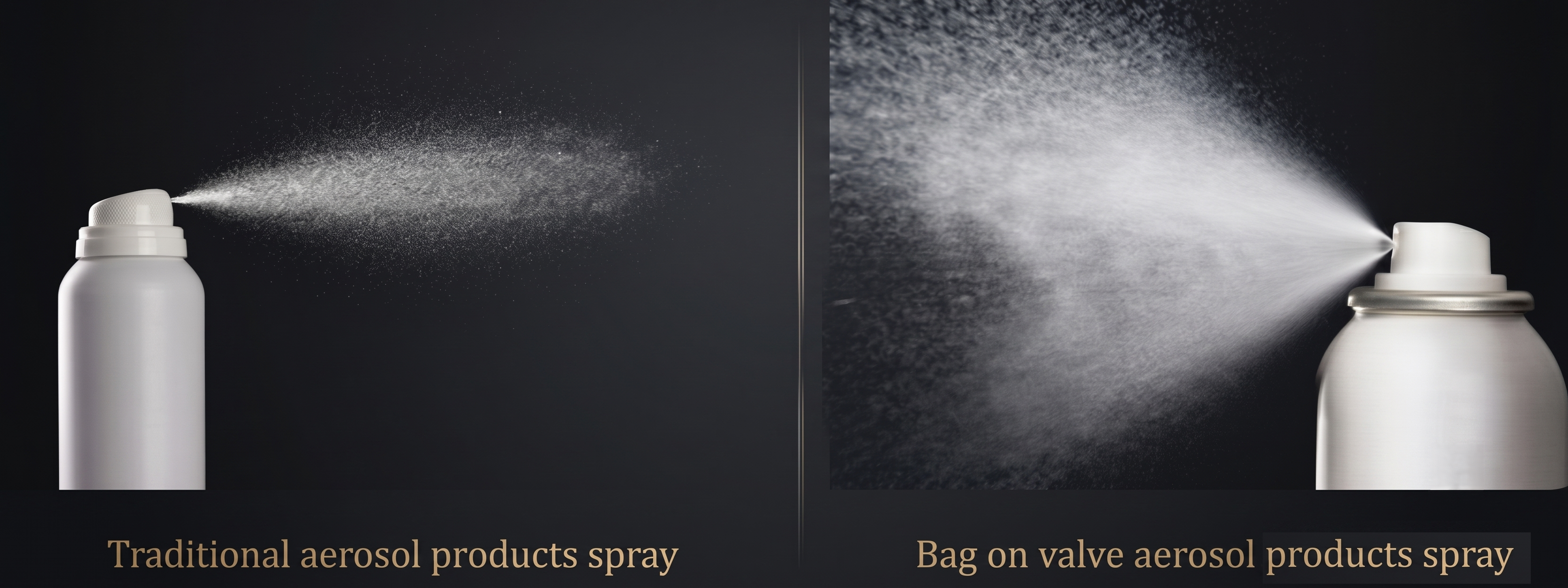
Unlike a traditional aerosol system, Bag on Valve packaging keeps the product inside a flexible bag attached to the valve, while the pressure medium remains in the space between the bag and the aerosol can.
This packaging structure changes the filling process and the equipment required for production.
A typical BOV production process includes three core operations:
Under-the-Cup Gassing and Crimping: Compressed air or nitrogen is introduced under the valve cup into the space between the bag and the can. The BOV valve is then securely crimped onto the aerosol can.
Product Filling Through the Valve: After the can has been pressurized and the valve crimped, the product is filled through the valve into the flexible bag.
Inspection and Downstream Handling: Depending on the production line configuration, the filling process can be followed by inspection, actuator pressing, cap pressing, coding, labeling and other downstream operations.
Because the can, BOV valve, bag, pressure medium and product all interact during production, BOV filling equipment should be configured according to the actual packaging components rather than selected only by machine model or nominal speed.
Chapter 2: Semi-Automatic BOV Filling Equipment
Semi-automatic BOV filling equipment is suitable for manufacturers that need a flexible production setup and do not yet require a continuously running fully automatic line.
In a semi-automatic setup, the key BOV filling operations are completed by dedicated equipment while operators participate in loading, transferring or unloading the aerosol cans and packaging components.
Depending on the actual production requirements, the equipment can cover under-the-cup gassing and crimping, product filling through the valve, and other necessary production steps.
Why Choose Semi-Automatic BOV Equipment?
The main advantage of semi-automatic production is flexibility. It can be a practical choice for manufacturers starting BOV production, producing smaller batches, handling multiple SKUs or packaging formats, or operating in a factory where production space and investment need to be controlled.
Because individual production steps can be configured according to the project, manufacturers can start with the essential BOV filling equipment and expand the production setup as their production requirements increase.
Semi-automatic production does require more operator involvement than a fully automatic line. For manufacturers with stable products and continuously increasing output requirements, an automatic production line may eventually become a more appropriate solution.
AILE Semi-Automatic BOV Filling Capacity
For AILE’s semi-automatic BOV equipment, typical production capacity is around 700–900 cans per hour, depending on the product, filling volume, packaging components and operator workflow.
The equipment can be configured according to the actual BOV packaging and production process, allowing manufacturers to select a setup that matches their current production requirements without immediately building a complete automatic line.
View AILE Bag-on-Valve Filling Machines →
Chapter 3: Fully Automatic BOV Aerosol Filling Line
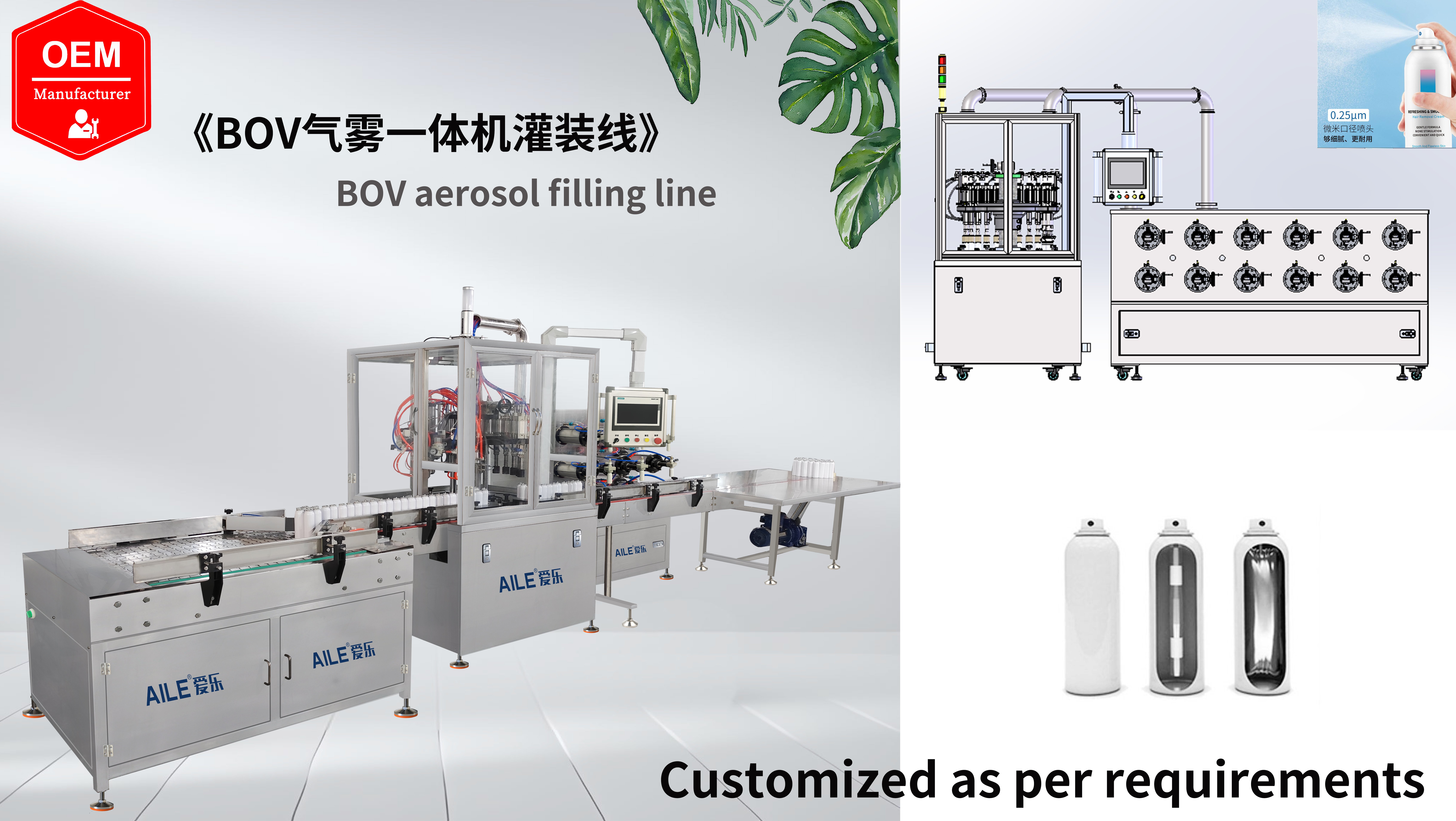
For manufacturers requiring more continuous production, a fully automatic BOV filling line integrates the key production steps into a connected system and reduces manual transfer between individual filling stations.
Depending on the project configuration, the line can integrate BOV valve handling, under-the-cup gassing, valve crimping, product filling through the valve and downstream production operations. The exact line configuration should always be based on the actual product and packaging.
An automatic BOV filling line is therefore not simply a faster version of a semi-automatic machine. It is a complete production system that must coordinate the packaging components, filling process, pressure supply, product feeding and line operation.
When Is a Fully Automatic BOV Line More Suitable?
A fully automatic line becomes more attractive when BOV production is already stable, the manufacturer requires continuous production, manual transfer between filling stations needs to be reduced, or the required production capacity has moved beyond what a semi-automatic setup can efficiently handle.
It is also more suitable when product and packaging specifications are relatively stable and the manufacturer wants the BOV filling process to work together with inspection and downstream equipment as a complete production line.
For a complete line project, factory planning should also consider available floor space, compressed air supply, electrical requirements, product preparation and storage, operator flow and downstream packaging requirements.
AILE Automatic BOV Filling Line Capacity
AILE’s automatic BOV aerosol filling lines are designed for continuous production, with typical output around 2,400–3,600 cans per hour, depending on the product and line configuration.
The machine frame is built in SS304, while product-contact parts can be configured in SS316 according to the filling material and production requirements.
For manufacturers with specific packaging formats or production requirements, the final line configuration is determined according to the actual aerosol can, BOV valve and bag, filling volume and required output.
View AILE Bag-on-Valve Aerosol Filling Lines →
Chapter 4: Semi-Automatic vs. Fully Automatic BOV Filling Equipment
The right level of automation depends on how the factory actually plans to produce BOV products.
| Factor | Semi-Automatic BOV Equipment | Fully Automatic BOV Filling Line |
|---|---|---|
| Production Style | Flexible or batch production | Continuous production |
| Typical AILE Output | Around 700–900 cans/hour | Around 2,400–3,600 cans/hour |
| Operator Involvement | Higher | Lower |
| Factory Space | Generally more compact | Requires more complete line space |
| Multiple SKUs | More flexible for frequent changes | Better suited to relatively stable production |
| Production Setup | Individual equipment can be configured as needed | Multiple operations integrated into one line |
| Expansion | Suitable for step-by-step production expansion | Designed for larger and more continuous production |
| Typical Buyer | New BOV projects, smaller batches, flexible production | Established BOV production with higher capacity requirements |
Neither configuration is automatically better for every manufacturer. For example, a factory producing multiple BOV products in relatively small batches may value the flexibility of semi-automatic equipment even if a fully automatic line offers higher production capacity.
In contrast, a factory producing the same or similar packaging formats continuously may benefit more from an integrated automatic BOV filling line. The decision should therefore be based on real production requirements rather than speed alone.
Chapter 5: What Should Be Confirmed Before Choosing BOV Filling Equipment?
BOV filling equipment cannot be selected accurately from the product name alone. Two manufacturers may both produce facial mist, edible oil spray or sunscreen, but use different aerosol cans, valves, bags, filling volumes and product formulations. These differences may require different tooling, filling systems or production-line configurations.
Before AILE recommends a BOV filling machine or filling line, the following information is particularly useful:
| Information | Why It Matters |
|---|---|
| Product Type | Liquid, cream, gel and other formulations can have different filling requirements |
| Filling Volume | Determines the required filling range and production setup |
| Can Diameter & Height | Equipment and tooling need to match the actual aerosol can |
| BOV Valve & Bag | The valve and bag assembly must be compatible with the gassing, crimping and filling process |
| Pressure Medium | BOV commonly uses compressed air or nitrogen |
| Required Output | Helps determine whether semi-automatic or fully automatic equipment is more appropriate |
| Product-Contact Material | Selected according to the actual formulation and production requirements |
| Factory Conditions | Space, electrical supply, compressed air and existing equipment affect line planning |
If several can sizes, filling volumes or products will be produced on the same equipment, this should also be confirmed before the final machine configuration is determined. This allows the equipment supplier to evaluate what adjustments, tooling or changeover requirements may be needed.
Chapter 6: Why BOV Packaging Samples Matter Before Machine Production
Actual packaging is particularly important when configuring BOV filling equipment. Even when two BOV packages appear similar, differences in the aerosol can, valve, bag, actuator or cap can affect how the equipment needs to be configured.
For this reason, AILE may request actual packaging samples or complete technical drawings before final machine production. Useful packaging information can include the aerosol can dimensions, BOV valve and bag assembly, actuator, cap and any other component that must interact with the filling or downstream equipment.
Providing samples allows the equipment to be matched more accurately to the customer’s packaging and can also support machine testing before shipment. For customized BOV projects, confirming packaging compatibility before final production is preferable to discovering component differences after the equipment arrives at the customer’s factory.
Chapter 7: Standalone BOV Filling Machine or Complete Production Line?
Not every BOV manufacturer needs to purchase a complete automatic line. If a factory already has compatible supporting equipment, is starting with smaller production volumes, or wants to build its BOV production capability step by step, individual BOV filling equipment may be sufficient.
A semi-automatic setup can also make sense when the manufacturer needs greater flexibility for different products or packaging formats.
A complete BOV filling line becomes more attractive when the factory is building a new production system, requires continuous production, wants to reduce manual transfer between stations, or needs filling operations to work together with inspection and downstream equipment.
The correct scope therefore depends not only on the required production capacity, but also on what equipment the factory already has and how the manufacturer plans to expand production in the future.
Chapter 8: How AILE Configures a BOV Filling Solution
AILE provides both semi-automatic BOV filling equipment and fully automatic BOV aerosol filling lines for manufacturers with different production requirements.
For smaller or more flexible production, AILE’s semi-automatic BOV equipment typically operates at around 700–900 cans per hour. For manufacturers requiring higher and more continuous output, AILE’s automatic BOV filling lines can typically reach around 2,400–3,600 cans per hour, depending on the product and line configuration.
Rather than recommending equipment based only on a general product category, AILE evaluates the actual packaging and production requirements, including the product, filling volume, aerosol can dimensions, BOV valve and bag, pressure medium, required output and factory conditions.
For projects involving customized packaging, customers can provide actual packaging samples or technical drawings so that the equipment and tooling can be matched to the components before final machine production.
The machine frame is generally manufactured in SS304, while SS316 can be used for product-contact parts according to the filling material and production requirements. This allows the BOV filling solution to be configured around the manufacturer’s actual production process rather than forcing different products and packaging formats into one fixed machine setup.
Explore AILE BOV Filling Machines →
Explore AILE Automatic BOV Filling Lines →
FAQ About BOV Filling Equipment
What is a BOV filling machine?
A BOV filling machine is equipment designed for the filling process used with Bag on Valve aerosol packaging. Depending on the equipment configuration, the production process can include under-the-cup gassing, valve crimping and product filling through the valve.
If you want to understand the BOV packaging structure and working principle first, see our What Is Bag on Valve (BOV)? guide.
What is the difference between traditional aerosol filling and BOV filling?
The main difference comes from the packaging structure and filling process. In BOV packaging, the product is contained inside a flexible bag attached to the valve, while the pressure medium remains outside the bag. The production process therefore requires equipment designed for BOV gassing, crimping and product filling through the valve. Traditional aerosol production uses a different filling process depending on the product and propellant.
Should I choose a semi-automatic or fully automatic BOV filling machine?
The choice depends mainly on your required output, production volume, number of SKUs, packaging formats, available factory space and level of automation.
AILE’s semi-automatic BOV equipment typically produces around 700–900 cans per hour and is suitable for smaller batches and flexible production. For higher and more continuous production requirements, AILE’s automatic BOV filling lines can typically reach around 2,400–3,600 cans per hour, depending on the product and line configuration.
Can one BOV filling machine handle different can sizes?
It depends on the machine configuration and the differences between the packaging formats. Changes in aerosol can diameter, can height, BOV valve or other packaging components may require machine adjustment or different tooling. For this reason, all planned packaging formats should be provided when the equipment is being configured.
Does BOV use compressed air or nitrogen?
Bag on Valve systems commonly use compressed air or nitrogen as the pressure medium. The appropriate option should be confirmed according to the product, packaging system and production requirements.
What material is used for AILE BOV filling machines?
AILE typically uses SS304 for the machine frame, while SS316 can be configured for product-contact parts according to the filling material and production requirements.
What information should I provide for a BOV filling machine quotation?
To recommend suitable equipment, AILE normally needs to know the product, filling volume, aerosol can diameter and height, BOV valve and bag specifications, pressure medium, required production capacity and electrical requirements. If available, actual packaging samples or technical drawings are also useful for checking compatibility and configuring the necessary tooling.
Conclusion: Choose the BOV Equipment Around Your Production
The best BOV filling solution is not necessarily the machine with the highest advertised speed. A manufacturer starting BOV packaging production with multiple products may need flexibility more than maximum output, while an established factory with stable packaging and continuous production may benefit from a fully automatic BOV filling line.
The equipment should therefore be selected around the product, packaging components, target output, level of automation and actual factory conditions.
AILE provides BOV filling equipment from flexible semi-automatic configurations at around 700–900 cans per hour to fully automatic BOV filling lines at around 2,400–3,600 cans per hour, depending on the product and final line configuration.
If you are planning a BOV packaging project, send us your product information, filling volume, can dimensions, BOV valve and bag specifications, pressure medium and required output. Our team can use these details to recommend a suitable equipment configuration for your production.