
Why Cosmetic Filling Machines Deliver Value Across Production Scales
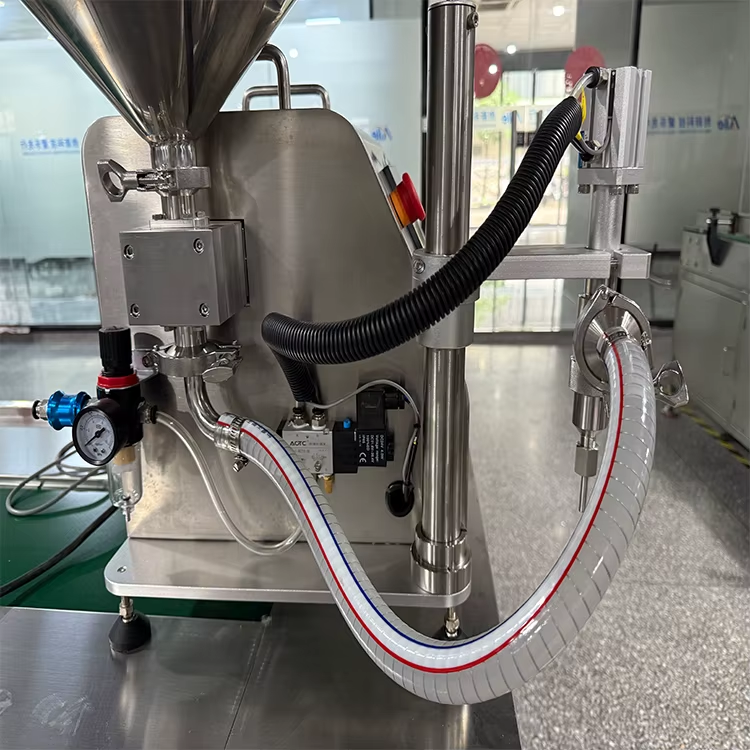
Whether operating a small-batch artisanal skincare brand or a large-scale contract manufacturing facility, the decision to invest in a cosmetic filling machine represents a turning point in production capability and product quality. Small-scale operations often begin with manual filling methods using handheld dispensers or gravity-fed nozzles, which are adequate for producing 100 to 500 units per day but become a bottleneck as order volumes grow. Large-scale manufacturers, meanwhile, face different challenges including maintaining fill accuracy at speeds exceeding 100 bottles per minute, managing frequent product changeovers, and meeting the documentation requirements of retail customers and regulatory bodies. A cosmetic filling machine, when appropriately specified for the production scale, addresses these challenges by standardizing the filling process, reducing material waste, and providing the data logging capabilities that modern quality systems demand.
Fill Accuracy and Material Cost Savings
The most immediately measurable benefit of a cosmetic filling machine is the reduction in product overfill and the associated material cost savings. Manual filling operations typically experience fill volume variation in the range of plus or minus 3 to 5 percent, as operators must judge fill levels by eye or react to simple timers. To avoid underfilling, which violates net content regulations in most markets, manual operators tend to overfill by a safety margin, resulting in an average overfill of 2 to 4 percent across a production batch. For a brand producing 500,000 bottles annually of a product with a material cost of 3 dollars per liter, a 3 percent average overfill represents 45,000 dollars in annual material giveaway. A servo-driven cosmetic filling machine operating at plus or minus 0.5 percent accuracy reduces that giveaway to less than 8,000 dollars annually, representing a direct material cost saving that often recovers the equipment investment within 12 to 24 months.
Production Throughput and Labor Efficiency
Beyond material savings, a cosmetic filling machine transforms labor productivity by multiplying the output per operator. A manual filling station with one operator typically achieves 300 to 500 bottles per hour for products like lotion or shampoo in 250ml to 500ml formats. A four-head semi-automatic filling machine operated by the same single operator can achieve 1,200 to 2,000 bottles per hour, while a fully automatic inline filling system with integrated capping can exceed 6,000 bottles per hour with one operator primarily performing supervisory and material replenishment tasks. For small-scale operations, this throughput improvement allows the business to fulfill larger orders without proportionally increasing labor costs, enabling growth without the margin compression that often accompanies scaling. For large-scale operations, the labor efficiency allows redirection of skilled staff from repetitive filling tasks to quality control, process improvement, and equipment maintenance activities.
Consistency Across Multi-SKU Production Environments
Cosmetic brands typically manage multiple product SKUs with different fill volumes, viscosities, and packaging formats. A modern cosmetic filling machine with recipe-based control stores the optimal filling parameters for each product, including fill volume, fill speed, nozzle dwell time, and anti-drip settings. When an operator selects a stored recipe, the machine automatically configures these parameters, reducing changeover time to 5 to 15 minutes compared to 30 to 60 minutes for manual recalibration. This recipe management capability is particularly valuable for contract manufacturers who may switch between 5 to 10 different products within a single production shift, where changeover efficiency directly determines overall equipment utilization rates. The machine's ability to maintain fill accuracy across different viscosities, from water-thin toners at less than 100 centipoise to thick body butters exceeding 50,000 centipoise, eliminates the need for separate filling systems for different product types.
Sanitary Design and Compliance Readiness
Regulatory expectations for cosmetic manufacturing continue to tighten globally, with markets including the European Union under Regulation 1223/2009 and the United States under MoCRA (Modernization of Cosmetics Regulation Act of 2022) increasing requirements for manufacturing process documentation and contamination control. A cosmetic filling machine designed for GMP-compliant cosmetic production incorporates features that support these compliance requirements: 316L stainless steel product-contact surfaces with documented material certificates, sanitary connections that can be disassembled for cleaning validation, enclosed filling zones with HEPA-filtered air for preservative-free products, and data logging capabilities that record fill weights, production counts, and cleaning events. For small-scale manufacturers, investing in GMP-compatible filling equipment early establishes the documentation discipline that facilitates retail partnerships and export market access as the business grows.
Scalability and Future-Proofing Production Investment
A well-chosen cosmetic filling machine provides a platform for production growth rather than a fixed-capacity asset that must be replaced as volumes increase. Semi-automatic machines can often be upgraded with additional filling heads, automatic bottle indexing systems, or integrated capping modules as production demands evolve. For example, a manufacturer might begin with a two-head semi-automatic filling machine producing 1,000 bottles per day and later add two more filling heads and an automatic capping station to reach 4,000 bottles per day without purchasing an entirely new system. Manufacturers such as Guangzhou Aile Automation Equipment Co., Ltd. offer cosmetic filling machine platforms that support this modular expansion approach, allowing production capacity to grow in step with market demand rather than requiring front-loaded capital investment for capacity that may not be immediately utilized.
Practical Sourcing and Implementation Considerations
When evaluating a cosmetic filling machine investment, several practical considerations extend beyond the machine specifications themselves. The supplier should provide installation and commissioning support, either through their own field service engineers or through trained local representatives, to ensure the equipment is properly set up and operators are trained on correct procedures. Spare parts availability for wear components including filling piston seals, valve assemblies, and nozzle tips should be confirmed, with recommended spare parts lists and lead times documented before purchase. The machine's control system should be accessible to the manufacturer's maintenance team for troubleshooting, with clear error diagnostics and preferably remote support capability that allows the supplier to assist with parameter adjustments without requiring an on-site visit. For export-oriented manufacturers, documentation including material certificates, calibration records, and equipment qualification protocols should be available to support customer audits and regulatory inspections.
Questions and Answers
At what production volume does it make financial sense to switch from manual to machine filling?
The break-even point depends on product value and labor costs, but a common threshold is approximately 500 to 1,000 bottles per day. At this volume, the material savings from reduced overfill combined with labor efficiency improvements typically recover the cost of a basic semi-automatic cosmetic filling machine within 18 to 24 months. Products with higher material costs reach the break-even point at lower volumes, as the overfill savings are proportionally larger.
Can a single cosmetic filling machine handle products with very different viscosities?
Yes, modern servo-driven piston filling machines can handle a wide viscosity range from water-thin liquids below 100 centipoise to thick creams above 50,000 centipoise through adjustable fill speed, different nozzle types, and configurable suck-back or anti-drip settings. The recipe-based control system stores the optimal parameters for each product, so switching between product types requires only selecting the stored recipe and possibly changing the filling nozzle, typically completed in under 10 minutes.
What documentation should I expect from a cosmetic filling machine supplier for GMP compliance?
A GMP-compliant equipment purchase should include material certificates for all product-contact components, surface finish certification for stainless steel parts, factory acceptance test reports documenting the machine's performance against specification, installation qualification and operational qualification protocol templates, and a recommended preventive maintenance schedule with spare parts identification. The supplier should also provide operator and maintenance training documentation that can be incorporated into the manufacturer's training management system.
Table of Contents
- Why Cosmetic Filling Machines Deliver Value Across Production Scales
- Fill Accuracy and Material Cost Savings
- Production Throughput and Labor Efficiency
- Consistency Across Multi-SKU Production Environments
- Sanitary Design and Compliance Readiness
- Scalability and Future-Proofing Production Investment
- Practical Sourcing and Implementation Considerations
- Questions and Answers