
The Unique Filling Challenges of High-Viscosity Cosmetic Products
Cosmetics creams and ointments present filling challenges that are fundamentally different from those of low-viscosity liquids like toners or micellar waters. Cream formulations, including moisturizers, night creams, and anti-aging treatments, typically exhibit viscosities ranging from 10,000 to over 100,000 centipoise, with some thick ointments and balms reaching semi-solid consistency at room temperature. These products do not flow freely under gravity, do not self-level in the container, and tend to trap air pockets during filling that can cause weight inaccuracies and aesthetic defects in the finished product. A cosmetic filling machine designed for cream and ointment applications must overcome these material handling challenges through positive displacement filling mechanisms, heated product pathways, and specialized filling nozzle designs that ensure complete container filling without air entrapment and with cut-off that prevents stringing or tailing of the product at the nozzle tip.
Positive Displacement Filling Technology for Creams and Ointments
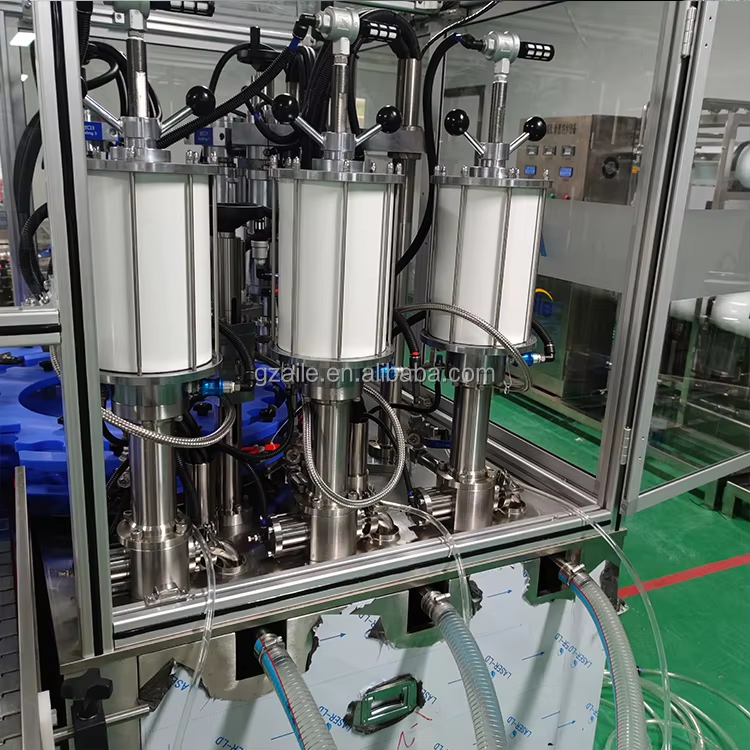
The filling mechanism most commonly employed in cosmetic filling machines for cream and ointment products is the positive displacement piston filler, which operates on a simple but highly effective principle. A rotating valve connects alternately to the product supply and the filling nozzle, while a piston within a precisely machined cylinder draws product from the hopper on the retraction stroke and dispenses it through the nozzle on the extension stroke. For very high-viscosity products exceeding 50,000 centipoise, the filling system may incorporate a heated hopper or heated product pathway that reduces the product viscosity during filling without affecting its final properties after cooling. Some advanced systems use a follower plate that applies downward pressure on the product in the hopper, forcing viscous material into the piston chamber on the intake stroke rather than relying on gravity feed, which would be inadequate for thick creams. The servo-driven versions of these fillers can achieve filling accuracy of plus or minus 0.5 percent by volume, enabling precise filling into jars, tubes, and bottles.
Container Handling and Filling Nozzle Design for Cream Products
The interaction between the filling nozzle and the container significantly influences filling quality for cream and ointment products. For jar filling, a diving nozzle that descends into the container and rises as the product fills minimizes the distance the product must fall, reducing the risk of air entrapment and ensuring the cream fills the container from the bottom up. The nozzle tip should incorporate a positive cut-off mechanism, either a rotary valve at the nozzle or a suck-back function that reverses the piston slightly at the end of each fill cycle, to produce a clean product break without stringing. For tube filling, the nozzle design must accommodate the narrow tube opening, typically 13mm to 25mm in diameter, while still achieving complete filling without air pockets at the tube base. A cosmetic filling machine designed for multi-format production may offer interchangeable nozzle sets for jar and tube applications, with quick-change mounting that allows format changes in under 10 minutes.
Production Speed Optimization for Cream Filling Lines
While cream and ointment filling speeds are inherently slower than those achievable with low-viscosity liquids due to the material flow characteristics, significant throughput improvements are possible through machine configuration optimization. A single-head piston filler for creams typically achieves 15 to 25 fills per minute for jar sizes of 30ml to 200ml, equating to 900 to 1,500 units per hour. A four-head configuration can increase this to 60 to 100 fills per minute or 3,600 to 6,000 units per hour, with the limitation being the container handling and capping speed rather than the filling mechanism itself. The filling speed for each product should be validated to ensure that faster cycle times do not introduce air entrapment or filling weight variability, with the optimal speed often being lower than the machine's maximum rated speed for very thick products.
Quality Control Parameters Specific to Cream and Ointment Filling
Quality control for cream and ointment filling extends beyond fill weight verification to include parameters that affect product appearance and consumer perception. Fill level consistency in transparent or translucent jars is critical, as visible variations in fill height between jars on a retail shelf create a perception of poor quality control even if the actual net weight is correct. Temperature control of the product during filling should be monitored, as creams that are filled too hot may shrink upon cooling, creating a gap between the product surface and the container wall, while filling too cold may result in poor surface finish and visible air pockets. Post-filling vibration or tapping stations can help settle the product in the container, eliminating air pockets and creating a smooth, even surface. Regular verification of the suck-back or anti-drip function prevents product accumulation on the container threads or exterior that would interfere with cap sealing and create a poor consumer experience upon opening.
Integration with Upstream Mixing and Downstream Packaging
A cream filling operation is only as efficient as its upstream and downstream process integration. The product transfer from the mixing vessel to the filling machine hopper should minimize shear that could break the emulsion structure of the cream, typically through the use of a positive displacement transfer pump operating at low speed rather than a high-shear centrifugal pump. The hopper level should be maintained within a consistent range, as variations in head pressure can affect fill weight consistency even with positive displacement fillers due to changes in the fill rate on the intake stroke. Downstream, the filled containers must proceed directly to capping to minimize open-container time, with the capping station ideally positioned within one meter of the filling station to reduce the risk of airborne contamination. A cosmetic filling machine from manufacturers such as Guangzhou Aile Automation Equipment Co., Ltd. can be configured as part of an integrated line that includes upstream emulsifying mixers and downstream capping, labeling, and coding equipment, providing the synchronized control needed for efficient cream production.
Selecting Filling Equipment for Multi-Product Cream and Ointment Lines
Cosmetic manufacturers who produce multiple cream and ointment formulations on shared equipment need filling machines with specific flexibility features. The filling volume range should accommodate the brand's entire product portfolio, from 5ml eye cream tubes to 500ml body butter jars, without requiring major mechanical changes between products. The machine's product-contact surfaces should be compatible with both oil-in-water and water-in-oil emulsion types, as well as anhydrous ointment formulations that may contain petrolatum, mineral oil, or silicone bases. Changeover between products should be achievable in under 30 minutes, including disassembly and cleaning of product-contact components, with documented cleaning validation procedures for manufacturers operating under GMP guidelines.
Questions and Answers
Why do cream products require different filling equipment than liquid cosmetics?
Cream products have viscosities typically 100 to 1,000 times higher than liquid cosmetics, meaning they cannot flow by gravity into containers and must be positively displaced by a piston or pump mechanism. Additionally, creams trap air easily during filling and require specialized nozzle designs with diving or bottom-up filling capability to minimize air entrapment. The filling nozzle must also provide a clean cut-off to prevent product stringing, which is not a concern with most liquid products.
How can I prevent air pockets in cream-filled jars?
Several strategies help minimize air pockets: use a diving nozzle that fills from the container bottom upward, validate the optimal fill speed for each product to avoid turbulent flow, maintain consistent product temperature during filling, and install a post-fill vibration or tapping station that settles the product and releases trapped air. For very thick creams, a slight overfill followed by a surface-leveling step can also produce a visually perfect fill.
What is the typical filling speed for cream and ointment filling machines?
A single-head cream filling machine typically achieves 15 to 25 fills per minute for 30ml to 200ml containers, resulting in 900 to 1,500 units per hour. Multi-head configurations of two to four heads can proportionally increase output to 3,600 to 6,000 units per hour. The actual sustainable speed depends on product viscosity, container geometry, and whether the capping and labeling stations can keep pace with the filling output.
Table of Contents
- The Unique Filling Challenges of High-Viscosity Cosmetic Products
- Positive Displacement Filling Technology for Creams and Ointments
- Container Handling and Filling Nozzle Design for Cream Products
- Production Speed Optimization for Cream Filling Lines
- Quality Control Parameters Specific to Cream and Ointment Filling
- Integration with Upstream Mixing and Downstream Packaging
- Selecting Filling Equipment for Multi-Product Cream and Ointment Lines
- Questions and Answers