
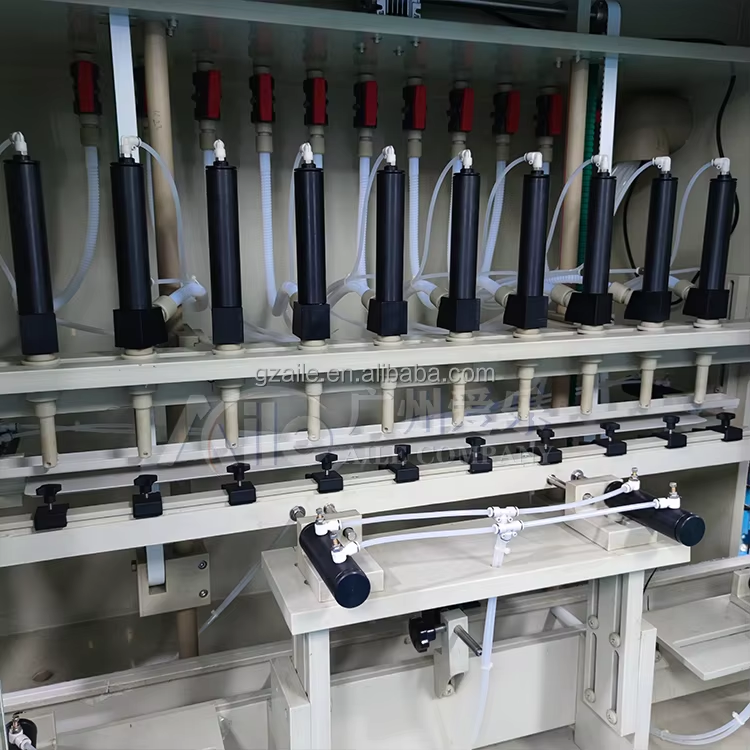
The Efficiency Gap: Why Manual Filling Machines Limit Paint Aerosol Production
Bottlenecks in labor-dependent workflows: inconsistency, fatigue, and throughput ceilings
Manual filling operations impose hard constraints on paint aerosol production. Human operators introduce variability in speed and precision, causing inconsistent cycle times that cascade across the line. Industrial ergonomic studies show worker fatigue can reduce output by up to 30% over extended shifts—directly undermining schedule adherence. This labor dependency caps sustainable throughput at just 40–50 cans per hour, a ceiling far below modern demand. The result is chronic bottlenecking: sealing stations sit idle while filling lags, eroding capacity utilization and inflating unit costs.
Quality risks of manual filling: overfilling, underfilling, and valve misalignment in paint formulations
Paint aerosols amplify the quality vulnerabilities of manual filling. Maintaining ±3% fill tolerance across thousands of cycles is impractical without automation—leading to costly overfills or noncompliant underfilled units. Packaging audits identify valve misalignment in 1 of every 50 cans, compromising seal integrity and accelerating propellant loss—especially critical with volatile solvents. For specialty coatings containing metallic pigments or high-viscosity resins, inconsistent handling increases sedimentation and batch failure rates by 15–22% compared to automated systems.
Semi-Automatic Integration: Synchronizing Sealing and Filling for Cycle-Time Optimization
Inline crimp-and-fill coordination: how synchronized sealing cuts average cycle time by 25–40%
Semi-automatic aerosol can sealing machines eliminate workflow fragmentation by merging filling and crimping into one continuous sequence. Unlike manual filling machines—where cans must be transferred between stations—this inline integration removes handling delays and enables uninterrupted motion. Industry studies confirm it reduces average cycle time by 25–40%. Programmable logic controllers synchronize nozzle dispensing with valve placement within 0.3-second tolerances, preserving fill accuracy while dramatically increasing flow efficiency.
Crimping precision and pressure retention: ensuring seal integrity for volatile paint aerosols
Volatile solvents require absolute seal reliability—something semi-automatic systems deliver through force-regulated crimping heads applying 200–300 psi of consistent radial pressure. This achieves uniform gasket compression without deforming thin-walled cans, a frequent failure mode in manual operations. Inline pressure decay testing validates seal integrity before egress from the workstation, cutting rejection rates by up to 18%. The result is verified containment of aerosol propellants for 24+ months—even under thermal stress exceeding 40°C.
Measurable Gains in Paint Filling Efficiency: Throughput, Accuracy, and Uptime
Real-world benchmarks: 80–120 cans/hour throughput, ±1.5% fill accuracy, and >92% operational uptime
Transitioning from manual filling machines delivers immediate, quantifiable gains. Production lines consistently achieve 80–120 cans per hour—a 35% average throughput increase—while simultaneously tightening fill accuracy to ±1.5%, reducing material waste and ensuring net weight compliance. Operational uptime exceeds 92%, per the Industry Standard Index 2023, reflecting fewer unplanned stoppages caused by misalignments, fatigue-related errors, or recalibration delays.
Smart controls enabling efficiency: programmable dispensing, viscosity compensation, and real-time leak detection
Smart control systems convert raw speed into resilient, adaptive efficiency. Programmable dispensing adjusts shot volumes automatically between batches, eliminating manual recalibration. Viscosity compensation dynamically offsets temperature-driven thinning in paint formulations, sustaining fill consistency despite ambient fluctuations. Most critically, integrated pressure sensors perform real-time leak detection during crimping—immediately isolating compromised seals before volatile aerosol failures occur. This layered intelligence transforms throughput into predictable, low-waste output—without operator intervention.
FAQ
What are the limitations of manual filling machines for paint aerosols?
Manual filling machines face limitations such as inconsistent cycle times, reduced output due to worker fatigue, and potential quality risks like overfilling or valve misalignment.
How do semi-automatic machines improve paint aerosol production?
Semi-automatic machines synchronize sealing and filling processes, cutting down cycle time and improving efficiency while maintaining consistent quality and seal integrity.
What are the benefits of using smart control systems in aerosol production?
Smart control systems enhance efficiency by offering programmable dispensing, viscosity compensation, and real-time leak detection, which help maintain fill accuracy and reduce waste.
Can production lines achieve higher throughput with semi-automatic systems?
Yes, production lines can achieve 80–120 cans per hour, a 35% increase in throughput, when using semi-automatic systems compared to manual filling machines.