
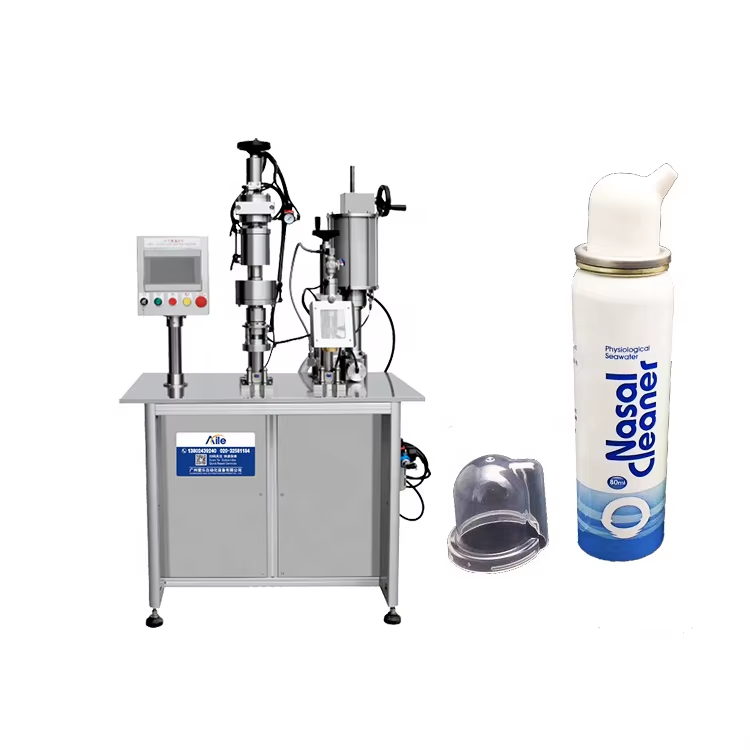
Understanding the Role of Aerosol Filling Machines in Modern Production
The aerosol filling machine has really taken off in manufacturing circles over recent years. What started as basic dispensers are now sophisticated automated systems tackling all sorts of production needs when it comes to speed, accuracy, and scaling operations. These devices make life much easier for companies making everything from makeup sprays to heavy duty cleaning products. They handle three main tasks automatically these days: getting just the right amount of liquid into each can, injecting the correct propellant mixture, and ensuring those cans get sealed properly so nothing leaks out. Looking at market trends, experts expect demand for such equipment to keep rising at around 9.6 percent per year going forward. Manufacturers love them because they solve real world problems on factory floors where efficiency matters most.
Core Functions of the Aerosol Filling Machine in Manufacturing
Modern aerosol filling equipment performs three core functions simultaneously:
- Precision filling: Delivering exact product volumes (±0.5% tolerance) to comply with regulatory standards
- Gas propellant integration: Injecting liquefied gases at controlled pressures to ensure consistent spray performance
- Leak-proof sealing: Applying crimping technology that achieves 99.97% container integrity rates
This triad of operations replaces 23 manual steps in traditional setups, cutting processing time by 68% according to automation efficiency studies.
How Automation Eliminates Manual Bottlenecks in Production Lines
Aerosol filling systems that are fully automated tackle some major problems with traditional methods: people just can't keep up with the speed needed anymore, plus there's always inconsistency when humans do the work manually. These modern machines combine robotic arms with those precision controlled nozzles, which lets them fill anywhere between 60 to 120 cans every single minute. That means companies see around 40 percent more production than they could get from their old semi automatic setups. Take one big name in consumer products for instance. When they switched to automation, they went from needing 12 workers on each shift down to just three operators, and at the same time managed to double how much product came off the line each day.
Aligning High-Speed Output With Fluctuating Market Demand
The agility of modern aerosol filling machines allows manufacturers to pivot between product SKUs in under 15 minutes. Advanced models feature:
- Quick-change clamps for different can sizes
- Digital recipe management for 100+ product formulations
- Real-time output adjustment from 50% to 100% capacity
This flexibility helps companies respond to sudden spikes in seasonal demand while avoiding overproduction waste—a critical advantage as retail SKUs for aerosol products grew 27% year-over-year (2024 Packaging Trends Report). By synchronizing production velocity with inventory algorithms, manufacturers maintain lean operations without sacrificing market responsiveness.
Precision Through Automation: Enhancing Consistency and Reducing Errors
Reducing Human Error and Improving Fill Accuracy with Automation
Automated aerosol filling machines minimize deviations caused by manual handling, achieving fill tolerances within ±0.5% through servo-controlled dispensing systems. Unlike manual methods prone to inconsistencies (studies show human-operated lines average 92% accuracy vs. 99.2% in automated systems), these machines use real-time pressure sensors and flow meters to adjust parameters without operator intervention.
Real-Time Monitoring and Feedback in Automatic Aerosol Filling Machine Systems
Advanced sensors track variables like propellant density and nozzle alignment, triggering micro-adjustments mid-cycle. For example, viscosity changes in hairspray formulations are automatically compensated within 0.3 seconds, preventing underfills that cost manufacturers $740k annually in rework (Ponemon 2023). This closed-loop control maintains <2% product giveaway across batches.
| Metric | Manual Process | Automated System | Improvement |
|---|---|---|---|
| Fill accuracy | 92% | 99.2% | +7.2% |
| Cycle time variance | ±15% | ±1.8% | -13.2% |
| Rework costs/month | $61k | $8.2k | 86% reduction |
Achieving 99.2% Fill Accuracy: Data-Driven Performance Metrics
Patented volumetric filling algorithms analyze 120 data points per second—from canister temperature to valve seating pressure—to maintain ±0.25ml fill consistency. Industry benchmarks confirm automated lines sustain 2,400 units/hour at this precision level, versus 900 units/hour with manual checks.
Balancing Operational ROI Against Labor Impact in Automated Setups
While automation reduces direct labor needs by 65%, the 14-month average payback period (per 2024 MAPI benchmarks) comes from eliminating $520k/year in error-related waste. Production managers report 23% higher throughput without expanding headcount, offsetting the capital costs of precision filling systems.
Real-World Impact: Efficiency Gains in Mid-Scale Manufacturing Facilities
From Semi-Manual to Full Automation: A Before-and-After Analysis
When mid-sized manufacturing companies switch to fully automated aerosol filling systems, they typically see dramatic improvements in their operations. Take one plant we worked with recently - they cut down their production cycle time by almost half (around 52%) once they moved away from their semi-manual setup. Daily output shot up to 11,000 units, which represents a solid 40% jump from what they were producing before under their old hybrid approach. What really stands out is how these automated systems handle those tricky manual tasks like aligning valves and applying caps. Without people involved in those steps, there's far less variation between products. Fill volumes stay consistently accurate within just ±0.5ml, something that's pretty hard to achieve manually. Plus, these machines keep running non-stop through all three shifts without needing breaks or adjustments.
Quantifying Improvements in Production Speed and Efficiency
Automated aerosol filling machines demonstrate measurable performance gains:
- 30% faster changeovers: Tool-free format adjustments enabled by servo-driven components
- 22% higher OEE (Overall Equipment Effectiveness): Achieved through real-time leak detection sensors preventing defective batches
- 17% energy reduction: Smart compressed air management in filling nozzles (2023 Packaging Efficiency Report)
These advancements allow facilities to scale production 1.8× faster than market demand growth—critical for serving time-sensitive retail replenishment cycles.
Operational Cost Savings and ROI Achieved Within 14 Months
Looking at 12 medium sized manufacturing operations recently showed these businesses saved around $480,000 each year once they switched to automated aerosol filling equipment. The biggest money saver was labor expenses which fell nearly 40% because there was simply less need for someone to watch over every step manually. Material waste also took a big hit going down from about 4.2% all the way to just 0.9% of what they produce overall. Most impressive though? Almost all of them got their money back on the automation purchase within fourteen months flat. This quick return happened partly because these machines can handle both regular and special propellants without needing separate setups, something that cuts down on downtime between production runs.
FAQ
What are the main tasks performed by aerosol filling machines?
Aerosol filling machines automatically manage liquid filling, gas propellant injection, and leak-proof sealing.
How do automated systems improve production speed and efficiency?
Automated systems eliminate manual bottlenecks, handling 60 to 180 cans per minute, thereby increasing production by up to 40%.
What benefits do manufacturers gain from smart technology integration in aerosol filling machines?
Manufacturers benefit from predictive maintenance, optimized fill rates, and reduced changeover times, enhancing efficiency and minimizing downtime.
How do aerosol filling machines contribute to sustainability?
They reduce material waste, improve energy efficiency, and minimize production errors, achieving cost savings and environmental benefits.