
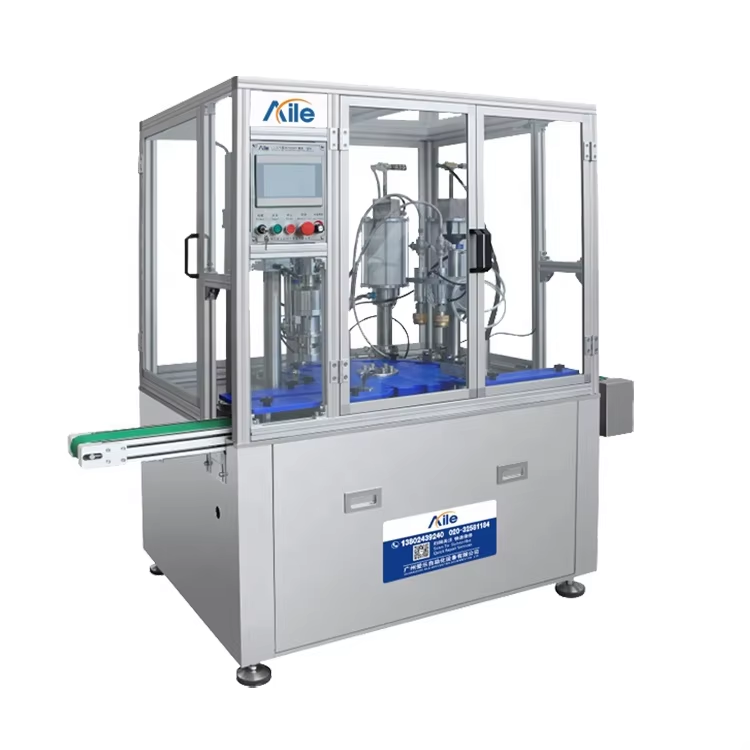
The Critical Role of Cosmetic Filling Machines in Achieving Batch-to-Batch Consistency
How micro-variations in fill volume undermine product performance and consumer trust
Even minor fill-volume inconsistencies can erode product quality and brand credibility. A deviation as small as 0.1 ml per bottle may seem negligible—but across thousands of units, it creates systemic under- or over-filling. For high-end serums, underfilling means customers receive less active ingredient, reducing efficacy and potentially compromising skin benefits. Overfilling inflates material costs and compresses profit margins. Consumers who detect inconsistencies—by weight, visual cues, or perceived performance—quickly lose confidence and may share negative feedback online. Remediation via rework or recall is costly and reputationally damaging. Automated cosmetic filling machines with closed-loop control systems eliminate these micro-variations, ensuring every bottle receives the exact intended dose, batch after batch.
Tolerance benchmarks by product category: ±0.5% for serums vs. ±1.5% for shampoos — why precision thresholds matter
Precision requirements vary significantly across cosmetic categories—and for good reason. Premium serums containing high-cost actives demand ±0.5% tolerance to guarantee therapeutic concentration, efficacy, and regulatory compliance. Even a 1% overfill can meaningfully erode margins on low-volume, high-value SKUs. In contrast, mass-market shampoos and body washes typically operate within ±1.5% tolerance, where minor volume shifts have minimal impact on unit economics. Still, strict adherence remains non-negotiable: underfilling violates labeling laws (e.g., FDA 21 CFR Part 201), while chronic overfilling wastes raw materials and inflates COGS. These benchmarks directly inform technology selection—servo-driven piston fillers for viscous serums, peristaltic pumps for low-viscosity liquids—ensuring the machine’s precision capability aligns with product-specific risk and value profiles.
Selecting the Right Cosmetic Filling Machine Based on Formulation Properties
Viscosity-driven technology selection: Matching low-viscosity toners, medium emulsions, and high-viscosity creams to optimal filling mechanisms
Viscosity is the primary determinant of filling technology suitability. Low-viscosity formulations—toners, micellar waters, and hyaluronic acid serums—flow easily but are prone to dripping, foaming, and aeriation. Peristaltic pumps or gravity-based fillers provide gentle, pulse-free dispensing with precise stop-start control, preserving formula integrity. Medium-viscosity products like lotions and emulsions require positive displacement without shear stress; servo-controlled piston fillers deliver consistent flow and tight repeatability (±0.5–1.0%). High-viscosity creams, balms, and gels demand mechanical force and thermal management—progressive cavity pumps or large-bore piston fillers with heated hoppers reduce back-pressure and ensure uniform fills. Misalignment between viscosity and machine design inevitably leads to tolerance drift, inconsistent dosing, and compromised consumer experience.
Performance comparison: Piston, peristaltic pump, volumetric, and weigh-based cosmetic filling machines — strengths and limitations
Piston fillers offer high accuracy (±0.5–1.0%) and durability across medium-to-high viscosities, making them ideal for emulsions and creams—but require regular seal maintenance and thorough cleaning between batches. Peristaltic pumps isolate product within disposable tubing, eliminating cross-contamination and protecting shear-sensitive formulas; however, tube fatigue limits run time, and throughput lags behind piston systems. Volumetric fillers—including time-pressure and rotary piston variants—prioritize speed for free-flowing liquids but lack real-time compensation for viscosity or density shifts, risking accuracy drift. Weigh-based fillers measure net weight during dispensing, achieving ±0.1% accuracy regardless of formulation, and auto-correct for foam, temperature, or density variation. Their trade-offs are slower cycle times and higher capital cost. Selecting among them requires balancing accuracy needs, production scale, formulation sensitivity, and long-term operational demands.
Regulatory, Operational, and Brand Benefits of Automated Cosmetic Filling Machines
Compliance assurance: How ISO 22716 and FDA 21 CFR Part 211 require documented fill accuracy and traceability
Regulatory compliance hinges on verifiable consistency—not just in what’s filled, but in how it’s documented. ISO 22716 (Cosmetic GMP) mandates validated processes, defined tolerances, and auditable records for all critical steps—including fill volume. Similarly, FDA 21 CFR Part 211 applies to cosmeceuticals and high-efficacy products, requiring documented evidence of accuracy, calibration, and traceability from raw material to finished unit. Automated cosmetic filling machines meet these expectations inherently: integrated sensors log every fill event—including volume, timestamp, batch ID, and operator ID—creating a tamper-resistant digital audit trail. This replaces error-prone manual logs, accelerates internal and regulatory audits, and provides immediate proof of adherence. Without such traceability, manufacturers face heightened recall risk, warning letters, or market access restrictions.
ROI beyond precision: 8–12% yield improvement, reduced rework, and strengthened brand reputation through consistent fill integrity
Automated filling delivers measurable financial and strategic returns far beyond accuracy alone. Manufacturers routinely achieve 8–12% yield gains by eliminating overfilling, spillage, and start-up waste—translating directly to lower COGS. Reduced rework cuts labor, packaging, and QC overhead, while faster, more stable cycles improve throughput efficiency. Most critically, consistent fill integrity reinforces brand promise: when consumers receive the exact quantity and performance they expect—every time—it builds loyalty and reduces churn. In an industry where perception of quality is inseparable from physical consistency, automated systems serve as both a compliance safeguard and a brand equity protector. With typical payback periods of 12–24 months, modern cosmetic filling machines represent a high-impact operational investment—not just equipment.
FAQ
Why is batch consistency important in cosmetic filling?
Batch consistency ensures product quality and consumer trust by delivering the exact intended dose across all units. Variations can lead to reduced efficacy, inflated costs, and damage to brand credibility.
What are the tolerance benchmarks for different products?
Tolerance benchmarks vary by product category: ±0.5% for premium serums and ±1.5% for mass-market shampoos, based on formulation sensitivity and unit economics.
How do viscosity differences affect cosmetic filling technology choices?
Viscosity determines the appropriate filling mechanism. Low-viscosity products require gentle dispensing, while high-viscosity products need mechanical force and specialized equipment like heated hoppers.
What are the key strengths and limitations of different filling machines?
Piston fillers offer durability and precision but need maintenance. Peristaltic pumps prevent contamination but have limited throughput. Weigh-based fillers offer extreme accuracy but with slower cycles and higher costs.
How can automated filling machines improve regulatory compliance?
Automated machines ensure documented accuracy and traceability per ISO 22716 and FDA 21 CFR Part 211, speeding audits and reducing recall risks.
Table of Contents
- The Critical Role of Cosmetic Filling Machines in Achieving Batch-to-Batch Consistency
- Selecting the Right Cosmetic Filling Machine Based on Formulation Properties
- Regulatory, Operational, and Brand Benefits of Automated Cosmetic Filling Machines
-
FAQ
- Why is batch consistency important in cosmetic filling?
- What are the tolerance benchmarks for different products?
- How do viscosity differences affect cosmetic filling technology choices?
- What are the key strengths and limitations of different filling machines?
- How can automated filling machines improve regulatory compliance?