
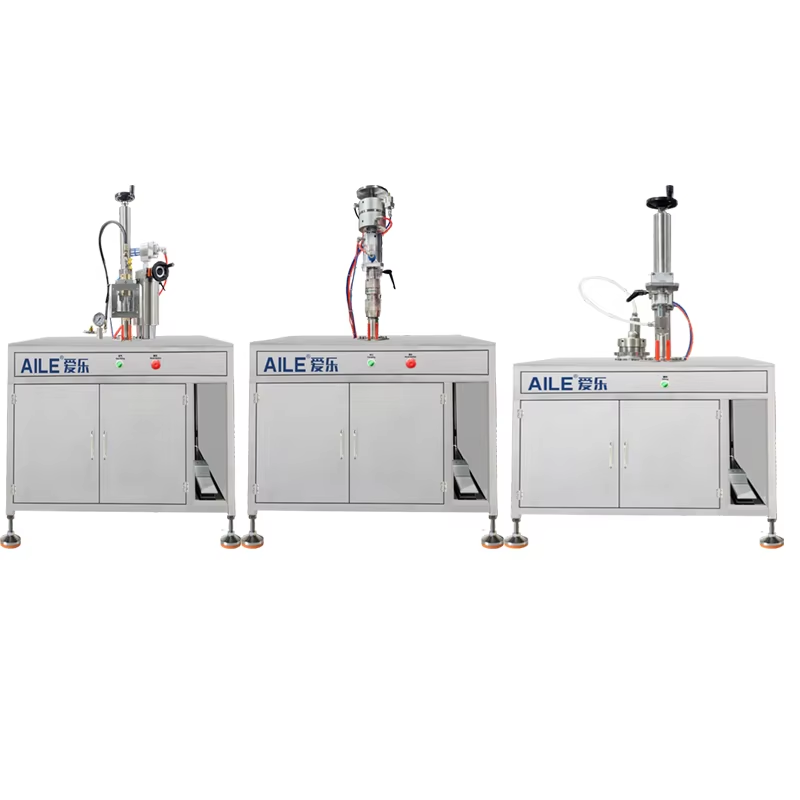
Why Precision Matters: The Business and Regulatory Impact of Fill Accuracy
The Cost of ±0.5% Variation: Brand Trust, Product Waste, and Compliance Risk
For manufacturers of creams and lotions, a filling tolerance as narrow as ±0.5% carries significant business and regulatory consequences. Under-filled containers erode customer trust—78% of consumers report reduced brand loyalty after inconsistent product experiences (Customer Loyalty Index 2024). Over-filling drives material waste, costing the average manufacturer $740k annually in excess formulation (Ponemon 2023). Critically, deviations beyond allowable limits also trigger regulatory risk: weights-and-measures authorities enforce strict adherence to labelled volume claims, and noncompliance can result in validation failures, production halts, or enforcement actions. High-value products amplify the impact—dermal serums, for instance, incur $39,200 in material loss per 100,000 units at just a 1.5% overfill rate. Precision in cosmetic filling machines is therefore not merely an operational detail—it’s a core safeguard for brand equity, profitability, and compliance.
FDA 21 CFR Part 211 & EU Annex 1: How Dose Consistency Requirements Shape Cosmetic Filling Machine Design
Regulatory frameworks translate precision into enforceable technical requirements. FDA 21 CFR Part 211 mandates that automated equipment consistently dispense uniform doses within validated limits—a requirement that extends to cosmetic manufacturing under FDA’s oversight of product safety and labelling accuracy. Similarly, EU Annex 1 (2023 revision) explicitly requires “rigorously tested” filling accuracy of ±1.0% for sterile cosmetics, reinforcing the need for design-level reliability—not just post-hoc verification. These standards drive engineering choices far beyond mechanical calibration: closed-loop feedback systems now integrate pressure sensors to compensate for viscosity shifts in high-viscosity emulsions (>30,000 cP), anti-drip valves to prevent thread fouling and container contamination, and real-time weight checkers paired with pressure-compensating pumps. Together, these features ensure fills remain within pre-set volumetric variance—turning regulatory mandates into built-in machine functionality.
Hygienic Integrity: Sanitary Design Standards for Cosmetic Filling Machines
Achieving hygienic integrity in cosmetic filling machines requires adherence to globally recognized sanitary design standards—including 3-A Sanitary Standards, EHEDG (European Hygienic Engineering & Design Group) guidelines, and FDA expectations for equipment used in cosmetic manufacturing. These frameworks define measurable criteria for construction, surface quality, and cleanability to prevent microbial ingress, residue retention, and cross-contamination.
3-A, EHEDG, and FDA-Compliant Construction: Why Surface Finish, Drainability, and Clean-in-Place (CIP) Matter
Surface finish—specifically Ra ≤ 0.8 µm—minimizes micro-crevices where microbes can adhere and proliferate. Drainability, enforced through minimum slopes of ≥3°, eliminates moisture pooling; audits across 4,700 facilities show this reduces between-batch contamination risk by 30%. Clean-in-Place (CIP) systems enable validated, repeatable sanitation without disassembly—cutting cleaning downtime by 65% while meeting FDA’s CGMP requirements for flow path coverage and spray distribution. For antimicrobial-sensitive formulations like anhydrous serums, these features are foundational: they mitigate recall risk and protect product integrity during line stoppages or format changeovers—critical moments when contamination vulnerability peaks.
Optimizing Yield and Consistency: Data-Driven Control in Modern Cosmetic Filling Machines
Modern cosmetic filling machines leverage real-time data and adaptive control systems to sustain fill consistency and maximize yield across high-speed production. Integrated sensors continuously monitor fill level, flow rate, and viscosity—feeding inputs to servo-driven pumps or proportional valves that auto-correct for deviation before it impacts output. This closed-loop responsiveness eliminates the drift common in legacy mechanical systems. One manufacturer achieved a 10% reduction in product waste after upgrading to a volumetric automatic filler—translating to over $50,000 in annual savings. When linked to a central production management platform, these systems support predictive maintenance, yield trend analysis, and live parameter optimization—enabling continuous improvement without line interruption. The outcome is tighter process control, stronger brand assurance, and measurable gains in both quality and margin.
FAQ Section
What is the significance of ±0.5% filling accuracy?
±0.5% filling accuracy is crucial for maintaining brand trust, minimizing product waste, and ensuring regulatory compliance.
What are the regulatory standards influencing cosmetic filling machine design?
Standards like FDA 21 CFR Part 211 and EU Annex 1 mandate dose consistency and reliable machine design to meet safety and labeling regulations.
Why is hygienic integrity important in cosmetic filling machines?
Hygienic integrity prevents microbial contamination, ensures product safety, and complies with global sanitary design guidelines.
How do modern cosmetic filling machines optimize consistency and yield?
By using real-time data and adaptive controls, these machines auto-correct deviations, maximize yield, and support predictive maintenance for continuous improvement.