
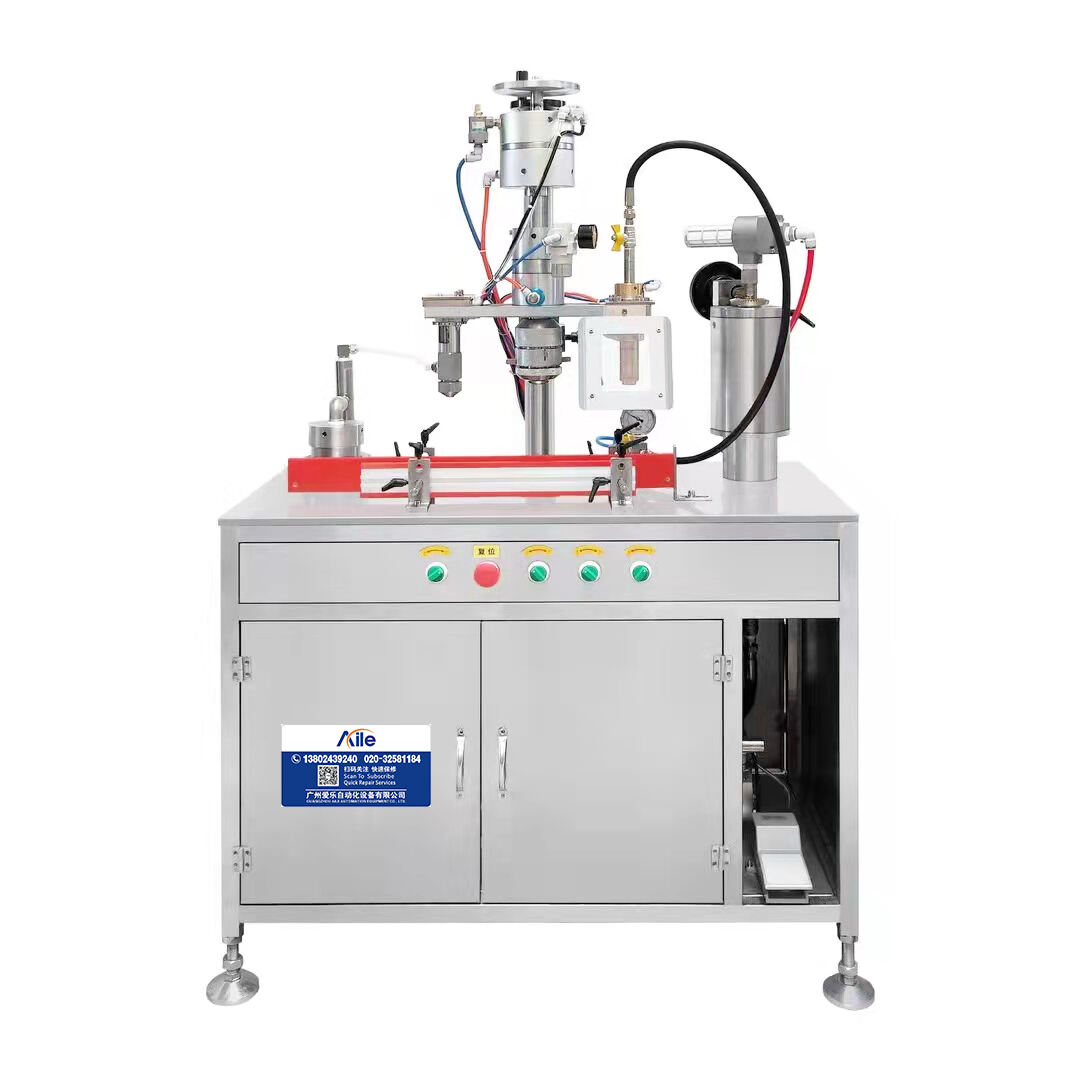
Unmatched Throughput and Continuous Efficiency
How Rotary Motion Enables 300–600 CPM in High-Volume Aerosol Filling
Rotary aerosol filling machines can hit speeds of around 300 to 600 cans per minute because they move containers in a continuous circle rather than stopping and starting. When the cans spin through these specially designed stations, different parts of the machine work at the same time on important tasks like putting in the propellant, placing valves, and filling with product. This approach gets rid of those annoying bottlenecks that happen with traditional systems which process things one after another, typically only managing between 80 and 150 cans per minute. The way these rotary machines are built actually saves energy since there's less need for constant speeding up and slowing down. Plus, the spinning motion helps keep everything aligned properly so seals get applied quickly and reliably every single time. Companies making millions of products each year find this makes a huge difference. They can produce about 40 to 50 percent more items every day without needing extra factory space, which is pretty impressive when looking at production costs.
Continuous Rotation vs. Stop-Start Indexing: Minimizing Downtime and Maximizing Uptime
Unlike linear machines that halt fully at each station, rotary systems maintain perpetual motion via servo-controlled mechanics—eliminating indexing delays that consume 15–20% of production time in traditional systems. Continuous rotation reduces mechanical stress on components by up to 70%, significantly lowering maintenance frequency and unplanned downtime. Key operational advantages include:
- Zero reset cycles: No position recalibration required between operations
- Inertia optimization: Constant momentum prevents energy spikes during restart
- Predictive maintenance: Steady load patterns support accurate failure forecasting
By avoiding abrupt stops—which cause product spillage, misalignment, and component wear—rotary aerosol fillers sustain >92% Overall Equipment Effectiveness (OEE), compared to 75–80% for linear alternatives.
Scalable Capacity for Growing Production Demands
Modular Station Expansion: Scaling from 24 to 40+ Stations Without Line Redesign
The modular design of rotary aerosol filling machines makes scaling production much easier for manufacturers. Companies can simply add more stations as needed, starting from around 24 and going well beyond 40, all while keeping their current production lines running. No need to tear everything down and wait those frustrating 3 to 5 weeks that usually comes with major equipment overhauls. What really helps is how standardized these systems are across mechanical parts, electrical components, and control systems. New modules for filling, crimping, or sealing just slot right into existing conveyor belts and PLC setups. For big operations aiming at producing over 10 million units each year, this kind of flexible expansion saves companies between 30% to 40% on capital costs compared to buying entirely new lines. That means businesses can grow when they need to, without stopping production cold turkey.
Aligning Rotary Aerosol Filling Machine Configuration with Annual Volume and SKU Complexity
Getting the setup right really depends on two main things working together: how many products we expect to make each year and how complicated our inventory is going to be. For companies cranking out over 20 million units annually, setting up between 36 to 40 workstations along with dual lane processing tends to give them maximum productivity. Facilities that produce anywhere from 5 to 15 million items per year generally get good returns on investment with around 24 to 30 stations. Dealing with all sorts of different product variations like various can sizes, different kinds of propellants, or multiple actuator setups requires flexible workstations where operators can switch tools quickly without downtime. The machines that automatically remember production settings shave about half off the time needed when switching between products, which makes a huge difference for plants dealing with 15 or more distinct product types. There are several important technical aspects worth considering here:
- Valve crimping precision across variable can diameters
- Dynamic fill-volume adjustment for formulation changes
- CIP (Clean-in-Place) compatibility for sensitive or regulated formulations
Properly matched rotary systems maintain OEE above 85% even amid 30% annual volume growth.
Superior Integration in End-to-End Packaging Lines
Rotary aerosol filling machines really shine when it comes to putting together all aspects of packaging. They bring together capping, valve crimping, and coding processes onto one smooth running platform that keeps everything moving without stopping. Getting rid of those manual transfers between different machines cuts down on mistakes during product handling by about 40 percent while also making production lines run faster. When operations are fully integrated like this, manufacturers typically see their Overall Equipment Effectiveness jump somewhere between 15% and 30%. The reason? Fewer tiny stoppages happen throughout the process and materials keep flowing consistently from start to finish.
Synchronized Inline Operations: Capping, Valve Crimping, and Coding Boost Overall Equipment Effectiveness (OEE)
Rotary platforms can handle filling, sealing, and labeling all at once without those annoying indexing pauses that slow things down. The system uses real time sensors to control when actuators move, which means we get about 0.2 mm accuracy for valve crimps and pretty sharp laser codes on the products. This kind of coordination makes a big difference compared to linear systems where each station works separately. Those separate stations tend to cause delays that build up over time and create bottlenecks in production. Most factories see around 12 to 18 percent less output from these issues. But when everything is properly integrated into a rotary line, manufacturers typically maintain over 98 percent overall equipment effectiveness even during large scale aerosol manufacturing runs.
Rotary vs. Linear Aerosol Filling Machines: Strategic Fit for Scale
The choice between rotary and linear aerosol filling machines really comes down to what the factory needs in terms of volume, how fast they want things moving, and the physical space available. Rotary systems are the go-to option when companies need to fill hundreds of containers per minute (around 300-600 CPM). These machines keep going nonstop, which works great for businesses that stick to standard container sizes and want steady production rates day after day. On the flip side, linear systems work better for smaller operations or places where product variety keeps changing. They handle lower volumes, maybe under 100 containers per minute, and make sense when different container types come through frequently. Sure, rotary machines take up more room and cost more initially, but they save money in the long run because each unit produced costs less as volume increases. Linear machines have their advantages too though - they fit into tighter spaces and can be rearranged easily when product specs change, even if that means slower overall speeds. When looking at big installations, rotary systems tend to align best with business goals since they integrate smoothly with other equipment like cappers, crimpers, and coders right after filling happens.
FAQ
What is a rotary aerosol filling machine?
It's a machine designed for continuous production that fills aerosol containers through a revolving process, achieving high-speed filling rates between 300 to 600 cans per minute.
Why are rotary machines preferred in high-volume production?
They enable continuous motion, reducing downtime and mechanical stress, which increases efficiency and lowers maintenance requirements, making them ideal for large-scale operations.
How does a rotary system minimize downtime?
By maintaining constant motion and using servo-controlled mechanics, rotary systems eliminate the pauses associated with stop-start indexing, leading to increased Overall Equipment Effectiveness (OEE).
Can rotary aerosol filling machines be expanded?
Yes, these machines can be easily expanded due to their modular design, allowing manufacturers to add more stations without a complete line redesign.
What is Overall Equipment Effectiveness (OEE)?
It's a measure of how well a manufacturing operation is utilized compared to its full potential during planned production times.