
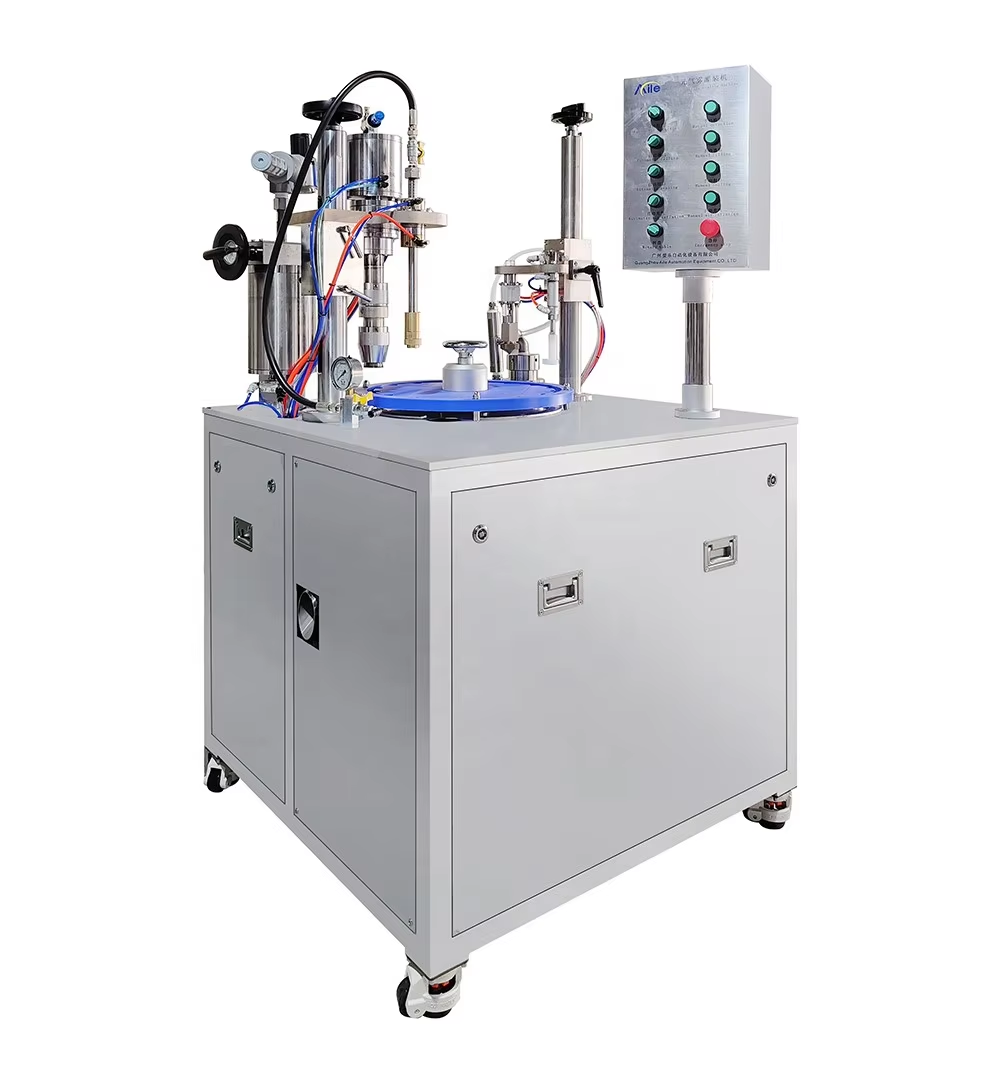
Precision Engineering in Semi-Automatic Aerosol Filling Machines
Volumetric vs. Gravimetric Metering: Accuracy Trade-Offs for Different Formulations
Aerosol filling machines work with two main ways to measure ingredients accurately - volumetric and gravimetric approaches. The volumetric method works by dispensing set amounts through calibrated pistons or chambers. These are great for things like alcohol based sanitizers since they handle thin liquids that don't change much in density. On the other hand, gravimetric systems actually weigh what comes out as it happens. This matters a lot when dealing with stuff like spray sunscreen formulas where the ingredients might settle differently over time. Volumetric systems can process around 15 to 20 percent more material per hour for straightforward liquids. But gravimetric gets really precise measurements within plus or minus 0.3 percent even when formulas vary. When choosing between these options, it's not really about which one is better overall. Simple fluids respond well to the faster volumetric approach while complicated mixtures need the gravimetric system's weighing capability to prevent problems like running out of product too quickly or putting too much in that could damage the container.
Sub-0.5% Fill Consistency via Real-Time Calibration and Closed-Loop Feedback
Getting consistent results below 0.5% variation isn't just about having good equipment; it requires proper integration across the whole system. Today's advanced machinery comes equipped with built-in pressure sensors and flow meters that constantly send real time information to those PLC boxes we all know and love. If things start drifting beyond that 0.2% threshold, the machine will automatically tweak either the nozzle timing or adjust how far the piston moves, usually within half a second or so. There's also this clever feedback loop that keeps checking both the amount of propellant and actual product weight, which helps account for when materials expand due to temperature changes during butane or propane filling operations. All these components working together bring down fill inconsistencies to around 0.5% or better, meaning factories can expect roughly 18 to 22 percent less wasted product compared to older systems without such controls. Plus, this same setup spots problems with worn nozzles or tired seals long before they affect accuracy, sending out maintenance warnings instead of waiting for breakdowns to happen.
Waste Reduction Strategies Built into Semi-Automatic Aerosol Filling Machines
Propellant-Safe Pressure Control and Anti-Overfill Safeguards
Getting better propellant efficiency really comes down to smart pressure control first and foremost. The sensors keep things running smoothly during every fill cycle, stopping those pesky leaks that slowly eat away at production yields and mess with the stability of the product formulation. When it comes to overfilling, there's actually a pretty clever system in place too. These safety mechanisms kick in right around the target volume mark, give or take half a percent either way, so we don't end up with cans that are too pressurized or ones that just aren't filled enough. This two-pronged approach cuts down on wasted materials by about 18% when compared to old school manual filling methods. Plus, containers stay intact for longer periods and fewer batches get rejected because of problems with seals failing or containers getting deformed somehow during processing.
Material Recovery Systems and Optimized Purge Cycles
Cutting down on waste isn't just about what goes into containers either. Modern recovery systems actually grab leftover materials when switching production lines, recovering nearly all - around 97% - of what would normally get thrown away. These systems work pretty smart too. The purge process gets fine tuned through advanced computing techniques that learn from past operations, which cuts down on wasted material when moving from one batch to another. This approach slashes the amount of cleaning solvents needed by about a third. Plus, these closed loop designs keep everything clean and sanitary throughout the whole process. And let's not forget the bottom line impact. Companies typically save around forty two thousand dollars each year on waste disposal costs for every production line they implement this system on.
Operator Integration: How Human Oversight Enhances Precision and Minimizes Waste
Semi automatic aerosol filling machines are designed to boost human skills instead of taking them over completely. People working these machines pick up on small signs that machines might miss until problems get worse. They notice things like changes in how thick the product flows, strange noises coming from the gas lines, or when something looks off visually. These quick fixes keep the fill levels within about half a percent accuracy and fix issues such as partially clogged nozzles much faster than waiting for machines to catch them. Plants where staff know their stuff tend to waste 12 to 18 percent less material compared to places run entirely by automation. Why? Because humans can spot and solve problems right away. The combination of people and machines turns experience into prevention. Workers adjust settings based on what they hear and see during inspections, cutting down on machine downtime while keeping operations running smoothly without losing flexibility.
Traceability and Data Intelligence: ISO-Aligned Analytics for Continuous Waste Reduction
Fill Data Logging, Anomaly Detection, and Predictive Maintenance in Aerosol Filling Machines
Each time the system fills up, it creates records that follow ISO standards for quality and food safety. These records include details about volume levels, pressure readings, temperatures, timing information, and when valves open and close. All this gets saved securely so auditors can check them anytime. The system spots problems as they happen too. If there's a sudden jump in pressure or gradual filling issues, alerts pop up right away letting operators fix things before anything goes to waste. For maintenance, special algorithms look at how parts vibrate, track how often cycles run, and watch for signs of wear and tear. This helps predict when equipment might fail around 92 percent of the time, cutting down unexpected breakdowns by roughly 30 percent and saving materials during those unplanned stops. Turning all these numbers into actionable advice lets factories connect what they measure with actual improvements. Over time, this approach leads to real reductions in waste that anyone can verify, helping companies make steady progress toward their green objectives.
Frequently Asked Questions
What is the difference between volumetric and gravimetric metering in aerosol machines?
Volumetric metering dispenses set amounts of liquids, ideal for simple fluids. Gravimetric metering weighs each ingredient, allowing for precision in complex formulations.
How do the advanced systems maintain less than 0.5% fill consistency?
They integrate real-time calibration and closed-loop feedback, using pressure sensors and flow meters to make rapid adjustments and maintain consistency.
How do material recovery systems reduce waste?
The systems capture reusable materials during production line changes, reusing about 97% of what would otherwise be discarded, and optimize purge cycles to minimize solvent use.
Why is human oversight still necessary in semi-automatic machines?
Humans can detect and correct machine issues quickly, offering flexible responses to various signals that machines might miss, thus enhancing operational efficiency.
What role does data intelligence play in waste reduction?
ISO-aligned analytics helps in continuous monitoring and recording, anomaly detection, and predictive maintenance, aiming for improved efficiency and reduced material waste.
Table of Contents
- Precision Engineering in Semi-Automatic Aerosol Filling Machines
- Waste Reduction Strategies Built into Semi-Automatic Aerosol Filling Machines
- Operator Integration: How Human Oversight Enhances Precision and Minimizes Waste
- Traceability and Data Intelligence: ISO-Aligned Analytics for Continuous Waste Reduction
-
Frequently Asked Questions
- What is the difference between volumetric and gravimetric metering in aerosol machines?
- How do the advanced systems maintain less than 0.5% fill consistency?
- How do material recovery systems reduce waste?
- Why is human oversight still necessary in semi-automatic machines?
- What role does data intelligence play in waste reduction?