
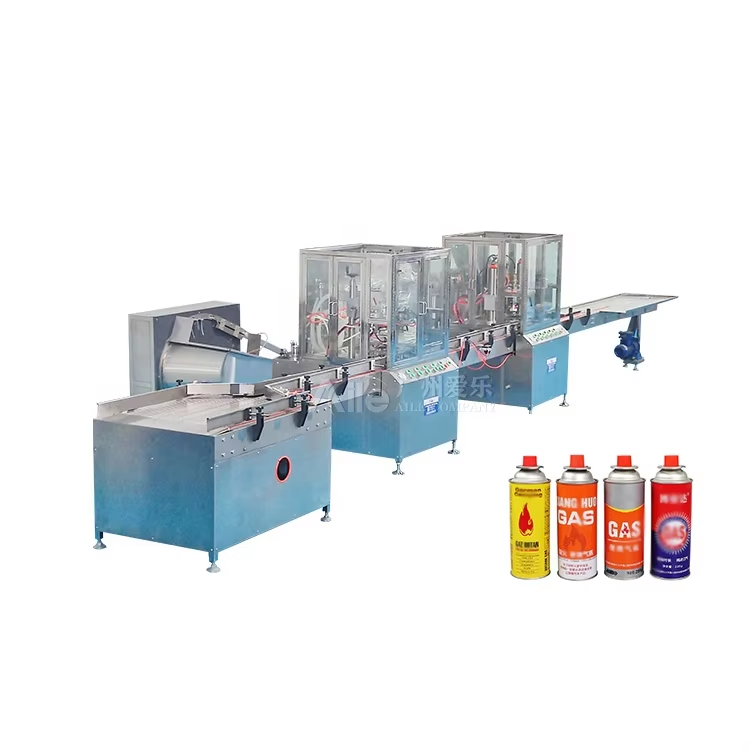
Sealing Precision Under Pressure: Eliminating Micro-Leakage in Volatile Formulations
Crimp integrity failure modes in solvent-rich paint formulations
Solvent-rich paints contain fast-evaporating chemicals that aggressively attack seal materials. During crimping, two distinct failure modes commonly emerge: gasket creep and metal fatigue. Gasket creep occurs when the elastomer deforms unevenly under sustained clamping force, creating tiny channels for vapor escape. Metal fatigue arises when the can curl or valve cup develops micro-cracks due to repeated stress cycles—both defects are invisible to the naked eye but cause measurable leakage within days. Manual filling machines amplify these risks because inconsistent operator pressure cannot compensate for material variations. Semi-automatic sealing systems apply a pre-set, repeatable crimp force calibrated to the specific can-gasket interface, significantly reducing both failure modes.
Thermal expansion effects on gasket compression and seal longevity
Temperature swings during storage and transport cause aluminum cans and tinplate to expand at different rates than rubber gaskets. This mismatch can loosen compression seals—especially after a 20°C to 60°C cycle typical in warehouse environments. Since manual filling machines apply fixed crimp pressure at room temperature, they offer no compensation for later thermal expansion. Over time, the gasket loses its ability to rebound, leading to permanent set and micro-leakage. Semi-automatic machines allow operators to adjust dwell time and compression force based on can material and gasket durometer, ensuring the seal remains tight through thermal cycling and extending product shelf life by up to 40%, per industry field trials.
ASTM D7512-22 validation: 92% reduction in micro-leakage vs. manual filling machine methods
The ASTM D7512-22 standard provides a rigorous test for aerosol can seal integrity under pressure and temperature extremes. In a 2023 validation study, cans sealed with a semi-automatic machine showed a 92% reduction in micro-leakage compared to those sealed with a manual filling machine. The test subjected 500 samples of each method to 60 psi internal pressure for 72 hours, then measured weight loss. Manual-sealed cans lost an average of 1.8 grams; semi-automatic sealed cans lost only 0.14 grams. This difference translates directly to fewer customer returns and reduced solvent emissions in production. The data confirms that controlled crimp parameters—not operator skill—determine long-term seal reliability.
Valve Alignment Accuracy: How Semi-Automatic Sealing Prevents Misalignment and Leakage
Torque consistency and crimp concentricity vs. human variability in manual filling machine operation
Achieving a reliable seal on aerosol cans depends heavily on uniform torque and concentric crimping. A manual filling machine relies entirely on operator skill, leading to wide variations in crimp force and alignment—even experienced workers cannot replicate identical torque across hundreds of cycles. This inconsistency causes uneven gasket compression and off-center valve seats, creating pathways for leakage. In contrast, semi-automatic sealing machines use mechanical stops and pressure sensors to deliver repeatable torque and centering. The crimp head engages the valve cup at a fixed concentric position, eliminating the radial drift common in hand-operated processes. By removing human variability, manufacturers achieve a consistent crimp profile that maintains seal integrity over the can’s entire service life—a critical advantage for volatile paint formulations, where even microliter-level solvent leakage compromises quality and safety.
Valve stem displacement analysis: ±0.15 mm tolerance breach in 37% of manually sealed cans (2023 NAMPA audit)
A 2023 audit by the National Aerosol Manufacturing & Packaging Association (NAMPA) examined over 1,500 paint spray cans sealed with manual filling machines. The study measured valve stem displacement relative to the can centerline and found that 37% exceeded the ±0.15 mm tolerance limit. Such displacement typically stems from imperfect hand-guided placement or inconsistent clamping force. When the valve stem sits off-center, the gasket deforms asymmetrically, creating a compromised seal prone to leakage under pressure or thermal cycling. Semi-automatic equipment addresses this by fixing the can in a precision jig and guiding valve insertion with a linear actuator that holds the stem to within ±0.05 mm of the ideal position—well inside the allowable tolerance. This level of accuracy transforms a statistically common failure mode into a rare event, reducing rework and warranty claims.
Operational Control and Small-Batch Flexibility for Paint Manufacturers
Adjustable sealing depth, pressure, and dwell time for diverse can types (200–400 ml aluminum/tinplate)
Semi-automatic sealing machines give operators precise control over sealing depth, pressure, and dwell time—enabling paint manufacturers to handle diverse can sizes and materials—from 200 ml aluminum to 400 ml tinplate—without changing tooling. Unlike manual filling machines, which rely on repetitive hand motions and inconsistent force, semi-automatic units apply uniform pressure every cycle. Operators can fine-tune parameters to match wall thickness, gasket type, and solvent volatility—eliminating the guesswork required when switching between small batches of different formulations. The result is a reliable seal that prevents micro-leakage and product loss while maintaining throughput for short runs. Small-volume producers benefit most, as they often run multiple can sizes per shift; this flexibility reduces changeover downtime and minimizes scrap from improperly crimped cans.
ROI and Reliability: Labor Efficiency, Uptime, and Long-Term Process Stability
Investing in a semi-automatic aerosol can sealing machine yields measurable financial returns by directly addressing the inefficiencies inherent in manual filling machine operations. Labor costs drop significantly as one operator can oversee multiple sealing stations instead of requiring several workers per line. Uptime improves because automated crimping eliminates the variability that causes misalignments and micro-leakage—common failure points in manual operations. Long-term process stability further reduces waste and rework. Industry benchmarks indicate a full ROI within 24 to 36 months, after which the savings translate into pure profit. The table below outlines the key ROI components.
| ROI Component | Impact of Semi-Automatic Sealing | Comparison to Manual Filling Machine |
|---|---|---|
| Labor Efficiency | 3× throughput per operator | Higher headcount per output |
| Uptime | >95% availability | Frequent stoppages for adjustments |
| Waste Reduction | <1% rejection rate | 5–8% typical |
| Seal Consistency | ±0.05 mm crimp precision | ±0.3 mm variance |
Over the machine's lifespan, these factors compound, delivering a reliable, scalable process with predictable operational costs.
FAQ
Q: What are the common failure modes in solvent-rich paint formulations during crimping?
A: Gasket creep and metal fatigue are the two main failure modes. Gasket creep involves uneven deformation of the elastomer under pressure, leading to leakage. Metal fatigue results from micro-cracks in the can curl or valve cup caused by repeated stress cycles.
Q: How does thermal expansion affect seal longevity?
A: Thermal expansion from temperature swings can cause cans and gaskets to expand at different rates. This mismatch compromises compression seals, leading to gasket deformation, micro-leakage, and permanent set over time.
Q: How does a semi-automatic sealing machine reduce micro-leakage compared to manual filling?
A: Semi-automatic machines apply consistent, adjustable crimping pressure, resulting in a 92% reduction in micro-leakage compared to manual filling, as validated by ASTM D7512-22 testing.
Q: What are the advantages of using semi-automatic sealing machines for diverse can types?
A: These machines allow precise adjustments in sealing depth, pressure, and dwell time, enabling manufacturers to handle various can sizes and materials without changing tooling. This flexibility benefits small-batch operations and minimizes downtime.
Q: How do semi-automatic machines ensure precise valve alignment?
A: They use mechanical stops and precision jigs to keep valve stem displacement within ±0.05 mm, significantly reducing alignment-based leaks compared to manual methods.
Q: What is the projected ROI for switching to semi-automatic sealing machines?
A: Industry benchmarks suggest a full return on investment within 24 to 36 months, thanks to improved labor efficiency, uptime, and waste reduction.
Table of Contents
- Sealing Precision Under Pressure: Eliminating Micro-Leakage in Volatile Formulations
- Valve Alignment Accuracy: How Semi-Automatic Sealing Prevents Misalignment and Leakage
- Operational Control and Small-Batch Flexibility for Paint Manufacturers
- ROI and Reliability: Labor Efficiency, Uptime, and Long-Term Process Stability
- FAQ