
Meeting the Demand for High-Volume Personal Care Filling
The personal care industry operates on tight margins and high throughput expectations. Shampoo and shower gel manufacturers face constant pressure to fill thousands of bottles per shift while maintaining precise volume control, preventing product contamination, and minimizing downtime between production batches. A cosmetic filling machine designed specifically for viscous personal care liquids addresses these challenges through features that general-purpose liquid fillers cannot match. These specialized machines incorporate positive displacement piston fillers or servo-driven pump systems calibrated for the medium to high viscosity range typical of shampoos at 2,000 to 10,000 centipoise and shower gels at 3,000 to 15,000 centipoise. The ability to handle these viscosity levels without dripping, stringing, or foaming during the filling cycle directly determines production line efficiency and finished product quality.
Technical Requirements for Shampoo and Shower Gel Filling Accuracy
Achieving consistent fill volumes in high-speed shampoo and shower gel production requires filling equipment with specific technical capabilities. The filling system must maintain volumetric accuracy within plus or minus 0.5 to 1 percent across thousands of consecutive cycles, even as product temperature and viscosity shift during extended production runs. A cosmetic filling machine designed for these applications typically uses servo-driven piston fillers with closed-loop feedback control, allowing the system to automatically compensate for changes in product flow characteristics. The filling nozzles should feature anti-drip shutoff valves and bottom-up filling capability, where the nozzle descends into the bottle and rises as the product fills, minimizing air entrapment and foam generation. For manufacturers running multiple SKUs with different bottle sizes ranging from 50ml travel sizes to 1,000ml family bottles, the machine should support quick-change tooling that allows format changes in under 15 minutes without requiring specialized technical personnel.
Production Line Configuration for Shampoo and Shower Gel Manufacturing
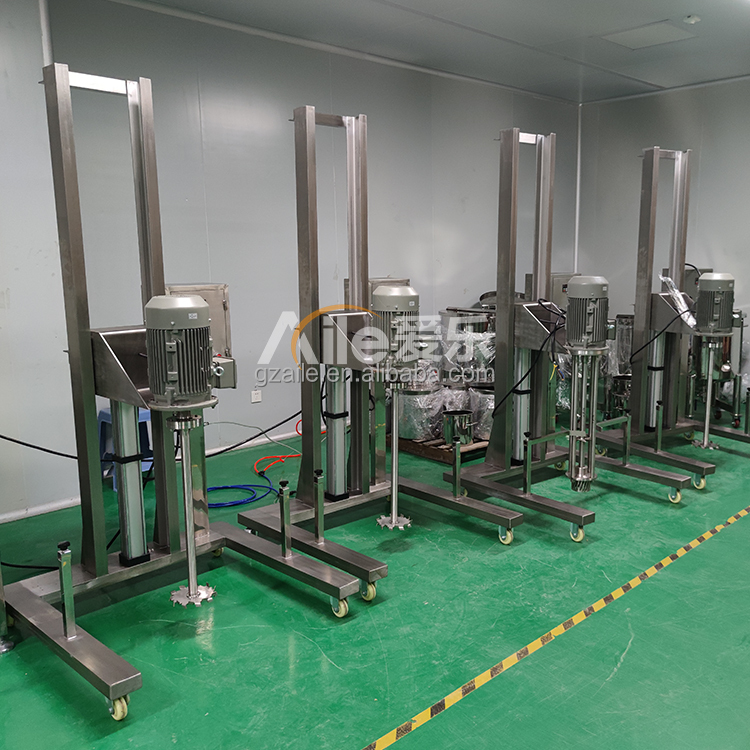
A complete shampoo and shower gel filling line extends beyond the filling machine itself to include upstream mixing and downstream capping and labeling equipment. The process begins with raw material preparation in an emulsifying mixer or mixing tank, where surfactants, conditioning agents, fragrances, and preservatives are combined under controlled temperature and agitation conditions. The homogenized product is then transferred to a storage tank that feeds the cosmetic filling machine through sanitary stainless steel piping. After filling, bottles proceed to an automatic capping station where caps are applied and torqued to specification, followed by labeling, coding, and packaging stations. For high-volume operations producing 3,000 to 6,000 bottles per hour, synchronizing these stations through a central PLC control system prevents bottlenecks and ensures consistent throughput. The filling machine's placement as the core process step means its reliability and speed directly determine overall line output.
Practical Production Scenario in a Contract Manufacturing Setting
A contract manufacturer of private-label personal care products in the Middle East operated three separate manual filling stations for shampoo, shower gel, and body wash production. Each station required one operator to position bottles, activate fill cycles, and manually cap each container, producing approximately 1,200 bottles per eight-hour shift across all three lines. After investing in a cosmetic filling machine with six filling heads and an integrated automatic capping system, the manufacturer consolidated all three product lines onto a single production system. The result was an increase in daily output to over 15,000 bottles while reducing direct labor from three operators per shift to one operator supervising the automated line. More importantly, fill volume consistency improved from a range of plus or minus 3 percent under manual operation to plus or minus 0.5 percent under automated control, directly reducing product giveaway costs by an estimated 2 percent of material value annually.
Hygiene and Cleanability Standards for Cosmetic Filling Operations
Personal care products that contact human skin require filling equipment that meets strict hygiene standards to prevent microbial contamination. The cosmetic filling machine's product-contact surfaces should be constructed from 316L stainless steel with electropolished finishes achieving surface roughness values of Ra 0.8 micrometers or better, which minimizes bacterial adhesion and facilitates cleaning validation. Sanitary tri-clamp fittings throughout the product pathway allow quick disassembly for daily cleaning-in-place or manual cleaning protocols between product batches. For manufacturers producing both rinse-off products like shampoo and leave-on products like body lotion on the same line, validated cleaning procedures must demonstrate removal of all active ingredients to prevent cross-contamination. The filling environment itself should maintain positive air pressure with HEPA filtration in the filling zone, particularly for products that do not contain preservatives or those marketed with clean beauty or natural claims that require elevated microbiological control throughout the manufacturing process.
Selecting the Right Cosmetic Filling Machine Supplier
Evaluating potential suppliers of filling equipment for shampoo and shower gel production requires examining both the machine specifications and the manufacturer's support infrastructure. A supplier with ISO 9001-certified manufacturing processes provides documented quality assurance throughout equipment assembly, while CE certification indicates compliance with international safety standards. Guangzhou Aile Automation Equipment Co., Ltd., as a manufacturer with both ISO 9001 and CE certifications, supplies cosmetic filling machines and associated emulsifying mixers for personal care production lines, and has exported equipment to over 60 countries. When selecting a supplier, manufacturers should request detailed throughput test data using product formulations similar to their own, verify the availability of local technical support for installation and troubleshooting, and confirm spare parts inventory commitments for critical components such as filling pistons, seals, and servo drives. A site visit to observe the equipment in operation at an existing customer facility can provide valuable validation of real-world performance.
Questions and Answers
What type of filling system works best for thick shampoo and shower gel products?
Piston fillers with servo-driven control are the preferred choice for medium to high viscosity personal care products. These systems use a rotating valve and reciprocating piston assembly that draws product from the supply tank and dispenses it into bottles with consistent volumetric accuracy. For very thick formulations above 15,000 centipoise, positive displacement pump systems with product heating jackets on the filling hopper may be necessary to reduce viscosity during the filling cycle.
How do I prevent foam formation during high-speed shampoo filling?
Several filling machine design features help control foam generation. Bottom-up filling, where the filling nozzle descends to near the bottle bottom and rises as the product fills, prevents product from splashing and entrapping air. Anti-drip shutoff nozzles prevent product strings that can create foam on the bottle neck. Additionally, controlling the product temperature during filling and using filling nozzles with laminar flow design rather than turbulent discharge can significantly reduce foam formation.
What cleaning validation is required when switching between different shampoo formulations on the same filling line?
A validated cleaning procedure should include flushing the entire product pathway with heated purified water or a suitable cleaning solution, followed by a rinse water conductivity or total organic carbon test to verify that all product residues have been removed. The cleaning validation protocol should define acceptance criteria for residue levels and microbiological limits, with documented evidence that the cleaning procedure consistently achieves these criteria. For manufacturers operating under GMP guidelines for cosmetics, these validation records should be maintained as part of the quality system documentation.
Table of Contents
- Meeting the Demand for High-Volume Personal Care Filling
- Technical Requirements for Shampoo and Shower Gel Filling Accuracy
- Production Line Configuration for Shampoo and Shower Gel Manufacturing
- Practical Production Scenario in a Contract Manufacturing Setting
- Hygiene and Cleanability Standards for Cosmetic Filling Operations
- Selecting the Right Cosmetic Filling Machine Supplier
- Questions and Answers