
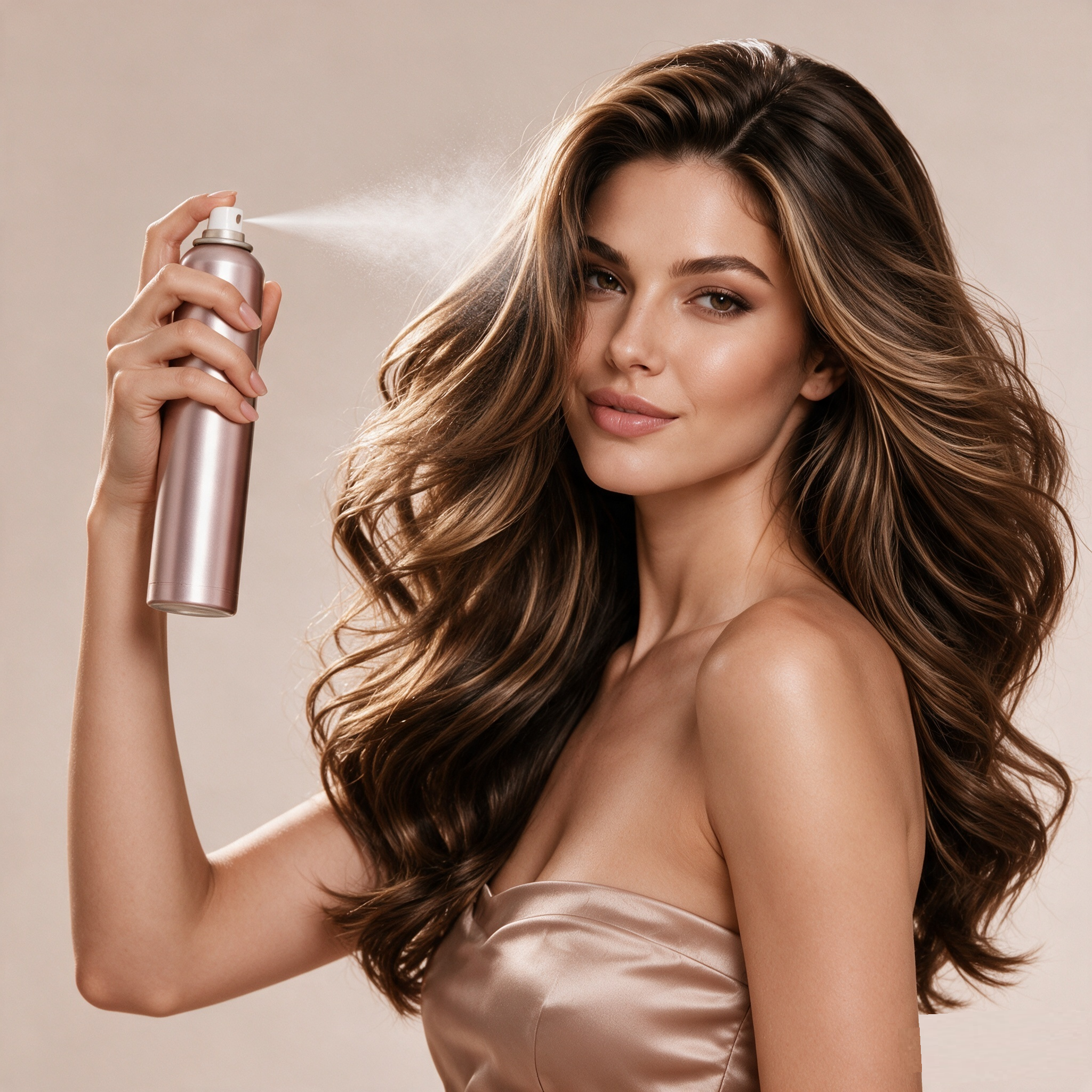
Hairspray is one of the most common personal-care aerosol products, but producing it consistently requires more than simply filling liquid into a can.
A typical hairspray formulation may contain a high percentage of alcohol together with styling resins or polymers, while the aerosol system may use flammable propellants such as LPG, DME or isobutane. This means the filling equipment must handle not only accurate liquid dosing and valve crimping, but also propellant filling, explosion-proof requirements, material compatibility and cleaning between batches.
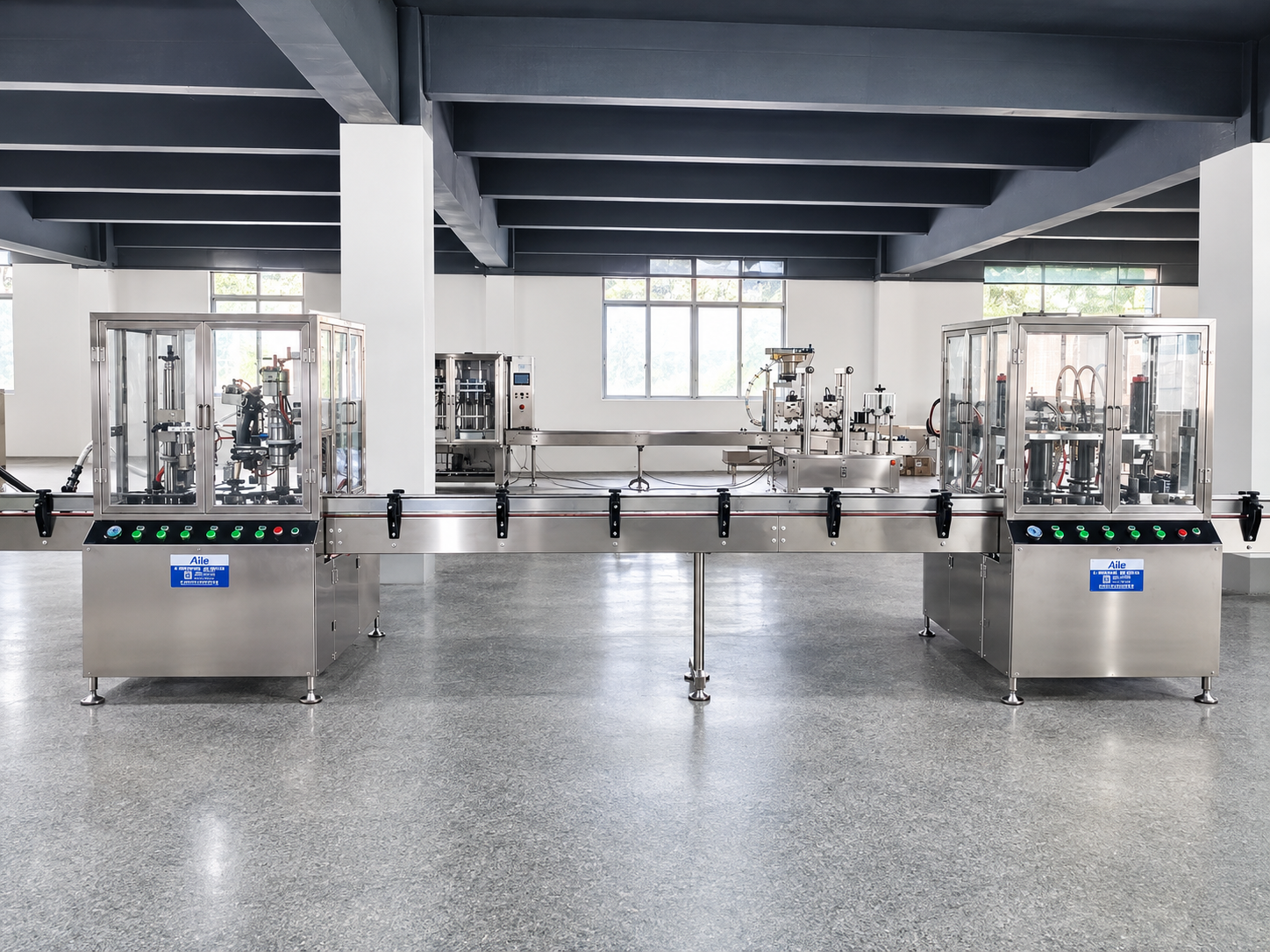
AILE provides both semi-automatic hairspray aerosol filling machines and fully automatic hairspray production lines, allowing manufacturers to choose a configuration according to production capacity, number of SKUs, packaging format, factory layout and automation requirements.
1. Hairspray Aerosol Production Overview
A typical hairspray aerosol production process includes several key stages:
- Product preparation
- Liquid filling
- Valve placement
- Valve crimping
- Propellant filling
- Leakage and weight inspection
- Actuator and cap assembly
- Coding, labeling and final packaging
The exact configuration depends on the hairspray formula, can and valve specifications, propellant type, required output and factory conditions.
For manufacturers producing smaller batches or multiple formulations, semi-automatic equipment provides greater flexibility.
For stable, continuous and higher-volume production, a fully automatic hairspray filling line can integrate multiple operations and reduce manual handling between stations.
2. How Hairspray Aerosols Are Filled
Liquid Filling
The prepared hairspray formulation is filled into the aerosol can according to the required filling volume.
Because hairspray often contains alcohol, resins and styling polymers, the liquid filling system should provide stable dosing while allowing convenient cleaning between production batches.
Valve Placement
After liquid filling, the aerosol valve is placed onto the can.
Automatic production lines can incorporate automatic valve feeding and placement, while semi-automatic systems may use manual or assisted valve placement.
Valve Crimping
The valve is crimped securely onto the aerosol can.
Consistent crimp dimensions are important because poor valve sealing can cause leakage or pressure loss during later production and storage.
Propellant Filling
The propellant is then introduced into the aerosol can.
Hairspray commonly uses liquefied aerosol propellants such as LPG, DME or isobutane, depending on the formulation and market requirements.
Because these propellants are flammable, the propellant filling section requires appropriate pneumatic and explosion-proof design.
Inspection and Downstream Handling
Depending on the production line configuration, finished cans can continue through:
- Automatic weighing
- Water-bath leakage testing
- Actuator pressing
- Cap pressing
- Coding
- Labeling
- Packing
These operations can be added according to the customer's production and quality-control requirements.
3. Semi-Automatic Hairspray Filling Machine
For manufacturers starting a hairspray project or producing smaller and more varied batches, a semi-automatic aerosol filling system is often a practical choice.
AILE can provide individual filling stations or integrated semi-automatic systems combining the main aerosol production steps.
A typical integrated system includes:
- Liquid filling
- Valve crimping
- Propellant filling
AILE's 3-in-1 and 4-in-1 semi-automatic aerosol filling machines are designed for manufacturers who want a compact production setup while retaining flexibility for different products and can formats.
Typical output for a semi-automatic hairspray filling setup is around 10–20 cans per minute, depending on the product, packaging components, operator workflow and machine configuration.
When Is a Semi-Automatic System Suitable?
Semi-automatic equipment is suitable for:
- New hairspray production projects
- Small and medium production batches
- Multiple SKUs or formulations
- Frequent product changeovers
- Trial production
- Contract manufacturers handling different customer products
- Factories with limited production space
The main advantage is flexibility.
Manufacturers can start with essential filling equipment and expand the production setup later as demand increases.
Explore AILE Semi-Automatic Aerosol Filling Machines →

4. Fully Automatic Hairspray Filling Line
For higher production volumes, AILE can configure a fully automatic hairspray aerosol filling line.
Depending on the project, the line can integrate:
- Automatic can feeding
- Liquid filling
- Automatic valve feeding and placement
- Valve crimping
- Propellant filling
- Automatic weighing
- Water-bath leakage testing
- Actuator pressing
- Cap pressing
- Coding
- Labeling
- End-of-line packaging
Typical production capacity can range from approximately 60 to 120+ cans per minute, depending on the filling line configuration and product requirements.
Linear automatic filling lines are commonly used for standard continuous production, while rotary or multi-head configurations can be used when significantly higher output is required.
A fully automatic production line reduces manual transfer between stations and allows filling, inspection and downstream handling to work as one integrated system.
For manufacturers with stable product specifications and continuous production requirements, this provides better efficiency and production consistency.
Explore AILE Aerosol Filling Lines →
5. Semi-Automatic vs. Fully Automatic Hairspray Filling Equipment
| Factor | Semi-Automatic 3-in-1 System | Fully Automatic Production Line |
|---|---|---|
| Typical Speed | 10–20 cans/min | 30–120+ cans/min |
| Production Style | Flexible / batch production | Continuous production |
| Labor Requirement | Typically 1–2 operators | Mainly supervisory / loading roles |
| Factory Footprint | Compact, approximately 1.5–2 m² for the main unit | Modular layout according to final line configuration |
| SKU Flexibility | Suitable for frequent product and packaging changes | Better for stable and repeated production |
| Changeover | Relatively simple and flexible | Depends on the level of automation and line design |
| Initial Investment | Lower | Higher |
| Best For | Startups, trial production, contract filling, multiple SKUs | Commercial-scale and high-volume manufacturing |
Neither configuration is automatically better.
A manufacturer producing multiple hairspray formulations in relatively small batches may benefit more from a semi-automatic system.
A manufacturer running the same or similar product continuously at higher volumes may achieve better efficiency with a fully automatic line.
6. Packaging, Formula & Propellant Considerations
The filling machine cannot be selected based only on the word "hairspray."
Several product and packaging factors directly affect the final equipment configuration.
Hairspray Formulation
Hairspray formulations commonly contain:
- Ethanol or other alcohol-based solvents
- Styling polymers or resins
- Fragrance
- Functional additives
Alcohol content and resin characteristics can affect filling-system materials, seal selection, cleaning frequency and nozzle design.
Resins and styling polymers can gradually build up inside filling nozzles, pipelines and product-contact parts if the equipment is not cleaned properly.
For this reason, easy cleaning and material compatibility are particularly important for hairspray production.
Aerosol Can
The manufacturer should confirm:
- Can diameter
- Can height
- Can material
- Filling volume
Machine tooling and handling systems need to match the actual aerosol can.
Valve and Actuator
Valve specifications affect:
- Crimping dimensions
- Valve placement
- Propellant filling
- Final spray performance
The actuator also needs to match the desired spray pattern.
Actual cans, valves and actuators can be provided for machine testing when customized tooling is required.
Propellant
Typical hairspray aerosol propellants include:
- LPG
- DME
- Isobutane
The selected propellant affects both the filling equipment and the explosion-proof requirements of the production area.
7. What Affects the Cost of a Hairspray Production Line?
The cost of a hairspray manufacturing setup depends mainly on the required production configuration rather than simply the product itself.
A basic semi-automatic system and a complete high-speed automatic line involve very different equipment scopes.
Automation Level
Equipment can range from:
- Individual semi-automatic filling stations
- Integrated 3-in-1 systems
- 4-in-1 systems
- Linear automatic production lines
- Multi-head or rotary high-speed filling lines
Higher automation generally increases the initial investment but reduces manual handling and increases production capacity.
Production Speed & Filling Heads
A single-head or semi-automatic filling system requires less equipment than a multi-head continuous filling line.
Higher-speed systems may require:
- Multiple filling heads
- Automatic valve handling
- Faster conveyors
- Rotary or indexing systems
- Additional inspection equipment
Explosion-Proof & Safety Configuration
Because hairspray may contain ethanol and flammable propellants such as LPG or DME, the required explosion-proof level affects:
- Electrical components
- Pneumatic systems
- Gas filling equipment
- Detection equipment
- Ventilation
- Gas-room configuration
Downstream Equipment
The total project investment may also include:
- Automatic weighing machine
- Water-bath leakage tester
- Actuator pressing machine
- Cap pressing machine
- Coding machine
- Labeling machine
- Packing equipment
AILE therefore recommends defining the required production scope before preparing the final quotation.
8. Safety, Explosion-Proof & Cleaning Considerations
Hairspray is a product where equipment safety and cleaning design are particularly important.
The combination of alcohol-based formulations, styling resins and flammable aerosol propellants creates requirements that are different from ordinary non-aerosol liquid filling.
Pneumatic Operation
AILE aerosol filling and crimping systems use pneumatic operation in critical production areas.
Pneumatic execution helps reduce electrical ignition sources around propellant filling operations and is widely used in aerosol machinery designed for flammable propellants.
Explosion-Proof Gas Filling Area
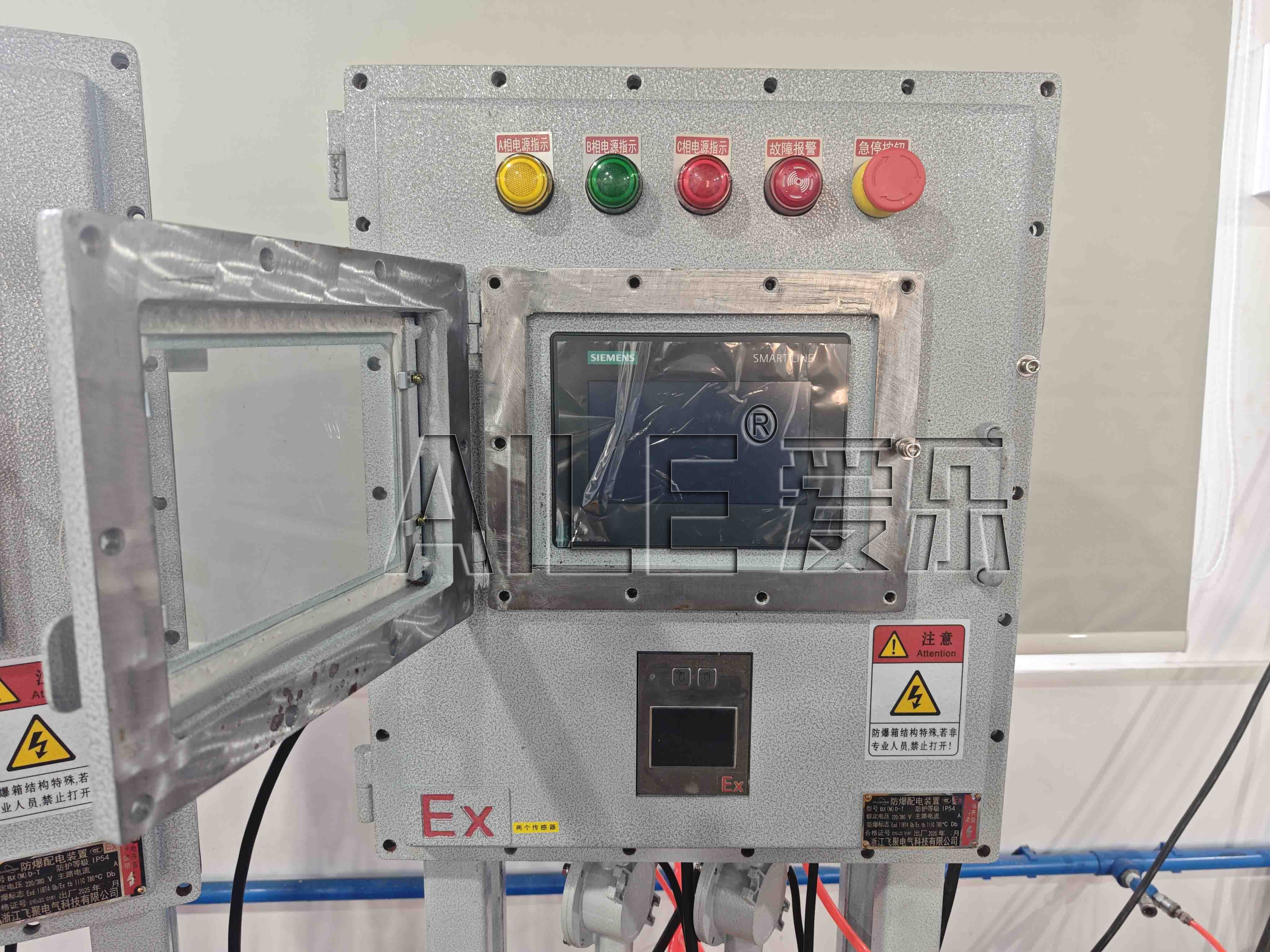
For hairspray products using LPG, DME or other flammable propellants, the propellant filling section can be installed in a dedicated explosion-proof gas-filling area.
Depending on the project configuration, the system can incorporate:
- Explosion-proof electrical components
- Gas-leak detection
- Automatic exhaust systems
- Ventilation
- Gas-room safety configuration
The final design should be matched to the customer's factory layout and local safety requirements.
Product-Contact Materials
For hairspray formulations containing alcohol and styling polymers, material compatibility is important.
AILE can configure product-contact components using SUS304 or SUS316L stainless steel, depending on the formulation and production requirements.
Compatible seal materials such as PTFE and Viton can also be used where solvent resistance is required.
Resin and Polymer Buildup
Hairspray styling resins can gradually accumulate inside:
- Filling nozzles
- Pipelines
- Valves
- Product-contact components
This may affect filling stability if cleaning is not performed correctly.
Equipment intended for hairspray production should therefore consider:
- Easy disassembly
- Cleaning access
- Anti-clogging design
- Suitable seals
- Appropriate product-contact materials
Changeover Cleaning
For contract manufacturers producing several hairspray formulations, changeover time is particularly important.
The filling system should allow remaining product to be discharged and product-contact components to be cleaned efficiently before switching to another formulation.
This reduces cross-contamination and helps maintain stable filling performance.
9. FAQ About Hairspray Aerosol Filling
What equipment is needed to manufacture hairspray aerosols?
Can hairspray be produced with a semi-automatic filling machine?
When should I choose a fully automatic hairspray filling line?
What propellants are commonly used for hairspray?
Why is explosion-proof equipment important for hairspray production?
Can the same hairspray filling machine handle different can sizes?
How often should a hairspray filling machine be cleaned?
What affects the cost of a hairspray filling line?
AILE Hairspray Aerosol Filling Solutions
AILE provides aerosol filling equipment ranging from compact semi-automatic systems to fully automatic and high-speed production lines.
For hairspray projects, equipment can be configured according to:
- Product formulation
- Filling volume
- Aerosol can size
- Valve and actuator
- Propellant
- Production capacity
- Level of automation
- Explosion-proof requirements
- Factory layout
- Downstream equipment
For a project recommendation and quotation, provide your product, filling volume, can and valve specifications, propellant type and required output.
For flexible production → Semi-Automatic Aerosol Filling Machines