Lubricant aerosol production typically requires liquid filling, aerosol valve placing and crimping, propellant filling, leak inspection and downstream packaging. AILE provides solutions ranging from compact 500–700 BPH semi-automatic equipment to 2,400–3,600 BPH automatic lubricant aerosol filling lines, with high-speed liquid filling configurations available for larger production requirements. Equipment can be configured for LPG, DME, N₂ or CO₂ according to the product, valve and production process.
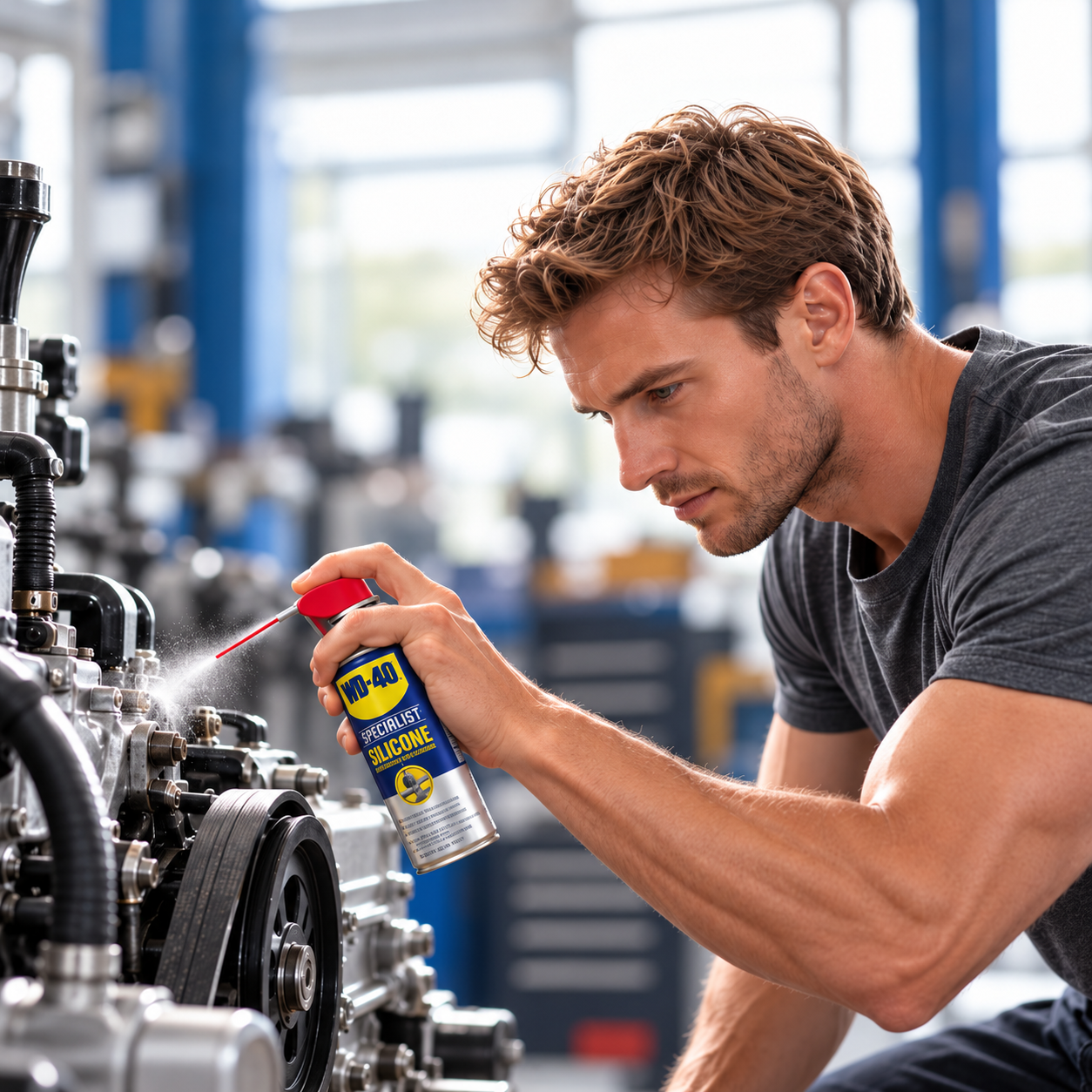
Lubricant aerosols are widely used for industrial maintenance, automotive servicing and equipment protection. Typical products include penetrating oil, anti-rust spray, silicone lubricant spray, multi-purpose lubricant spray, chain lubricant and other maintenance aerosols. Although these products all use aerosol packaging, their formulations can differ significantly in viscosity, solvent content, additives, filling volume and propellant requirements.
For this reason, selecting a lubricant aerosol filling machine should not be based on production speed alone. The filling system must also match the actual formulation, aerosol can, valve, propellant and required downstream quality-control process. AILE provides lubricant aerosol filling solutions ranging from compact semi-automatic machines to fully automatic production lines for different production scales.
1. How Are Lubricant Aerosols Filled?
A conventional lubricant aerosol production process normally includes the following stages:
- Aerosol can feeding
- Lubricant liquid filling
- Aerosol valve placing
- Valve crimping
- Propellant filling
- Leak and weight inspection
- Actuator and cap installation
- Coding and final packaging
The first four core filling operations determine the basic configuration of the production line. Additional equipment such as water bath leakage testers, checkweighers, actuator pressing machines, cap pressing machines, coding systems and extension straw applicators can then be added according to the finished product and factory requirements. For a commercial automatic production project, these stations can be integrated into one continuous conveyorized system.
Explore our complete Lubricant Aerosol Filling Line turnkey configurations.
2. Lubricant Formulation & Filling Considerations
Lubricant aerosols are not all handled in exactly the same way. The physical characteristics of the formulation influence how the liquid filling section should be configured.
Low-Viscosity Penetrating Oils
Penetrating oils and many rust-release sprays usually have relatively low viscosity and good flowability. These products require stable liquid metering and clean filling cutoff to reduce product residue or dripping around the filling nozzle. For these formulations, the filling system should be configured according to:
- Target liquid filling volume
- Solvent content
- Aerosol can size
- Required production speed
- Product-contact material requirements
- Seal compatibility
Higher-Viscosity or Additive-Rich Lubricants
Some lubricant aerosols contain heavier base oils, silicone components, anti-corrosion additives or other ingredients that increase viscosity. These formulations may require different liquid filling settings from low-viscosity penetrating oils. The final machine configuration should therefore be confirmed according to the customer's actual formulation or product sample.
Rather than assuming one universal filling setup, AILE evaluates the product characteristics before determining the appropriate liquid filling configuration. This becomes especially important when a factory plans to produce multiple lubricant aerosol SKUs on the same production line.
3. Semi-Automatic Lubricant Aerosol Filling Machine
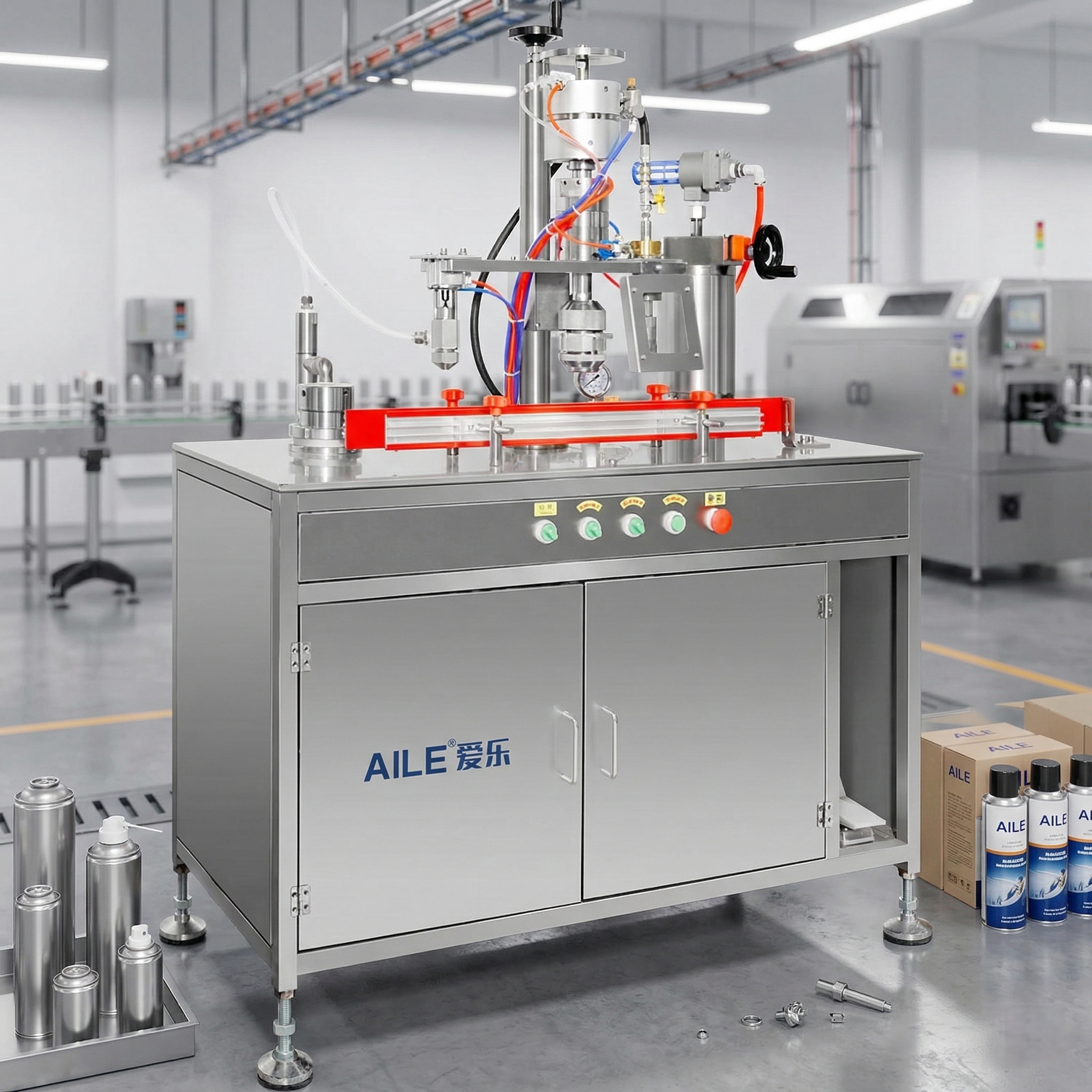
For small-volume production, new factories, product trials or frequent small-batch changeovers, a semi-automatic system can be a practical starting point. AILE's AL-QW-SHY3 Semi-Automatic 3-in-1 Aerosol Filling Machine combines liquid filling, aerosol valve crimping, and propellant filling into one compact workstation.
Confirmed Specifications
| Parameter | Specification |
|---|---|
| Production Capacity | 500–700 cans/hour |
| Maximum Liquid Filling Volume | 450 ml |
| Maximum Gas Filling Volume | 450 ml |
| Filling Accuracy | ≤ ±1 g |
| Can Diameter | 45–70 mm |
| Can Height | 80–315 mm |
| Aerosol Valve | 1 inch (25.4 mm) |
| Crimping Diameter | 27.1–27.3 mm |
| Crimping Depth | 5.0–5.2 mm |
| Working Pressure | 0.6–0.8 MPa |
| Air Consumption | 0.6 m³/min |
| Machine Size | 1200 × 500 × 1600 mm |
| Net Weight | 207 kg |
The semi-automatic configuration is especially useful when production flexibility is more important than maximum throughput. It can also be suitable for factories producing multiple lubricant products in smaller batches.
Check out our modular Semi-Automatic Aerosol Filling Machines for entry-level setups.
4. Automatic Lubricant Aerosol Filling Line
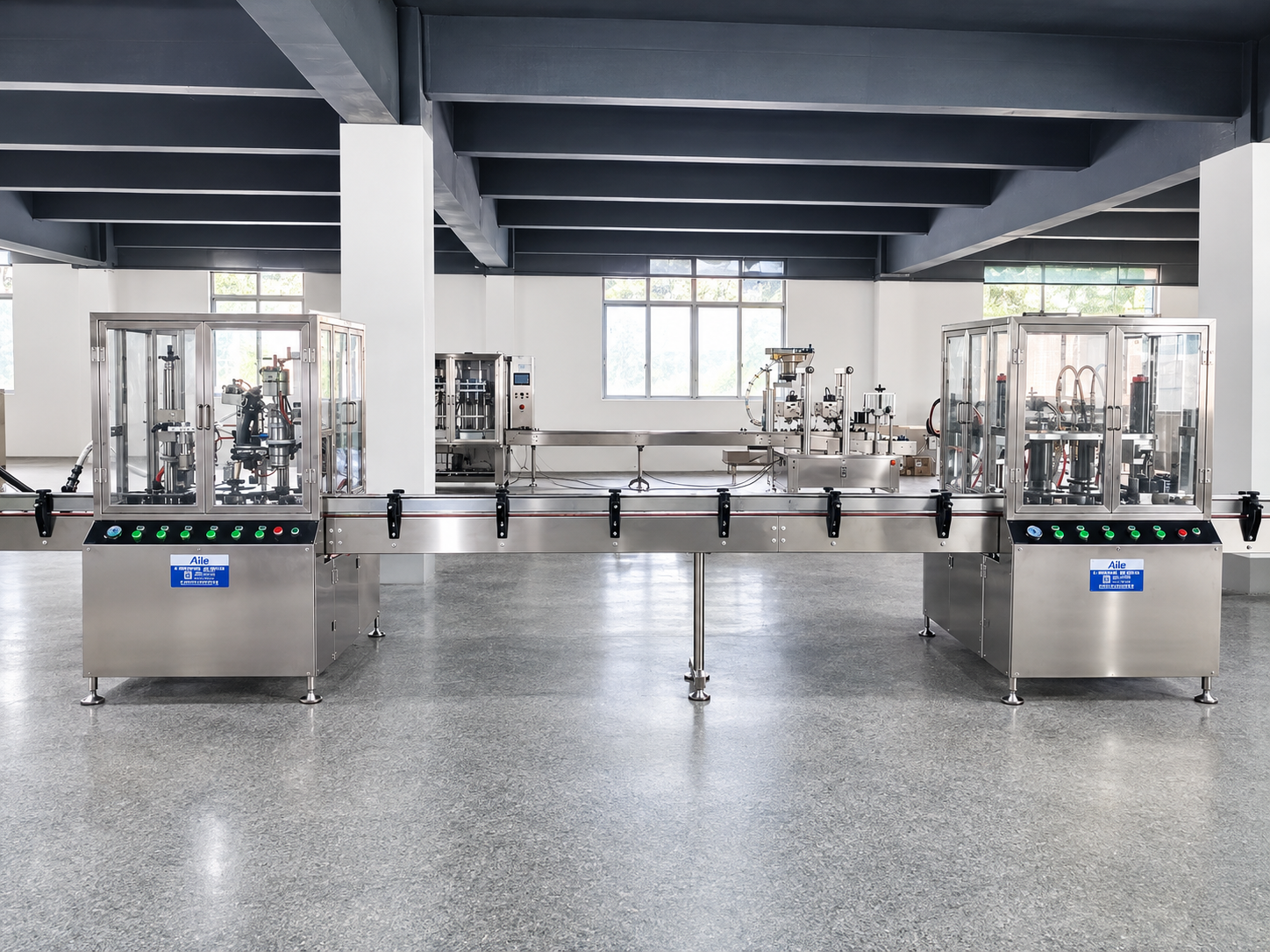
When production volume increases, a fully automatic line reduces manual product transfer between filling stages and creates a more continuous production process. AILE's standard Lubricant Aerosol Filling Line has a confirmed production capacity of approximately 2,400–3,600 cans/hour, depending on the filling volume and actual production configuration.
The standard line supports:
- Can diameter: 35–70 mm
- Can height: 80–300 mm
- Standard aerosol valve: 1 inch (25.4 mm)
- Propellants: LPG, DME, N₂, CO₂
- Power: 5.5 kW
- Voltage: 3 Phase 380V, 50/60Hz
- Stainless steel main construction
- AIRTAC / SMC pneumatic components
This type of automatic line is suitable for commercial production of penetrating oil aerosol, anti-rust spray, silicone lubricant spray, multi-purpose lubricant spray, and general automotive maintenance aerosols.
Learn more about our turnkey Lubricant Aerosol Filling Line options.
5. High-Speed Lubricant Aerosol Production
For factories with larger production requirements, liquid filling capacity becomes an important factor in the overall production-line design. AILE's high-speed liquid filling configuration can use 12 vertical filling cylinders, 300 ml each, with a confirmed liquid filling module speed of approximately 100–120 cans/minute.
Applicable filling volume: 100–300 ml ×4
Confirmed filling accuracy:
- ≤100 ml: ±0.5 ml
- ≤200 ml: ±1 ml
- ≤300 ml: ±1.5 ml
Applicable aerosol can range for this module:
- Diameter: 35–70 mm
- Height: 100–330 mm
Because the 100–120 CPM figure refers specifically to the high-speed liquid filling module, the complete production-line output should be determined according to the final configuration of all filling, valve, crimping, propellant and downstream stations. For large-volume projects, AILE evaluates the complete process rather than using one workstation speed as the guaranteed output of the entire line.
6. Semi-Automatic vs Automatic Lubricant Aerosol Equipment
The correct equipment level depends on more than the maximum machine speed. Review our quick comparison below:
| Selection Factor | Semi-Automatic 3-in-1 | Standard Automatic Line | High-Speed Configuration |
|---|---|---|---|
| Typical Capacity | 500–700 BPH | 2,400–3,600 BPH | Designed for higher-volume production |
| Automation | Semi-Automatic | Fully Automatic | High Automation |
| Product Transfer | Operator assisted | Continuous conveyor | Continuous high-output system |
| Space Requirement | Compact | Complete production line | Larger line configuration |
| SKU Flexibility | High | Suitable for commercial production | Best for larger production campaigns |
| Best For | Startups, trials, small batches | Established commercial factories | Large brands and contract fillers |
Choose Semi-Automatic Equipment When:
- Production volume is relatively low
- You manufacture many small batches
- Factory space is limited
- You are starting a new aerosol project
- Frequent product changeovers are required
Choose an Automatic Filling Line When:
- Production volume is stable
- Labor reduction is important
- You need continuous production
- Multiple downstream stations need to be integrated
- Production consistency and automation are priorities
Consider a High-Speed Configuration When:
- Large production campaigns are common
- Liquid filling could become a line bottleneck
- Higher throughput is required
- Production is organized around fewer, larger-volume SKUs
The final recommendation should be based on the customer's actual production plan rather than simply selecting the fastest available machine.
7. LPG, DME, N₂ or CO₂: Choosing the Propellant Filling Configuration
A lubricant aerosol filling line can be configured for different aerosol propellants. AILE equipment supports LPG, DME, Nitrogen (N₂), and Carbon dioxide (CO₂).
LPG & DME
LPG and DME are liquefied propellants commonly used in conventional aerosol production. The propellant filling system is configured according to required gas filling volume, aerosol valve, product formulation, propellant supply conditions, and production capacity.
N₂ & CO₂
Nitrogen and carbon dioxide are compressed gas propellants. Their gas supply and filling conditions differ from liquefied propellant systems, so the filling pressure and equipment configuration must be confirmed according to the actual product and valve. If one factory plans to manufacture several lubricant aerosol products using different propellants, this should be discussed during the technical evaluation stage.
Review our specialized Aerosol Propellant Filling Machine designs.
8. Valve Crimping & Leakage Control
Valve crimping is one of the most important quality-control stages in aerosol production. After liquid filling and valve placement, the aerosol valve must be securely crimped onto the can before propellant filling.
For the confirmed AILE semi-automatic 1-inch valve configuration:
- Crimping diameter: 27.1–27.3 mm
- Crimping depth: 5.0–5.2 mm
Incorrect crimping can contribute to propellant leakage, poor valve sealing, product leakage, and unstable pressure during storage. After filling and crimping, downstream leak inspection can be added to the production process. A water bath leakage tester is commonly integrated into automatic aerosol production lines when required by the project.
9. Optional Equipment for a Complete Lubricant Aerosol Production Line
The filling machine is only one part of a complete aerosol production system. Depending on automation requirements, the following equipment can be integrated:
- Water Bath Leakage Tester: Used for downstream aerosol leakage inspection after propellant filling.
- Online Checkweigher: Checks finished can weight and helps identify filling deviations.
- Automatic Actuator Pressing Machine: Installs the spray actuator onto the finished aerosol valve.
- Automatic Cap Pressing Machine: Applies protective overcaps after filling and testing.
- Extension Straw / Red Tube Equipment: Lubricant sprays and penetrating oils often use an extension straw for more precise spraying. An external straw application unit can therefore be integrated when required.
- Coding & Packing Equipment: Coding, conveying and final packing equipment can also be configured according to the customer's finished packaging process.
10. Safety & Explosion-Proof Requirements
Lubricant aerosol factories may use flammable propellants such as LPG or DME. For this reason, machine configuration and workshop design must take the actual propellant system into account. AILE aerosol filling equipment is available with:
- CE certification
- Explosion-proof certification documentation
Pneumatic components from AIRTAC / SMC are used in relevant equipment configurations. Specific workshop requirements, certification standards and explosion-proof classifications depend on the final project and local regulations. AILE confirms the final safety configuration based on actual production conditions rather than applying one universal specification to every factory.
11. Real Lubricant Aerosol Project Experience
AILE has supplied lubricant aerosol filling equipment for projects in Turkey, Mexico, Argentina, and other international markets. Real project evaluation normally begins with the customer's product formulation, aerosol can, valve, liquid filling volume, propellant, target capacity, and required downstream equipment.
Where necessary, customers can provide product samples, cans, and valves for machine testing before shipment. Factory acceptance testing (FAT) can then be arranged according to the confirmed production-line configuration to verify the actual filling process before delivery.
12. What Information Should You Provide Before Choosing a Lubricant Aerosol Filling Machine?
To recommend the correct machine configuration, it is useful to provide the following details:
- Lubricant Product: Penetrating oil, anti-rust spray, silicone lubricant, spray grease, or multi-purpose lubricant.
- Liquid Filling Volume: Exact volume (ml) of lubricant filled into each aerosol can.
- Aerosol Can Size: Can diameter, height, and body material.
- Aerosol Valve: Confirm 1-inch (25.4 mm) aerosol valve or custom specification.
- Propellant: Specify LPG, DME, N₂, CO₂, or others.
- Production Capacity: e.g., 500–700 BPH, 2,400–3,600 BPH, or higher-output automated line.
- Downstream Automation: Water bath leak testing, checkweighing, actuator pressing, cap pressing, coding, or extension straw insertion.
13. FAQ About Lubricant Aerosol Filling Machines
Can one aerosol filling machine produce different lubricant aerosol products?
Yes. Different lubricant formulations can be produced using the same general aerosol filling process, but liquid filling parameters and product-contact configurations should be confirmed according to formulation characteristics, viscosity and filling volume.
What is the production capacity of a lubricant aerosol filling machine?
AILE offers different equipment levels. The semi-automatic AL-QW-SHY3 produces approximately 500–700 cans/hour, while the standard automatic lubricant aerosol filling line produces approximately 2,400–3,600 cans/hour. Higher-output liquid filling configurations are also available for larger projects.
Can the equipment fill LPG and DME?
Yes. LPG and DME filling configurations are available.
Can the same equipment use N₂ or CO₂?
AILE can also configure filling equipment for N₂ and CO₂. The required gas supply conditions and filling setup should be confirmed according to the actual product and valve.
What aerosol can sizes are supported?
The standard automatic line supports aerosol cans approximately 35–70 mm in diameter and 80–300 mm in height. Special sizes can be evaluated according to the project.
What valve size is commonly used?
The standard automatic configuration supports 1-inch (25.4 mm) aerosol valves, with customization available according to the customer's packaging.
Do I need a water bath leak tester?
It depends on the required production process and quality-control system. Water bath testing can be integrated as downstream equipment when required.
Can AILE test my lubricant product before shipment?
Product sample, aerosol can and valve testing can be arranged according to the project requirements before shipment.
Request a Lubricant Aerosol Filling Solution
Whether starting a small-batch project or designing a complete high-speed automated packaging line, our engineering team customizes configurations around your formulation, propellant, and can specifications.
Get a Lubricant Aerosol Filling Solution