
In the fiercely competitive landscape of modern manufacturing, operating with outdated aerosol packaging equipment is a rapid drain on your profitability. For B2B enterprises expanding in key industrial hubs like Turkey, Mexico, and emerging European markets, the demand for precision is skyrocketing. Whether you are producing high-margin MDI (Metered Dose Inhalers), premium cosmetic sprays, or industrial spray paints, relying on disconnected, semi-automatic stations inevitably leads to massive labor overheads, inconsistent propellant pressure, and costly product leakage.
The transition from a labor-intensive, chaotic factory floor to an optimized, high-yield operation begins with one critical upgrade. By implementing an advanced indexing Rotary Aerosol Filling Machine, facilities are undergoing a complete operational transformation. This is not merely an equipment purchase; it is a strategic investment engineered to slash labor dependency and drastically multiply your daily output.
1. Core Advantages & ROI
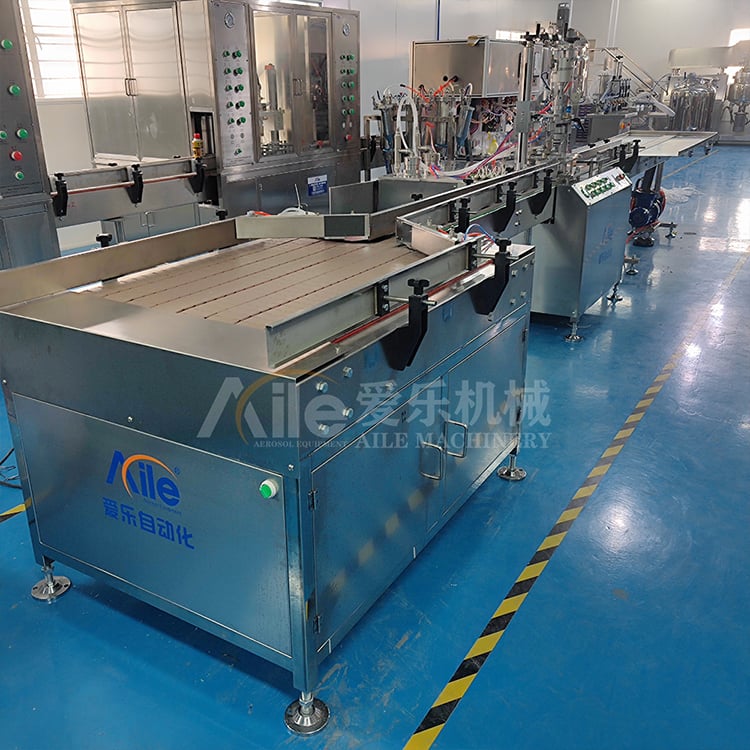
If your production line currently utilizes separate machines for liquid filling, valve inserting, crimping, and gas injection, you are losing valuable time during every manual transfer. Furthermore, human handling increases contamination risks—a fatal flaw when manufacturing sensitive pharmaceutical MDI products or facial cosmetic mists. Our centralized 1-inch rotary indexing table eliminates these micro-delays by uniting the entire packaging workflow into one continuous, high-speed automated cycle.
The system is highly adaptable, allowing manufacturers to choose between two distinct operational modes based on their capital expenditure strategy and production volume requirements:
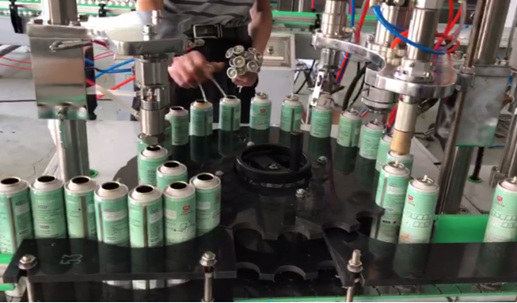
- Manual Valve Insertion Mode: Ideal for mid-sized manufacturers controlling initial costs. The machine handles the heavy lifting—precise liquid dosing, stabilizing, airtight crimping, and dual gas filling—while a single operator simply drops the valves into the passing cans.
- Automatic Valve Insertion Mode: The ultimate solution for high-volume facilities. Integrated with a specialized automatic valve sorter (designed for standard iron/tinplate valves), this setup completely removes human intervention from the indexing table, enabling an uninterrupted, maximum-capacity production flow.
2. Technical Specifications
In B2B industrial procurement, equipment is only as valuable as the technical parameters it guarantees. The rotary system is engineered specifically for standard 1-inch tinplate and aluminum cans, making it exceptionally versatile for processing oils, water-based solutions, emulsion solvents, and medium-viscosity chemicals. Below are the core specifications that drive its operational superiority:
| Key Parameter | Specification Data | Operational Advantage |
|---|---|---|
| Liquid Filling Volume | Up to 450ml | Adaptable to diverse SKUs, easily switching between small MDI doses and standard spray paint cans. |
| Filling Accuracy | ≤ ± 1.0% | Extreme precision prevents costly product giveaway and ensures strict regulatory compliance for pharmaceuticals. |
| Crimping Precision | Dia: (27.1-27.3)±0.15mm Depth: (4.9-5.1)±0.15mm |
Creates an internationally standardized, 100% airtight seal. Eliminates propellant leaks and product returns. |
| Applicable Can Sizes | Height: 80-315mm Diameter: 35-70mm |
Maximum packaging flexibility to meet rapidly changing consumer market trends. |
To fully maximize the efficiency of these specifications, we highly recommend integrating the rotary system with our automatic can unscramblers and conveyor networks to ensure a seamless feed of raw materials.
3. Working Principle
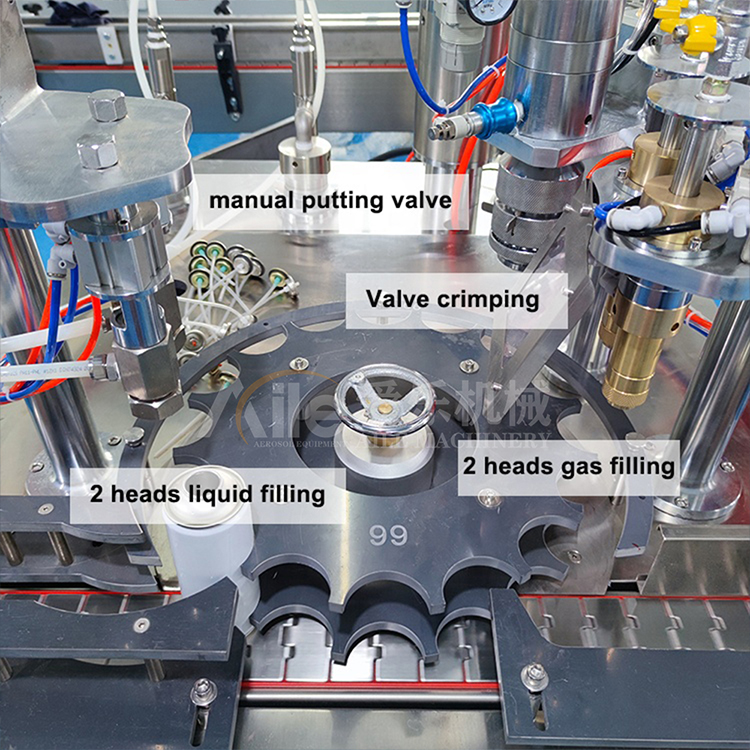
The mechanical elegance of the machine lies in its synchronization. As empty cans are fed onto the platform via the 6-meter stainless steel conveyor, they enter the rotary indexing table. The process initiates with Double-Head Liquid Filling, utilizing high-grade pneumatic cylinders for stable and precise volumetric dosing.
Next, the can moves to the valve station (either manual drop or automatic sort). Once the valve is seated, a mechanical stabilizer secures it perfectly in place before the crimping head descends. The crimping mechanism guarantees an absolute seal. Finally, the can indexes to the Double-Head Gas Filling station, where specialized short cylinders inject the propellant (such as LPG, DME, or Butane) with pinpoint accuracy. The finished product is then smoothly ejected back onto the conveyor.
4. Maintenance Guide
- Pneumatic Cylinder Care: Regularly inspect the double-head liquid and gas filling cylinders for adequate lubrication. Ensure the compressed air supply is filtered and free of moisture to prevent internal corrosion.
- Crimping Head Calibration: Verify the crimping diameter and depth weekly using a precision caliper. Maintaining the (27.1-27.3)mm diameter tolerance is non-negotiable for preventing gas leaks.
- Indexing Table Lubrication: Keep the central rotary mechanism and star wheels clean from chemical spills. Apply industrial-grade grease to the moving mechanical joints monthly to maintain smooth, synchronized indexing.
- Safety Audits: Since the machine handles flammable propellants, routinely verify the integrity of the Explosion-Proof Motors and ensure the heavy-duty working platform is properly grounded.
5. FAQ
Ready to Eliminate Production Bottlenecks?
Do not let outdated, labor-intensive machinery throttle your market growth. Upgrade to a fully synchronized rotary aerosol filling system and reclaim your profit margins today.
Request a Custom ROI Calculation