
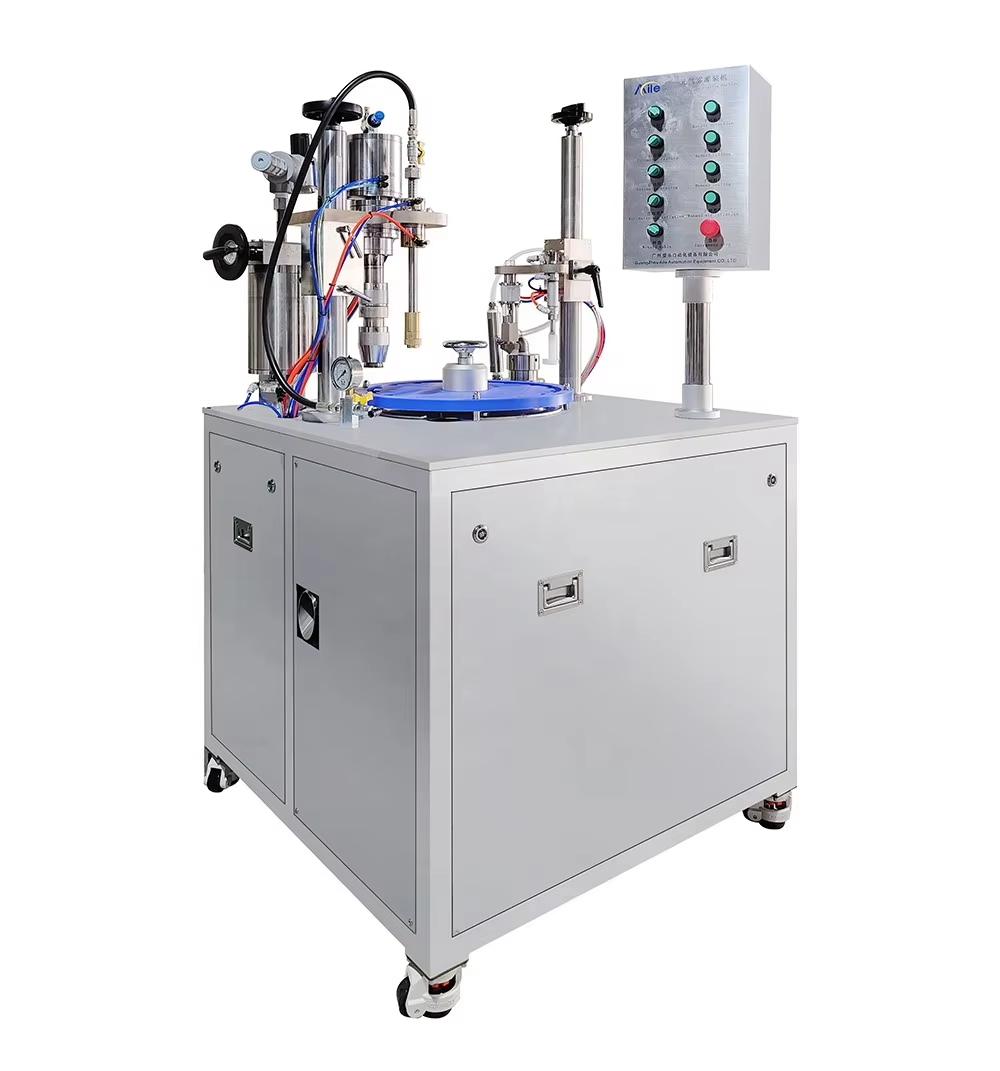
Why Viscosity Demands Specialized Cosmetic Filling Machines
The Viscosity Challenge: Why Standard Liquid Fillers Underperform with Shampoo and Shower Gel
Thick shampoos and shower gels—typically ranging from 1,000 to 5,000 cP—pose a fundamental challenge for standard liquid fillers designed for water-thin fluids. These machines lack the torque and precision valve control needed to move viscous product reliably, leading to splattering, dripping, and inconsistent fill volumes. The consequences are tangible: overfilled containers waste costly raw materials; underfilled ones risk noncompliance and customer complaints. Temperature fluctuations compound the issue—viscosity rises as product cools, causing flow rates to drift mid-batch. Without a machine engineered specifically for high-viscosity personal care formulations, production lines face avoidable rework, downtime, and eroded margins.
How Piston and Peristaltic Pump Systems Deliver Precision for 1,000–5,000 cP Formulations
Piston and peristaltic pump systems are purpose-built for this viscosity range—and for good reason. A piston filler uses positive-displacement mechanics: a precisely controlled cylinder draws and dispenses thick product in fixed volumes, unaffected by moderate viscosity shifts. Its adjustable stroke ensures repeatable, programmable fills across batches. Peristaltic pumps, meanwhile, rely on rollers compressing a flexible tube—generating gentle, sealed, shear-free flow ideal for delicate gels and surfactant-rich formulas. Unlike gravity or overflow fillers, both technologies eliminate drip and splash, support rapid SKU changeovers, and maintain >99% fill accuracy without sacrificing throughput. Matching pump type to rheology—not just viscosity—is how manufacturers achieve reliable, scalable performance.
Key Features of High-Performance Cosmetic Filling Machines for Personal Care
Foam Suppression Technology: Subsurface Nozzles and Vacuum Deaeration
Foam is a persistent defect when filling surfactant-heavy, viscous products like shampoo and shower gel. Splash filling introduces air, triggering bubbles that cause underfills, spills, and variable net weights. High-performance cosmetic filling machines address this at the source. Subsurface nozzles insert below the product surface, filling from the bottom up to minimize air entrapment. For stubborn foams—especially in high-solids or cold-fill scenarios—integrated vacuum deaeration applies gentle vacuum inside the container before filling, removing dissolved gases that would otherwise form headspace bubbles. This dual approach enables stable, high-speed operation (40–60 bpm) even at viscosities up to 5,000 cP, ensuring consistent fill levels and eliminating unnecessary product giveaway.
Integrated Quality Assurance: Vision Inspection and Inline Capping Compatibility
Maintaining speed without compromising quality requires built-in assurance—not afterthought inspection. Modern cosmetic fillers integrate vision inspection systems that use high-resolution cameras to verify fill height, cap presence, and label alignment in real time, automatically diverting any nonconforming unit before sealing. Paired with inline capping—driven by servo-controlled torque application—the filler becomes a compact, closed-loop station. Consistent cap torque prevents leaks and cross-threading, while unified HMI control allows one operator to oversee both functions. This integration reduces labor requirements by up to 30%, strengthens compliance with ISO 22716 and GMP guidelines, and ensures every bottle meets brand-specific quality benchmarks for personal care products.
Selecting the Right Cosmetic Filling Machine for Your Production Scale
SME-Focused Modular Systems for Multi-SKU Shower Gel Launches
Small and medium enterprises launching multiple shower gel variants benefit most from modular cosmetic filling platforms. Designed for flexibility, these systems feature quick-change tooling, tool-less nozzle adjustments, and digitally programmable fill volumes—enabling seamless transitions between SKUs without retooling or extended downtime. Operating at 10–50 units per minute, they scale efficiently: semi-automatic configurations support early-stage validation, while modular architecture allows straightforward upgrades to full automation as demand grows. Integrated cleaning protocols—such as CIP-compatible manifolds and accessible wetted parts—further reduce changeover time between formulations. For SMEs balancing capital discipline with precision, this approach delivers fill accuracy up to 5,000 cP while preserving agility across product development cycles.
Case Evidence: 98.7% Fill Accuracy Achieved on pH-Balanced Shampoo (3,200 cP) Using Dual-Piston Filler
A real-world case study validates the engineering advantage of purpose-built fillers: a dual-piston system filled pH-balanced shampoo (3,200 cP) at 40 bottles per minute with 98.7% fill accuracy. This level of repeatability is critical—not only for minimizing giveaway but also for maintaining regulatory compliance and brand trust. The dual-piston design, paired with servo-driven motion control, delivered consistent shot volume despite minor batch-to-batch rheological variation. Foam suppression was achieved via subsurface nozzles, eliminating spillage and ensuring clean, stable fills. Integrated vision inspection added a final quality gate—detecting underfills and missing caps in real time. For manufacturers handling similar medium-viscosity personal care products, this outcome underscores a core principle: adapting a low-viscosity filler invites compromise; selecting one engineered for the formulation delivers measurable ROI in yield, consistency, and operational resilience.
Frequently Asked Questions
Why can’t standard liquid fillers handle viscous products?
Standard liquid fillers are designed for water-thin fluids and lack the torque, precision valve control, and mechanisms to handle thick products like shampoos and shower gels, leading to issues like inconsistent fills and product waste.
What benefits do piston fillers offer for high-viscosity formulations?
Piston fillers provide precise, repeatable fills regardless of viscosity shifts, eliminating dripping and splashing. They are ideal for products ranging from 1,000 to 5,000 cP and allow for programmable batch consistency.
How does foam suppression technology work in cosmetic filling machines?
Foam suppression involves using subsurface nozzles to fill from the bottom up, minimizing bubble formation. Advanced systems also include vacuum deaeration, which removes dissolved gases before filling.
What features make modular filling systems ideal for SMEs?
Modular systems offer quick-change tooling, tool-less adjustments, and digital programmability, allowing seamless transitions between multiple SKUs. They also support semi-automatic to fully automated upgrades as production scales.
How does integrated vision inspection improve quality assurance?
High-resolution cameras in modern fillers check fill height, cap presence, and label alignment in real-time, automatically rejecting nonconforming units and ensuring brand quality standards are met consistently.
Table of Contents
- Why Viscosity Demands Specialized Cosmetic Filling Machines
- Key Features of High-Performance Cosmetic Filling Machines for Personal Care
- Selecting the Right Cosmetic Filling Machine for Your Production Scale
-
Frequently Asked Questions
- Why can’t standard liquid fillers handle viscous products?
- What benefits do piston fillers offer for high-viscosity formulations?
- How does foam suppression technology work in cosmetic filling machines?
- What features make modular filling systems ideal for SMEs?
- How does integrated vision inspection improve quality assurance?