
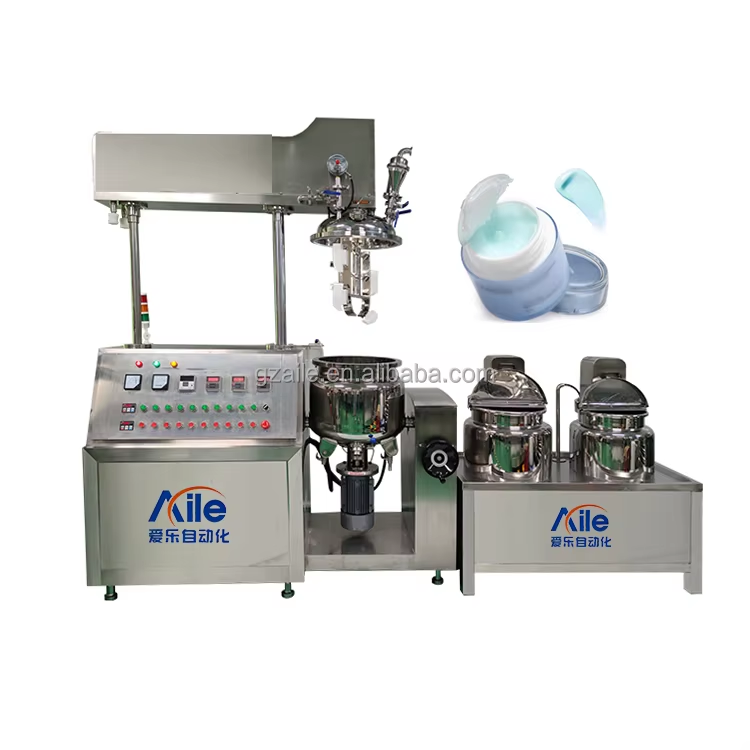
The Challenge of Filling Viscous Cosmetic Ointments Consistently
Cosmetic ointments, creams, and thick emulsions present unique filling challenges that standard liquid filling equipment cannot adequately address. Products with viscosities above 5,000 centipoise, such as hand creams, medicated ointments, and barrier balms, resist gravity flow and tend to trap air bubbles during dispensing. When manufacturers attempt to fill these products using a basic cosmetic filling machine designed for thin liquids, they often encounter inaccurate fill volumes, inconsistent dispensing, and product waste from drip and stringing. Automatic filling machines specifically engineered for high-viscosity ointments solve these problems through positive displacement pumping, heated hoppers, and anti-drip nozzles that ensure each container receives the exact specified weight of product. Understanding how these specialized systems work helps production managers make informed equipment decisions that directly impact both output speed and fill accuracy.
Positive Displacement Technology for Precise Ointment Dispensing
The core technology that distinguishes an automatic ointment filling machine from a standard cosmetic filling machine is the positive displacement pump. Unlike gravity-fed or pressure-fed systems that rely on liquid flow properties, positive displacement pumps move a fixed volume of product with each cycle, regardless of viscosity changes. Two common pump types dominate the cosmetic ointment filling sector: lobe pumps and piston fillers. Lobe pumps use rotating lobed rotors that create chambers of precise volume, making them ideal for products with particulates like exfoliating scrubs. Piston fillers use a cylindrical chamber and reciprocating piston that draws in a measured volume of product on the intake stroke and dispenses it on the discharge stroke, achieving fill accuracy within plus or minus 0.5 percent of target weight. For a 50-gram jar of ointment, this means the actual fill stays between 49.75 and 50.25 grams, a precision level that manual filling simply cannot match consistently.
Heated Hoppers and Temperature Control for Temperature-Sensitive Formulations
Many cosmetic ointments and creams are semi-solid at room temperature and must be heated to achieve flowable consistency for filling. Automatic filling machines for ointments incorporate heated hoppers with jacketed walls that circulate thermal fluid to maintain the product at an optimal filling temperature, typically between 35 and 55 degrees Celsius. The temperature must be carefully controlled because excessive heat can degrade active ingredients in pharmaceutical ointments or cause separation in emulsion-based creams. Modern ointment filling systems use programmable temperature controllers that maintain the product within a narrow range, preventing the viscosity fluctuations that cause fill weight variation. For manufacturers filling products like petroleum-based ointments or beeswax balms, the heated hopper also includes a stirring mechanism that ensures uniform temperature distribution throughout the product mass, eliminating cold spots near the hopper walls that could cause intermittent flow blockages.
Integration with Cosmetic Filling Machine Lines for High-Speed Production
An automatic ointment filling machine rarely operates in isolation. In a typical cosmetic production line, the ointment filler sits between the emulsifying mixer that prepares the product and the capping and sealing stations that complete the package. The filling machine must synchronize with upstream and downstream equipment to maintain continuous flow without creating bottlenecks. Automatic ointment fillers achieve this through programmable logic controllers that coordinate conveyor speed, nozzle dive depth, fill volume, and dwell time. A four-head piston filler can process 1,500 to 2,400 containers per hour depending on fill volume and container size, while an eight-head configuration can reach 3,000 to 4,800 units per hour. This scalability allows manufacturers to start with a smaller configuration and add filling heads as production volume grows, protecting their initial investment in the cosmetic filling machine platform.
Application Example: Upgrading Ointment Filling for a Pharmaceutical Skincare Brand
A pharmaceutical skincare manufacturer producing 30-gram aluminum tubes of medicated ointment faced recurring fill weight inconsistencies with their manual filling operation. Quality control samples showed fill weights ranging from 28.5 to 31.2 grams, creating compliance issues with pharmaceutical labeling regulations that require fill weight within plus or minus 3 percent of declared amount. After installing an automatic piston filling machine with a heated hopper set to 45 degrees Celsius, the manufacturer achieved fill weights consistently between 29.4 and 30.6 grams. The machine's diving nozzles eliminated product stringing between tubes, and the integrated weight-check system automatically rejected any tube outside the acceptable range. The upgrade reduced product giveaway by approximately 4 percent, translating to significant cost savings on active pharmaceutical ingredients. This case illustrates how investing in specialized ointment filling equipment addresses both regulatory compliance and material cost control simultaneously.
Selecting the Right Ointment Filling Machine: Key Evaluation Criteria
When evaluating an automatic ointment filling machine, buyers should assess several factors beyond basic throughput numbers. Product compatibility is paramount because the pump materials, seals, and tubing must resist the oils, solvents, or active ingredients in the specific formulation. Stainless steel 316L contact parts offer superior corrosion resistance for pharmaceutical and cosmetic ointments compared to standard 304 stainless. Clean-in-place capability is essential for manufacturers running multiple products on the same line, as it reduces changeover time from hours to minutes. Buyers should also verify that the filling machine's nozzle design matches their container opening size, as ointments tend to string and drip if the nozzle outer diameter is too small relative to the jar or tube mouth. Suppliers like Guangzhou Aile Automation Equipment manufacture ointment and cream filling machines with customizable pump configurations, heated hoppers, and dive nozzle systems, supported by ISO 9001 quality management and CE compliance documentation.
Frequently Asked Questions
What viscosity range can an automatic ointment filling machine handle?
Automatic ointment filling machines with positive displacement pumps typically handle viscosities from 1,000 to 100,000 centipoise. Products above 100,000 centipoise may require a heated hopper with auger assistance to achieve consistent flow into the pump chamber.
How accurate is an automatic piston filling machine compared to manual filling?
Automatic piston fillers achieve fill accuracy within plus or minus 0.5 percent of target weight, while manual filling typically varies by 3 to 8 percent depending on operator skill and product viscosity. This precision difference directly affects product giveaway cost and regulatory compliance.
Can an ointment filling machine handle both jars and tubes?
Yes, modern ointment filling machines can be configured with interchangeable nozzles and container handling fixtures to accommodate both wide-mouth jars and narrow-neck tubes. Changeover between container types typically takes 15 to 30 minutes, depending on the degree of automation in the container handling system.
Table of Contents
- The Challenge of Filling Viscous Cosmetic Ointments Consistently
- Positive Displacement Technology for Precise Ointment Dispensing
- Heated Hoppers and Temperature Control for Temperature-Sensitive Formulations
- Integration with Cosmetic Filling Machine Lines for High-Speed Production
- Application Example: Upgrading Ointment Filling for a Pharmaceutical Skincare Brand
- Selecting the Right Ointment Filling Machine: Key Evaluation Criteria
- Frequently Asked Questions