
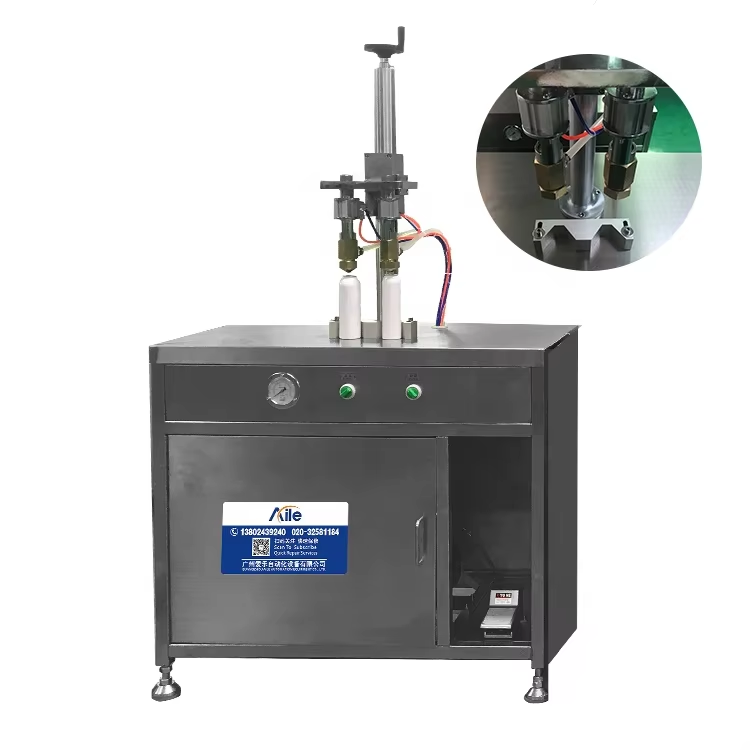
Why Choose a Semi-Automatic Aerosol Filling Machine?
Businesses making aerosol products in mid volume ranges, say between 5,000 to 50,000 units each month, will find semi automatic filling machines hit just the right spot when it comes to getting things done right. Fully automatic systems cost a small fortune these days, often running into six figures for setup. Semi auto versions cut down on upfront costs substantially while still hitting around 1.5 percent accuracy in filling thanks to those manual controls operators can tweak as needed. The combination of human oversight and machine power makes all the difference when placing valves correctly and adjusting pressures properly. This works especially well with different product types too, whether dealing with tricky solvents that want to escape or thick gels that resist flowing smoothly through equipment.
The flexibility these manufacturers get is pretty amazing actually. They can work with different container materials like aluminum and tinplate, plus handle sizes ranging from 100 to 1000 mL all without having to spend big bucks on new tooling. This kind of adaptability really works well for companies in various industries. Take personal care brands rolling out new hair spray products, contract fillers who need to switch between client requirements, or even those in agrochemicals dealing with changing seasons and fluctuating demands. When looking at mid volume production where return on investment matters but quality still needs to stay high, semi automatic equipment often beats out fully automated systems when it comes to both cost savings and day to day operations.
Cost-Effectiveness and Measurable ROI
Semi automatic aerosol filling machines offer serious money saving benefits because they require less upfront spending and pay back faster. The way these machines are built cuts out all those expensive automation parts we see in full systems like robotic arms, conveyor belts that tie everything together, and special purpose software packages. As a result, companies can save between 40 to 60 percent when setting up shop compared to going all in on automation. For smaller to medium sized manufacturing operations, this price difference means they have extra cash flow to invest in growing their customer base or developing new products without sacrificing the quality control needed for proper packaging standards.
Lower upfront investment vs. fully automated aerosol filling machines
Semi-automatic systems typically cost $25,000–$50,000–less than half the $100,000+ price tag of fully automated equivalents. Operators avoid substantial expenses tied to conveyor integration, robotic actuation, and vendor-locked maintenance contracts. This cost differential is especially impactful for emerging brands testing new formulations or entering competitive markets where capital preservation is critical.
Faster breakeven for mid-volume producers (5,000–50,000 units/month)
Production analysis shows semi-automatic systems achieve breakeven within 6–12 months for operations filling 5,000–50,000 units monthly. Their modular design requires minimal facility modifications, and throughput scalability supports incremental capacity additions. Key drivers of faster ROI include:
- Lower per-unit operational costs at mid-scale volumes
- Elimination of specialized engineering maintenance contracts
- Flexible batch processing that minimizes product changeover downtime
Precision, Flexibility, and Process Control
Semi-automatic aerosol filling machines deliver essential precision with ±1.5% fill accuracy–validated by ISO/IEC 17025-accredited testing labs and aligned with ASTM D7138 standards for aerosol fill consistency. This consistency is achieved not through algorithmic automation, but through real-time operator oversight of mechanical dosing systems, pressure gauges, and valve alignment.
Consistent fill accuracy (±1.5%) with operator-guided valve placement and pressure calibration
Operators keep a close eye on fill parameters as they work, making adjustments on the fly when needed to fix any issues right away. When operators are involved directly alongside properly calibrated mechanical dosing systems, it helps maintain those tight tolerances we need, especially important for tricky materials such as shear sensitive substances or thick viscous gels. A recent study from the Aerosol Packaging Council back in 2023 showed something interesting too. They found that when people actually watched over the process manually rather than relying solely on automated systems, there was about a 32 percent drop in fill problems for medium sized production runs. Makes sense really because sometimes machines just can't catch everything that human experience picks up on.
Broad compatibility: container sizes (100–1,000 mL), materials (aluminum, tinplate), and formulations (solvents to gels)
Quick-change tooling allows seamless transitions between packaging variants–no re-engineering or extended downtime required. The same machine reliably processes:
- Material variants: Aluminum cans and tinplate containers
- Volume ranges: Travel-size (100 mL) to industrial (1,000 mL) formats
- Formulations: Low-viscosity solvents, water-based cleaners, and shear-sensitive creams
Changeovers are completed in under 15 minutes, eliminating production-line redundancies and supporting agile, multi-client or multi-brand operations.
Proven Applications Across High-Demand Industries
Personal care (hair sprays, deodorants), household cleaners, agrochemicals, and automotive lubricants
Semi automatic aerosol filling machines bring just the right level of precision needed in industries where getting things right matters for safety, following regulations, and keeping the brand's good name intact. Take personal care products for instance. With around 1.5% accuracy in filling, companies avoid wasting product through overfilling while still making sure their hair sprays and antiperspirants work properly and feel good to consumers. For household cleaners, these machines handle all sorts of different formulas without needing major changes to the production setup. Think about switching from an alcohol based disinfectant to a thick gel sanitizer? No problem. In agriculture chemical manufacturing, getting the pressure settings right means pesticides get safely packaged into aluminum cans that meet those strict EPA requirements. Automotive lubricant makers love how quickly they can switch between small 100mL containers and larger 1000mL tins during production runs, which helps them keep up with whatever demand comes their way from original equipment manufacturers or the aftermarket. All told, this kind of equipment has found its way into over 1200 facilities worldwide, many of which operate under FDA guidelines (21 CFR Part 110) and ISO 22000 food safety standards.
FAQ
What is the cost range for a semi-automatic aerosol filling machine?
The cost for a semi-automatic aerosol filling machine typically ranges from $25,000 to $50,000.
How accurate are semi-automatic aerosol filling machines?
Semi-automatic aerosol filling machines offer accuracy of approximately ±1.5% in filling.
What industries commonly use semi-automatic aerosol filling machines?
Industries such as personal care, household cleaners, agrochemicals, and automotive lubricants commonly use semi-automatic aerosol filling machines.
How do semi-automatic aerosol filling machines contribute to ROI?
Semi-automatic aerosol filling machines contribute to ROI by offering lower upfront costs, faster breakeven periods, and savings on operational costs compared to fully automated systems.