
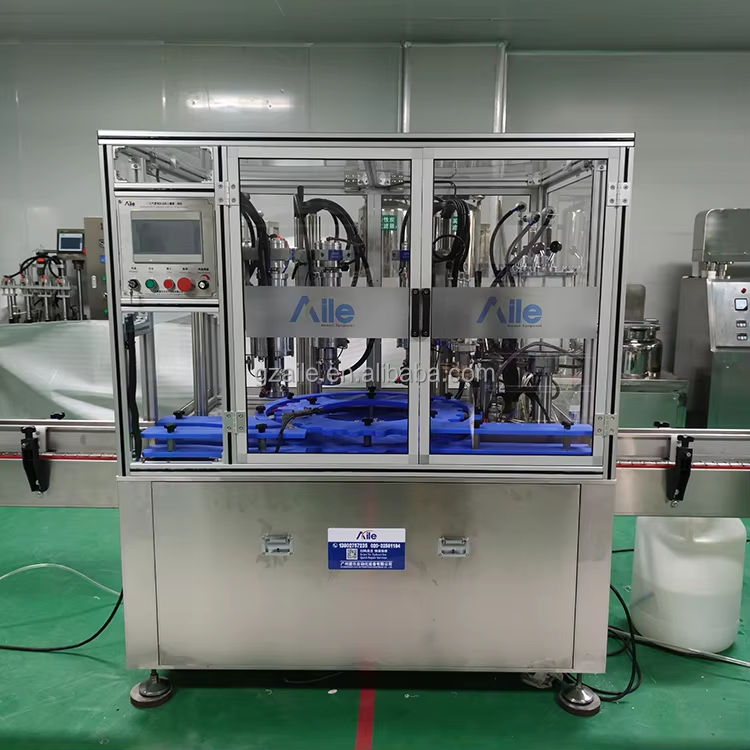
Why Pneumatic Control Eliminates Manual Filling Machine Limitations
Replacing human-trigger dependency with precise, repeatable stroke actuation
Pneumatic control transforms paint filling operations by replacing manual operator triggers with mechanical precision. Unlike manual filling machines—where human activation introduces fatigue-related inconsistencies—semi-automatic systems use air pressure to execute identical strokes cycle after cycle. This eliminates reliance on operator reaction times and reduces rejected fills by 29% (Packaging Digest 2023). Automated actuation maintains consistent plunger velocity and fill initiation timing, which is critical for achieving uniform coating thickness in automotive applications where even minor variance causes defects in 1 of every 8 finishes.
Achieving ±2% volumetric consistency via pressure and flow modulation
Compressed air regulation enables real-time modulation impossible with manual methods. Integrated pressure sensors and flow valves dynamically compensate for viscosity shifts during each fill cycle, sustaining ±2% volumetric accuracy across temperature fluctuations. Where manual filling machines struggle with particulate settling in high-solids paints—causing up to 11% volume drift per batch—pneumatic systems maintain homogeneity through turbulent flow design. Combined with programmable stroke lengths verified by laser displacement sensors, this delivers tolerances tighter than ISO 9001 requirements for aerospace primers.
Quantifiable Gains: Cycle Time, Labor, and Throughput vs. Manual Filling Machine
57% faster cycle time: 18 seconds (semi-auto) vs. 42 seconds (manual filling machine)
Semi-automatic systems dramatically accelerate production cycles. Traditional manual methods require 42 seconds per fill; pneumatic-controlled spray fillers complete the same task in just 18 seconds—a 57% reduction. This efficiency stems from automated stroke initiation and consistent material flow, eliminating operator-dependent variability in start/stop timing. Shorter cycles directly increase hourly output without expanding floor space.
3× operator capacity: One technician manages three semi-automatic stations
Labor efficiency sees transformative gains with semi-automation. A single technician can simultaneously oversee three filling stations due to the reduced physical intervention required. Each station’s pneumatic controls handle precise volumetric delivery (±2% accuracy), while automated shutoff prevents overfills. This tripled operator capacity translates to significant labor cost reductions—particularly impactful in high-wage regions or operations running multiple shifts.
Consistency and Quality Outcomes Enabled by Semi-Automatic Spray Filling
78% transfer efficiency vs. 52% for manual filling machines — ASTM D7239 validation
Semi-automatic spray fillers achieve 78% material transfer efficiency compared to just 52% for manual processes, per ASTM D7239, reducing overspray and material waste. By automating nozzle pressure and flow dynamics, these systems atomize coatings more precisely than hand-operated filling machines—lowering material costs by up to 30% annually while decreasing VOC emissions.
| Performance Metric | Manual Filling Machine | Semi-Automatic Spray Filler |
|---|---|---|
| Transfer Efficiency | 52% | 78% |
| Volumetric Consistency | ±5% | ±2% |
| Annual Material Savings | Baseline | Up to 30% |
Cpk ≥1.33 sustained across 12,000+ fills: Real-world quality control in automotive finishing
Precision pneumatic controls enable sustained Process Capability Index (Cpk) values of ≥1.33 across 12,000 consecutive fills in automotive finishing lines—meeting Six Sigma standards. Validated in OEM audits, this consistency reduces rework by 19% compared to manual filling operations. Since process variables like viscosity and pressure are algorithmically adjusted, coating thickness maintains ±0.3 mil tolerances critical for corrosion resistance.
Frequently Asked Questions
What is the primary advantage of using pneumatic control over manual filling machines?
Pneumatic control offers precise, repeatable strokes by using air pressure, eliminating the inconsistencies associated with human-triggered manual filling processes. This leads to reduced waste, improved uniformity, and increased efficiency.
How does pneumatic control affect labor efficiency?
With pneumatic control, a single technician can manage three filling stations due to reduced physical intervention required, thereby increasing operator capacity and reducing labor costs.
What is the significance of ±2% volumetric consistency?
Achieving ±2% volumetric consistency ensures sustained accuracy and reliability in filling operations, particularly crucial for industries requiring high precision, such as aerospace and automotive sectors.
How does the transfer efficiency compare between semi-automatic and manual filling machines?
Semi-automatic spray fillers attain 78% material transfer efficiency, significantly higher than the 52% achieved with manual processes, leading to reduced material waste and cost savings.