
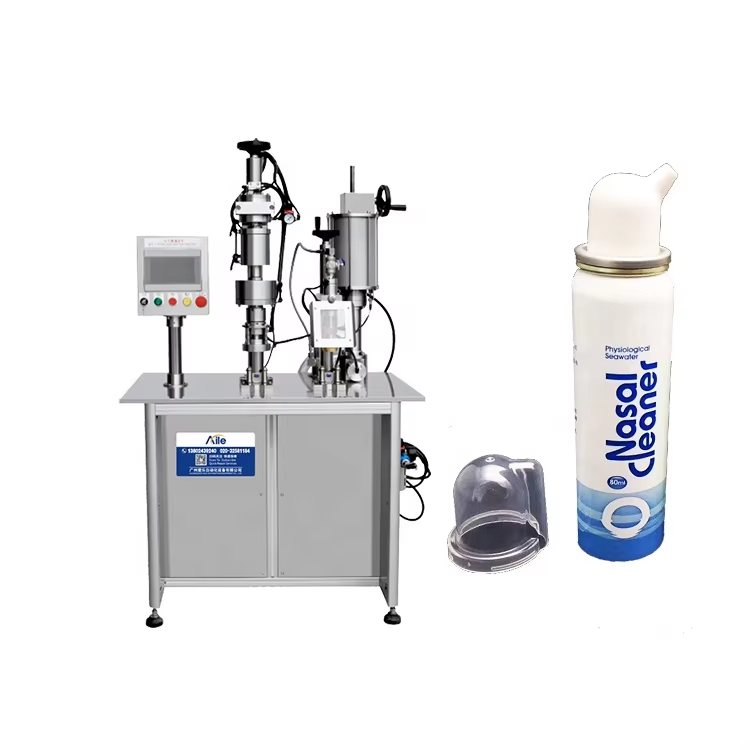
Labor Cost Reduction: Efficiency Gains with Semi-Automatic Aerosol Filling Machines
From 4–6 to 1–2 operators per shift: Measuring direct labor savings
Semi automatic aerosol filling machines cut down on the number of operators needed per shift from around 4 to 6 people down to just 1 or 2. That represents somewhere between 60 to 70 percent fewer workers required, which means lower payroll expenses plus savings on training costs and less hassle with scheduling shifts. Manual production lines require someone constantly watching over them for things like placing valves correctly and handling propellants safely. But semi automatic systems come equipped with guided loading features and precise actuators that handle much of the work automatically. What happens is operators move away from doing the same old repetitive tasks day after day toward more supervisory positions where they monitor how the machine is running and check important quality points along the way. Mid volume manufacturers who produce anywhere from 5 thousand to 20 thousand units each day can expect their yearly labor costs to drop significantly, maybe around $740 thousand based on research published by the Ponemon Institute in their 2023 report on operations benchmarks. The best part? These cost savings don't come at the expense of being able to switch products quickly when needed.
OPEX comparison: Semi-automatic vs. manual and fully automatic aerosol filling machines
Semi-automatic aerosol filling machines deliver a strategic OPEX balance—avoiding the high fixed costs of full automation and the hidden inefficiencies of manual operations:
| Cost Factor | Manual Systems | Semi-Automatic | Fully Automatic |
|---|---|---|---|
| Operators per line | 4–6 | 1–2 | 0–1 |
| Changeover time | 15–30 min | 8–12 min | 2–5 min |
| Energy consumption | Low | Medium | High |
| Maintenance cost | $2k/year | $7k/year | $15k+/year |
Automatic systems definitely cut down on labor needs, but come with about 2.3 times more expensive maintenance bills and need special techs to fix them when something goes wrong. That means unexpected downtime becomes a real problem. On the other hand, manual production lines save money upfront on machines but often end up with inconsistent fill amounts. We've seen companies get FDA warnings because their products were coming out underfilled. Semi-auto machines strike a better balance though. Their modular setup makes repairs easier to handle, and those built-in sensors plus feedback loops help avoid compliance issues. For businesses running at medium scale operations, these semi-automatic options actually cost around 40 percent less per unit compared to manual methods, and still manage to save about 15% over full automation setups.
Quality Assurance Built In: Precision and Consistency in Semi-Automatic Aerosol Filling
±0.5% filling accuracy validated by ISO 8573-1 and ASTM D1895 standards
The semi automatic aerosol filling machines hit around 0.5 percent volumetric accuracy, which means less than quarter of a milliliter difference when filling a standard 50 ml canister. These specs beat the standards set by ISO 8573-1 for compressed air purity and also meet requirements from ASTM D1895 regarding aerosol leakage. Getting such accurate fills matters because it stops companies from giving away extra product and avoids those pesky underfill issues that get picked up in FDA inspections. Independent tests show about 98 out of every 100 machines keep this level of accuracy even after running through over 10 thousand production cycles. That translates to cutting down on wasted materials by roughly 17 percent compared to what happens with manual filling processes according to the latest numbers from the Packaging Efficiency Consortium in 2023. For products that need special handling like thick insecticide sprays or cosmetic foams, these machines constantly adjust both the pressure at the nozzle and how long each fill lasts. Even small changes of just one percent can really mess up how these types of products work properly once they're packaged.
Preserved critical control points: Valve seating, propellant dosing, and pressure integrity checks
Semi-automatic systems retain three irreplaceable human-involved quality checkpoints:
- Tactile valve seating verification, preventing deformed seals—a $2.3M/year failure point in personal care aerosols (2024 Filling Industry Benchmark Report);
- Propellant dosing modules with real-time mass flow meters, achieving 99.2% hydrocarbon gas measurement accuracy for flammability safety;
- Pressure decay testing at 30–50 PSI, detecting microleaks <0.5 mm before crimping—with rejection rates four times lower than manual inspection.
This human-machine collaboration identifies root causes—like particulate contamination during changeovers—while digital batch records ensure full traceability for FDA 21 CFR Part 11 compliance.
The Human-in-the-Loop Advantage: Operator Oversight That Enhances Quality and Traceability
In semi automatic aerosol filling operations, experienced workers keep a close eye on things to ensure product quality stays high while meeting all regulatory requirements. These folks watch what happens with valves seating properly, measure how much propellant goes into each can, and check if pressures stay stable throughout the process. They spot those little issues that machines often overlook like tiny problems with seals or brief changes in pressure that wouldn't show up on standard equipment readings. Their attention helps maintain about plus or minus half a percent accuracy when filling containers and cuts down wasted materials by around fifteen percent for companies producing moderate quantities. When it comes to keeping track of batches, operators record information either by hand or through computer systems built right into the production line. This makes it possible to pinpoint exactly which products were made together, so when recalls happen they affect far fewer items and save money compared to pulling entire product lines off shelves. Having people involved in this process creates records that stand up under scrutiny and gives customers confidence about where their products come from, all while still getting most of the speed benefits from partially automated systems.
ROI Justification: Fast Payback Through Balanced Automation for Mid-Volume Production
CAPEX efficiency: Why semi-automatic aerosol filling machines deliver <18-month ROI
For aerosol manufacturers dealing with moderate production volumes, semi automatic filling machines offer a quicker ROI compared to full automation setups. The price tag usually falls between eighty thousand to one hundred fifty thousand dollars, which is way cheaper than the five hundred thousand plus cost of fully automated lines. These machines slash labor needs by about half to three quarters without getting bogged down in complex integrations or rigid programming requirements. According to market research, companies producing anywhere from one thousand to ten thousand units each day typically see their investment paid back within eighteen months. This happens because operators need less training, production can switch between batches more easily, and there's extra cash available for improving quality control systems. Looking at the bigger picture, these machines represent a smarter spending approach that actually works for businesses wanting to boost output while staying compliant with regulations as they grow.
FAQ Section
- How do semi-automatic aerosol filling machines reduce labor costs? These machines lower the number of operators needed per shift from 4-6 to just 1-2, reducing payroll and training expenses by 60-70%.
- What is the filling accuracy of semi-automatic aerosol machines? They achieve a filling accuracy of ±0.5%, validated by ISO and ASTM standards, ensuring quality and minimizing waste.
- How do semi-automatic machines compare to manual and fully automatic ones? Semi-automatic machines offer a balance between labor efficiency, changeover time, and maintenance costs, being more cost-effective than both manual and fully automated systems for mid-volume production.
- What is the average ROI timeframe for these machines? Semi-automatic aerosol filling machines typically deliver a return on investment in less than 18 months for mid-volume manufacturers.
Table of Contents
- Labor Cost Reduction: Efficiency Gains with Semi-Automatic Aerosol Filling Machines
- Quality Assurance Built In: Precision and Consistency in Semi-Automatic Aerosol Filling
- The Human-in-the-Loop Advantage: Operator Oversight That Enhances Quality and Traceability
- ROI Justification: Fast Payback Through Balanced Automation for Mid-Volume Production