
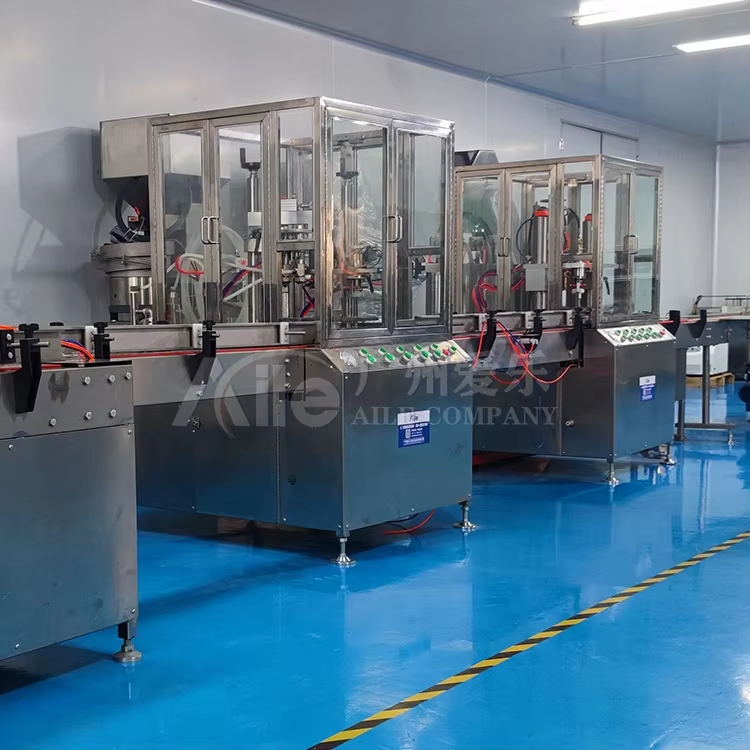
Superior Precision: How Pneumatic Control Delivers Sub-Milliliter Accuracy vs. Manual Filling Machines
Pressure-regulated fluid control enabling ±0.3 mL accuracy across 50–1000 mL aerosol formats
Pneumatic paint filling machines use compressed air to drive a precision piston with real-time stroke control—eliminating the inconsistency of hand-operated valves. By dynamically regulating air pressure, the system maintains a stable flow rate regardless of can size or viscosity. This delivers repeatable ±0.3 mL accuracy across the full 50–1000 mL aerosol range—a performance level manual filling machines cannot sustain. Operators set the target volume via an intuitive touch-screen interface; the controller then adjusts piston displacement automatically. The result is fill error under 0.5%, even during rapid format changes on the same line. This consistency directly reduces overfills, underfills, and rework—improving yield and lowering material waste for high-volume paint producers.
Real-world validation: 99.7% fill consistency in 500 mL cans (BASF Coating Solutions, 2023)
A 2023 production trial by BASF Coating Solutions validated this precision at scale: a pneumatic system filled 10,000 units of 500 mL aerosol cans under ISO 8573‑1 clean air standards and achieved 99.7% fill consistency—just 30 cans fell outside the ±0.3 mL tolerance. In contrast, manual filling machines typically show 3–5% variation, resulting in frequent nonconformances. The pneumatic system’s closed-loop pressure feedback compensated for minor air-supply fluctuations, preserving sub-milliliter accuracy throughout the shift. This real-world evidence confirms that pneumatic control replaces operator-dependent guesswork with deterministic, specification-compliant output—reducing customer returns and strengthening brand trust.
Proven Efficiency Gains: Cycle Time Reduction and Scalable Throughput with Pneumatic Systems
42% faster average cycle time versus manual filling machines — validated under ISO 8573-1 clean air standards
Pneumatic systems reduce average cycle time by 42% compared to manual filling machines—a gain verified under ISO 8573‑1 clean air conditions to ensure operational integrity. Compressed-air actuators operate at speeds up to 5 m/s, removing the delays inherent in manual valve actuation and visual confirmation. Each cycle becomes fully deterministic, compressing variability and increasing output per shift. For aerosol paint lines, one pneumatic machine often replaces two or three manual stations. This improvement stems from synchronized nozzle transitions, parallel process execution, and PLC-driven coordination—not just speed, but smarter sequencing. Manufacturers report throughput gains of 30–50% without expanding floor space, while reduced rework further shortens effective cycle times and supports leaner, more responsive production flows.
Seamless Industry 4.0 integration: Real-time OEE tracking and adaptive throughput tuning in high-mix lines
Pneumatic paint filling machines natively integrate with Industry 4.0 platforms, feeding real-time data—including fill volume, cycle count, and pressure deviation—into manufacturing execution systems for live OEE monitoring. Adaptive throughput tuning automatically adjusts fill speed based on can size, product viscosity, and batch priority—enabling seamless operation across high-mix lines handling everything from 50 mL touch-up cans to 1 L pails. Changeover times improve by 60% or more, with no manual recalibration required. Embedded sensors detect early signs of wear or micro-leakage, triggering predictive alerts before failures cause downtime. Multi-plant deployments confirm a 25% reduction in unplanned stops. Crucially, this digital intelligence preserves the core 42% cycle-time advantage—even during frequent product switches—delivering scalable, traceable, labor-light throughput that aligns with smart factory strategy.
Robust & Safe Operation: Why Pneumatic Paint Filling Machines Excel in Hazardous and High-Demand Environments
Intrinsically safe design certified to UL 60079-0 for Class I Div 1 explosive atmospheres
Pneumatic paint filling machines are engineered for hazardous environments where flammable vapors or combustible dusts create persistent ignition hazards. Their intrinsically safe architecture—certified to UL 60079‑0—eliminates electrical arcing and sparking, the leading failure mode in manual or electro-mechanical alternatives. Because operation relies solely on compressed air—not electricity—the system is inherently compatible with Class I, Division 1 locations (where explosive gases may be present during normal operation). This certification extends to all critical components, including filling heads, control valves, and actuators, ensuring end-to-end compliance without costly explosion-proof enclosures or retrofitting.
Lower TCO over 5 years: 30% reduced maintenance vs. electro-hydraulic alternatives and zero risk of spark ignition
Pneumatic systems deliver compelling total cost of ownership (TCO) advantages over both manual and electro-hydraulic alternatives. Over five years, maintenance costs drop ~30% due to fewer moving parts, no hydraulic fluid management, and minimal heat-related wear. With no electric motors or wiring, spark ignition risk is eliminated entirely—lowering insurance premiums, simplifying compliance audits, and reducing safety system overhead. Pneumatic components also withstand dust, moisture, and ambient temperatures common in paint production—translating to higher uptime and lower spare-part spend. For multi-shift operations running at high demand, these reliability and safety benefits compound quickly, making pneumatic filling not just safer—but demonstrably more economical—over the full equipment lifecycle.
FAQ
What is the accuracy level of pneumatic paint filling machines?
Pneumatic paint filling machines offer ±0.3 mL accuracy across a range of 50–1000 mL aerosol formats, ensuring precision that manual machines cannot achieve.
How do pneumatic systems enhance throughput efficiency?
By reducing average cycle time by 42% and supporting smarter sequencing, pneumatic machines enable 30–50% throughput gains without requiring additional floor space.
Are pneumatic paint filling machines safe for hazardous environments?
Yes, their intrinsically safe design is certified to UL 60079-0, making them suitable for Class I, Division 1 explosive atmospheres without risk of spark ignition.
What maintenance advantages do pneumatic systems offer?
Over five years, pneumatic machines reduce maintenance costs by approximately 30% compared to electro-hydraulic systems, thanks to fewer moving parts and no hydraulic fluid management.
Can pneumatic systems integrate with Industry 4.0 platforms?
Yes, these machines natively integrate with Industry 4.0 for real-time OEE monitoring, adaptive throughput tuning, and predictive maintenance alerts.
Table of Contents
- Superior Precision: How Pneumatic Control Delivers Sub-Milliliter Accuracy vs. Manual Filling Machines
- Proven Efficiency Gains: Cycle Time Reduction and Scalable Throughput with Pneumatic Systems
- Robust & Safe Operation: Why Pneumatic Paint Filling Machines Excel in Hazardous and High-Demand Environments
-
FAQ
- What is the accuracy level of pneumatic paint filling machines?
- How do pneumatic systems enhance throughput efficiency?
- Are pneumatic paint filling machines safe for hazardous environments?
- What maintenance advantages do pneumatic systems offer?
- Can pneumatic systems integrate with Industry 4.0 platforms?