
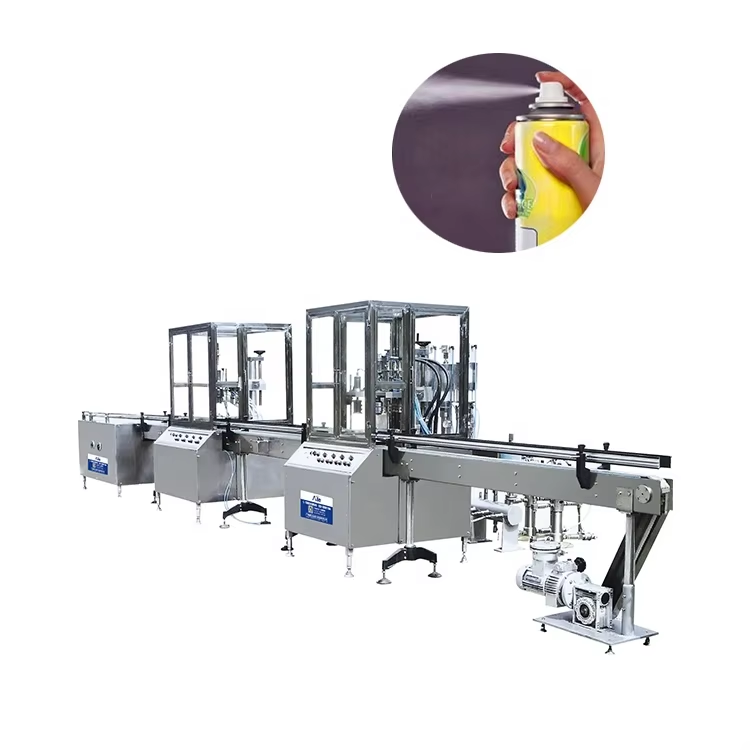
Why a Ten-Head Liquid Filling Machine Maximizes Throughput and Uptime
Linear Scalability: How 10 Heads Deliver Greater Output vs. 4-Head Systems Without Bottlenecks
The ten-head liquid filling machine is changing how bottling works because it spreads out the workload among its separate nozzles instead of relying on just four heads at once. Traditional setups often hit a wall when trying to go faster since they can't keep up with demand. But these new machines work together simultaneously, pumping around 120 bottles every minute while still keeping things pretty accurate within about half a percent variance. Manufacturers have actually tested this setup against older models and found that their productivity jumps nearly three times higher when switching from four to ten heads. What makes this possible? Each nozzle gets its own special feeding line so there's no drop in pressure during operation, which matters a lot when dealing with harsh chemicals or thick substances like syrup. Plus, those fancy servos are all synced up perfectly, making sure everything stays on schedule throughout long production shifts without needing extra storage areas or backup equipment lying around.
Real-World Uptime Gain: 32% Increase After Migration to Ten-Head Anti-Corrosion Liquid Filling Machine
The numbers don't lie: companies that upgrade to these ten-head anti-corrosion models see their unplanned downtime drop by around 32% compared to older systems according to the 2023 Operational Efficiency Report. Why? Because spreading the workload across 10 heads rather than just 4 means each part doesn't get worn down as much. We're talking about cutting component wear by roughly 60% during those intense production cycles. The modular design makes replacing nozzles super fast too—less than 90 seconds actually—which matters a lot when dealing with stuff like crystallizing hydrochloric acid. One contract manufacturer making industrial cleaning products saw their annual maintenance time shrink by 1,200 hours after switching, while producing an extra 19,000 units every day. These systems use corrosion resistant SUS316L materials wherever they come into contact with chemicals, plus distribute the workload better. This combination keeps particles out and seals intact longer, stretching service intervals by almost half. Most major beverage bottlers are now hitting about 94.5% uptime with these ten-head setups, which speaks volumes about how reliable they really are.
Precision Filling of Corrosive Liquids with Chemical-Resistant Construction
Regular liquid filling equipment tends to break down badly when dealing with acids or harsh solvents. The main problems are usually seal deterioration, which causes about 78% of all downtime in chemical manufacturing, plus metal corrosion in parts that come into contact with liquids. This leads to leaks, mixing of different substances, and inaccurate measurements where the error can go beyond plus or minus 5% after just 200 hours of operation. When these things happen, pumps start cavitating early, valves get stuck, and there's contamination from rusted parts throughout the system. Most conventional setups simply aren't built to handle long term chemical processing under these conditions.
Failure Modes of Standard Liquid Filling Machines with Acids and Solvents
- Seal Degradation: Elastomer seals swell and crack upon exposure to ketones or chlorinated solvents, causing leaks that compromise workplace safety
- Metallic Corrosion: Sulfuric acid rapidly deteriorates carbon steel components, generating iron sulfate particulates that contaminate batches
- Accuracy Drift: pH-induced material fatigue alters flow path dimensions, reducing fill accuracy by 0.2% weekly in continuous operation
Engineering Solution: PTFE Seals + SUS316L Wetted Parts Enable ±0.3% Accuracy at 120 BPM
Advanced liquid filling machines overcome these limitations through purpose-built material science:
- Non-Reactive Sealing: PTFE (Polytetrafluoroethylene) gaskets resist 98% of industrial chemicals without swelling or embrittlement
-
Corrosion-Proof Wetted Paths: SUS316L stainless steel components demonstrate greater pitting resistance versus standard 304 grades in chloride environments
This chemical-resistant construction maintains ±0.3% fill accuracy even at 120 bottles-per-minute throughput by eliminating reactive wear and particulate generation. Closed-loop viscosity compensation further counters flow rate variations caused by temperature-sensitive solvents.
Sustained High-Speed Performance via Modular, Corrosion-Proof Design
Industry Shift Toward Integrated Rotary Platforms with Quick-Change Anti-Corrosion Nozzles
These days, many manufacturing plants are switching to rotary platforms equipped with quick change nozzles so they can keep things moving when working with corrosive substances. What makes these systems stand out is how fast operators can replace blocked or broken parts in under ninety seconds without stopping the whole operation. That's a big deal compared to older setups where everything had to shut down completely for repairs. For the nozzles themselves, manufacturers typically go with SUS316L stainless steel combined with PTFE coatings. This helps stop those annoying pits from forming due to acids and protects against damage from solvents something regular carbon steel units struggle with badly. Plus, the modular design means workers can adjust the setup depending on what kind of material viscosity they're dealing with. Even after long periods running harsh chemicals like hydrochloric acid or acetone solutions, these systems still manage to last quite a while between breakdowns, often hitting around 98 percent uptime.
Closed-Loop Control: Intelligent Weighing Feedback Across All 10 Heads Maintains Consistency
The latest generation of liquid filling equipment comes equipped with real time weight monitoring systems. Each individual nozzle checks how much liquid goes into containers compared to what should be there. Sensors placed underneath the containers send any discrepancies straight to the main computer, which then makes tiny adjustments to the pistons moving at around 120 beats per minute. These machines handle tricky situations too, adjusting automatically when things get messy because of temperature changes affecting how thick or thin liquids become during processing. They also stop small mistakes from adding up over time between different production runs. Looking at numbers from Packaging Digest in 2023, these advanced systems hit pretty close to spot on measurements within just 0.3% variance. Plus they save companies money by wasting about 17% less product compared to older methods without this kind of feedback mechanism. And best part? All ten filling spots stay consistent whether dealing with sticky glues or dangerous chemicals that evaporate quickly.
FAQ
-
What is the main advantage of using a ten-head liquid filling machine?
The ten-head liquid filling machine offers increased productivity by spreading the workload over more heads, resulting in higher throughput and minimizing bottlenecks compared to traditional four-head systems. -
How does the ten-head liquid filling machine reduce downtime?
By distributing the workload across ten heads, these machines reduce wear on individual components, decreasing the frequency of maintenance and downtime by up to 32%. -
Why is precision important in handling corrosive liquids?
Precision is crucial to avoid leaks and inaccurate measurements, which can lead to contamination and product waste, especially when dealing with harsh chemicals. -
What materials are used to combat corrosion in these machines?
The machines use PTFE seals and SUS316L stainless steel components to resist corrosion and maintain precise filling accuracy, even under challenging conditions. -
What makes the integrated rotary platforms with quick-change nozzles beneficial?
They allow for rapid part replacement without halting production, reducing downtime and maintaining high-speed performance even with corrosive substances.