
Cost-Effective Entry: Lower Upfront Investment with Strong ROI
Comparing Capital Outlay: Semi-Automatic vs. Manual and Fully Automatic Aerosol Filling Machines
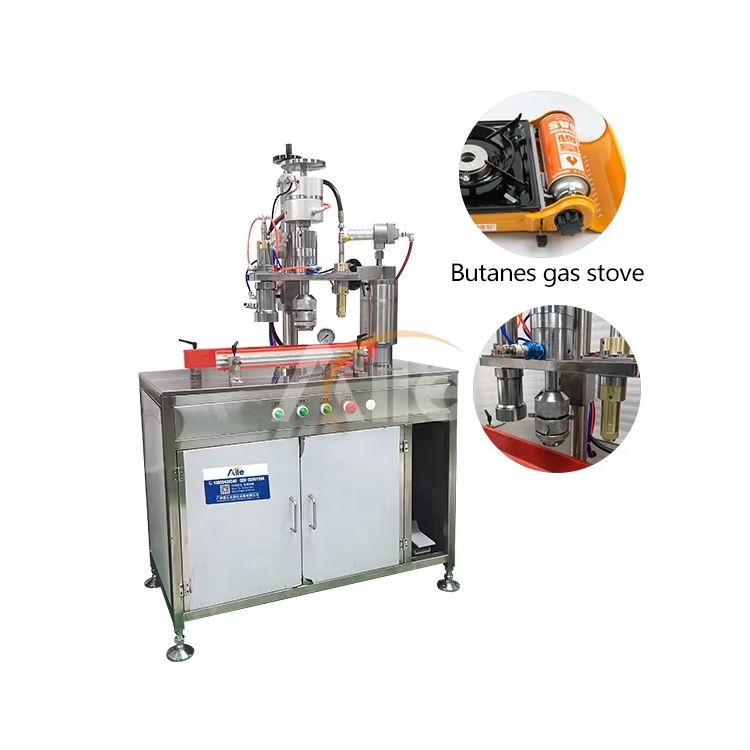
Semi automatic aerosol filling equipment sits somewhere in between the old school manual approach and those expensive fully automated production lines. Let's put some numbers on this. The manual option typically runs anywhere from ten to twenty five thousand dollars upfront costs, plus needing three to five people operating it all day long. Fully automatic systems? They'll set manufacturers back over two hundred grand right out the gate. Semi auto models offer something different though. These machines can fill products with good accuracy at prices ranging forty to ninety thousand dollars. That's actually less than half what companies would spend getting started with full automation. Plus there's no need to pay that extra twenty to thirty percent for all the special wiring, air systems, and duct installations required by automation setups. For small businesses just starting out, this means keeping more money in the bank while still maintaining product consistency and meeting quality standards across their production runs.
| System Type | Initial Investment | Installation Complexity | Operator Requirement |
|---|---|---|---|
| Manual | $10k–$25k | Minimal | 3–5 full-time |
| Semi-Automatic | $40k–$90k | Low–Moderate | 1–2 operators |
| Fully Automatic | $200k+ | High (+20–30% costs) | Minimal monitoring |
Labor Savings and Break-Even Timeline: When Does the Aerosol Filling Machine Pay for Itself?
Labor accounts for 60–70% of manual filling costs—averaging $25/hour per operator. A semi-automatic system reduces staffing to one operator managing 150–200 cans/hour. For a startup producing 5,000 units weekly:
- Manual labor cost: $1,875/week (3 operators)
- Semi-auto labor cost: $625/week
Net weekly savings: $1,250
At a $65k investment, break-even occurs in 52 weeks ($65,000 ÷ $1,250). Factoring in 30% higher yields from reduced spills and 99% fill accuracy, most businesses recover costs within 10–14 months. These gains—combined with lower scrap rates and faster throughput—free up capital for R&D, marketing, or customer acquisition, directly supporting scalable growth.
Built to Scale: Supporting Agile Production as Your Business Grows
Semi-automatic aerosol filling machines deliver the operational agility growing businesses need to navigate fluctuating demand. Their modular architecture enables seamless transitions between small-batch prototyping and seasonal volume surges—without costly reconfiguration or production downtime.
Handling Variable Batch Sizes—From Prototypes to Seasonal Launches
Unlike fully automated lines that require minimum batch sizes, semi-automatic systems efficiently handle micro-batches for market testing while scaling reliably for holiday or promotional spikes. This eliminates the “all-or-nothing” production dilemma, allowing startups to:
- Validate new formulations with 50–100 unit batches
- Fulfill last-minute retailer requests
- Maintain lean inventory between seasonal peaks
Operators adjust filling parameters and material inputs between runs—no mechanical recalibration needed.
Seamless Upgrade Path: Integrating with Future Automation or Line Expansion
Forward-thinking manufacturers select semi-automatic systems with standardized interfaces—such as OPC-UA connectivity—that support future integration with automation. This strategic foundation enables:
- Phased adoption of robotics (e.g., capping or labeling modules)
- Duplication of parallel production lines
- Centralized monitoring via SCADA or MES platforms
By avoiding proprietary “walled garden” ecosystems, businesses retain flexibility and avoid vendor lock-in—building toward lights-out operations without production interruptions or retraining costs.
Operational Simplicity: Low Footprint, Minimal Training, and High Uptime
Reducing Floor Space and Facility Requirements for Early-Stage Facilities
For startups working with limited space, semi automatic aerosol filling machines can be a real game changer. These machines take up roughly 30 to 40 percent less room compared to their fully automated counterparts, so companies don't have to shell out big bucks expanding their facilities. Many businesses actually start producing right in their current warehouse spaces or tiny industrial buildings instead of moving somewhere bigger. According to recent industry reports from 2023, this approach saves around $15,000 per year on things like extra rent or building costs. Another plus point? The modular setup means these machines work fine with regular single phase electricity and don't require special ventilation setups either. That cuts down on all sorts of infrastructure headaches for new manufacturers getting off the ground.
Intuitive Operation and Fast Operator Onboarding for Small Teams
What makes these machines stand out is how easy they are to operate right from day one. The interface has been designed around simple tasks so even someone with no prior experience can get going quickly. Most new operators become fully proficient in less than eight hours, compared to the forty plus hours needed for fully automated systems. This saves precious time for small production teams who need results fast. The machines come equipped with visual guides and built-in safeguards that stop incorrect fills before they happen, keeping fill volumes accurate within half a percent across the board. Because there's less moving parts involved overall, these semi automatic aerosol fillers tend to run reliably for long periods. Industry leaders report upwards of ninety five percent uptime when doing just routine maintenance checks, which means consistent product quality without needing a whole team of engineers on site all the time.
Consistent Quality and Brand Protection Through Precision Aerosol Filling
Consistent product quality matters a lot for startups trying to build their brand and keep customers coming back. When products aren't filled properly, it causes problems on both ends. Too little product in each unit leads to unhappy customers who won't buy again. Too much product just wastes money and cuts into profits. Some research shows that even small variations beyond about 1.5% in fill levels start causing trouble for companies, especially those in tightly controlled industries such as beauty products or medicine manufacturing where regulations are strict. That's why many businesses now invest in semi automatic aerosol filling equipment equipped with these advanced dosing mechanisms that typically stay within around plus or minus 0.5% accuracy range. Getting this kind of consistency means fewer batches have to be thrown away due to errors, which protects not just the bottom line but also what people think about the brand overall.
When it comes to packaging, precision filling cuts down on wasted product by around 7 to 12 percent when compared with old fashioned manual techniques according to the Packaging Efficiency Report from 2022. This translates into better profit margins for manufacturers. When products come out consistently every time, customers start trusting what they see on the label. Less variability means fewer problems down the line too fewer rejected batches, less returned goods, and not so many warranty issues either. Businesses looking to expand need to understand that getting these operations right goes beyond simple cost savings. It actually becomes something that sets them apart from competitors while building lasting customer relationships over years rather than months.
Frequently Asked Questions
-
What are the initial costs associated with different types of aerosol filling machines?
Manual systems cost between $10,000–$25,000, semi-automatic systems $40,000–$90,000, and fully automatic systems over $200,000. -
How does labor savings contribute to the ROI of semi-automatic aerosol filling machines?
Semi-automatic systems reduce labor costs significantly, offering net weekly savings of approximately $1,250, thus helping reach a break-even point within 52 weeks. -
How do semi-automatic machines support growth and scalability for startups?
These machines allow for seamless transitions between different production scales without costly reconfigurations, making it easier for businesses to adjust to demand variations. -
What advantages do semi-automatic machines offer for businesses with limited space?
They require less floor space, operate with regular single-phase electricity, and do not need special ventilation setups, making them ideal for small startups. -
How does consistent product filling impact brand protection?
Achieving fill accuracy within +/- 0.5% leads to fewer rejected batches, less waste, and enhanced trust and loyalty from customers.