
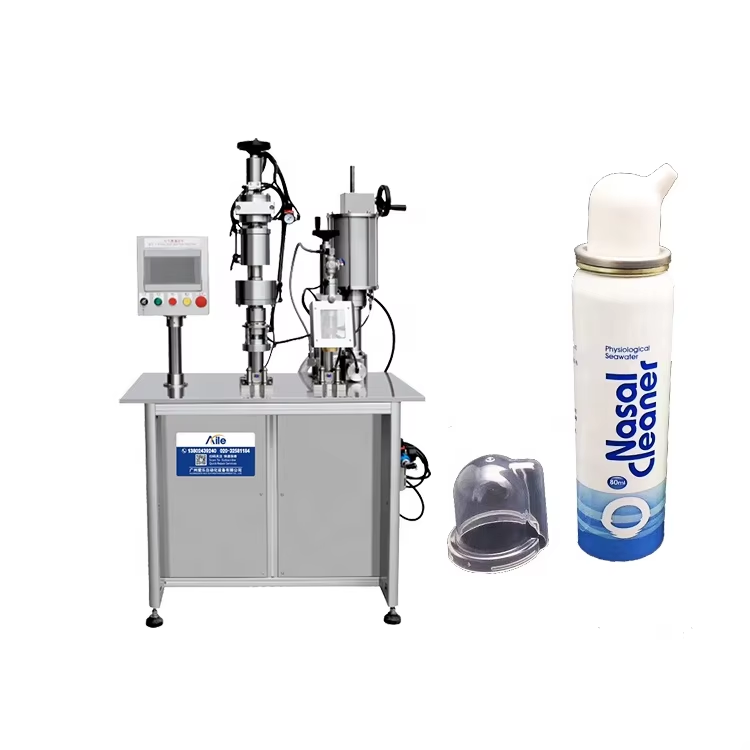
Lower Capital and Operational Costs for SMEs
Reduced upfront investment vs. fully automatic aerosol filling machines
For small and medium enterprises looking at production equipment, semi automatic aerosol fillers represent real money savings. These machines usually fall between 150 thousand to 250 thousand dollars, while full automation systems run anywhere from half a million up to over a million bucks according to recent industry data. That kind of price difference means companies can redirect funds towards product development, getting those tricky regulatory approvals sorted out, or actually building their market presence. Fully automatic production lines come with all sorts of extra requirements like conveyor belts running through factories, expensive robotic components, and complete facility redesigns. Semi automatic models just plug into existing spaces as standalone stations without needing all those additional investments or complicated setup procedures that eat into budgets.
Simplified maintenance, operator training, and facility integration
The bottom line shows operational costs falling somewhere between 30% and maybe even 50% when switching to semi-automatic equipment. These machines depend on solid mechanical parts instead of those fancy proprietary PLC systems or complicated servo controls that require special knowledge to fix. Most shops can handle regular maintenance using basic hand tools and their own staff who already know how things work around there. Training operators typically takes no more than three days at most, compared to the several weeks needed for fully automated setups. Plus, these machines run on standard 220 volt single phase power, so they fit right into existing commercial buildings or small manufacturing facilities without needing any expensive electrical rewiring first. Looking at actual numbers from similar operations, yearly maintenance costs tend to stay under fifteen thousand dollars annually, which is way cheaper than the forty thousand plus that companies usually spend maintaining automated solutions. This kind of cost difference really speeds up return on investment while still keeping everything running reliably day after day.
Agile SKU Changeovers and Support for Product Diversity
Semi-automatic aerosol filling machines empower small-to-medium manufacturers to efficiently manage diverse product portfolios through intentional design flexibility.
Manual Adjustability Enables Rapid Switching Between Aerosol Formulations and Can Sizes
Operators have the ability to adjust nozzle height settings, tweak fill amounts, and modify sealing specs by hand within just a few minutes rather than waiting for hours. The manual control cuts out those annoying software programming delays and lets workers switch between different propellants like LPG, nitrogen, or compressed air on the fly. They can handle everything from runny solvents to super thick gels too, plus work with containers ranging anywhere from 45mm right up to 76mm in diameter. A manufacturing company we talked to saw their changeover times drop by almost three quarters, which means they can now produce five completely different aerosol products all in one day without needing any help from engineers standing over their shoulders.
Minimal Retooling Downtime for Multi-Product Aerosol Filling Lines
Fully automatic systems need mechanical recalibration and frequently involve getting a vendor out to the site whenever there's a new SKU involved. Semi automatic equipment works differently though, relying on universal fittings and adjustments that don't require tools. When switching from one product line to another, all that's really needed is to clean the filling head and adjust those mechanical stops somewhere around here. Most folks can knock this out in about 10 to 15 minutes depending on how rushed they are. The flexibility makes a big difference for things like seasonal items think summer bug sprays versus winter road melt products or when running custom batches. Production schedules tend to be tight anyway, and companies are always trying to keep inventory low these days. Any time lost means real money down the drain.
Optimized Throughput: Achieving 600–700 Cans/Hour with Operator Collaboration
Real-world performance data from SME aerosol filling machine deployments
Semi-automatic aerosol filling machines deliver proven, scalable throughput for SMEs: optimized lines consistently achieve 600–700 cans/hour, striking an effective balance between speed and adaptability. This output is 42% faster than manual filling, yet avoids the underutilization and excessive overhead associated with fully automated systems operating below capacity. Key enablers include:
- Operators manually positioning cans while the machine handles precise volumetric dispensing
- Concurrent operation of the sealing station during fill cycles
- Real-time visual quality checks at handoff points
This throughput range supports mid-volume production economically—e.g., fulfilling quarterly demand for a 500K-unit niche product in just three shifts per week. Crucially, sustained performance depends on skilled, attentive operators who manage can handling, jam resolution, and minor adjustments—reinforcing the human-machine partnership central to semi-automatic efficiency.
When to Choose a Semi-Automatic Aerosol Filling Machine: A Strategic Fit Assessment
Selecting the right aerosol filling machine requires aligning production scale, budget, and operational priorities with technology capabilities. For small-to-medium manufacturers producing 1,000–5,000 cans daily, semi-automatic systems deliver optimal value—balancing throughput, flexibility, and cost discipline. This strategic fit emerges when:
- Production volumes fall below mass-scale thresholds (where fully automatic systems justify their complexity and cost)
- Frequent SKU changes or diverse formulations demand rapid, tool-less adjustability
- Facility constraints—including floor space, electrical infrastructure, or CAPEX limits—preclude full automation
| Factor | Semi-Automatic Fit | Alternative Consideration |
|---|---|---|
| Daily Production Volume | 1,000–20,000 cans | <1,000: Manual; >20,000: Fully automatic |
| Annual Budget | ≥$150k CAPEX | Higher budgets may support automation |
| Formulation Diversity | High (≥5 monthly variants) | Low variation favors automation |
Industry data confirms this alignment—semi-automatic machines capture 63% of the mid-market aerosol equipment segment (Spherical Insights), reflecting their unmatched operational agility for growth-stage manufacturers. Prioritize this solution if your roadmap includes phased scaling, consistent throughput targets of 600–700 cans/hour with operator support, and frequent product innovation cycles.
FAQ
What are the main benefits of semi-automatic aerosol filling machines for SMEs?
Semi-automatic aerosol filling machines offer significant cost savings, simplified maintenance, rapid SKU changeovers, and flexible production capabilities unlike fully automated systems, which are generally more expensive and complex.
How do semi-automatic machines support product diversity?
Semi-automatic equipment allows for manual adjustments that enable rapid switching between different aerosol formulations and can sizes, supporting diverse product portfolios effectively.
Can SMEs achieve substantial throughput with semi-automatic aerosol filling machines?
Yes, SMEs can achieve optimized throughput of 600–700 cans per hour, which is 42% faster than manual filling by efficiently utilizing human-machine collaboration.
How do I know if a semi-automatic aerosol filling machine is suitable for my business?
This type of equipment is ideal for companies with medium production volumes, frequent SKU changes, and where facility constraints exist, supporting flexible and scalable operations.
Table of Contents
- Lower Capital and Operational Costs for SMEs
- Agile SKU Changeovers and Support for Product Diversity
- Optimized Throughput: Achieving 600–700 Cans/Hour with Operator Collaboration
- When to Choose a Semi-Automatic Aerosol Filling Machine: A Strategic Fit Assessment
-
FAQ
- What are the main benefits of semi-automatic aerosol filling machines for SMEs?
- How do semi-automatic machines support product diversity?
- Can SMEs achieve substantial throughput with semi-automatic aerosol filling machines?
- How do I know if a semi-automatic aerosol filling machine is suitable for my business?