
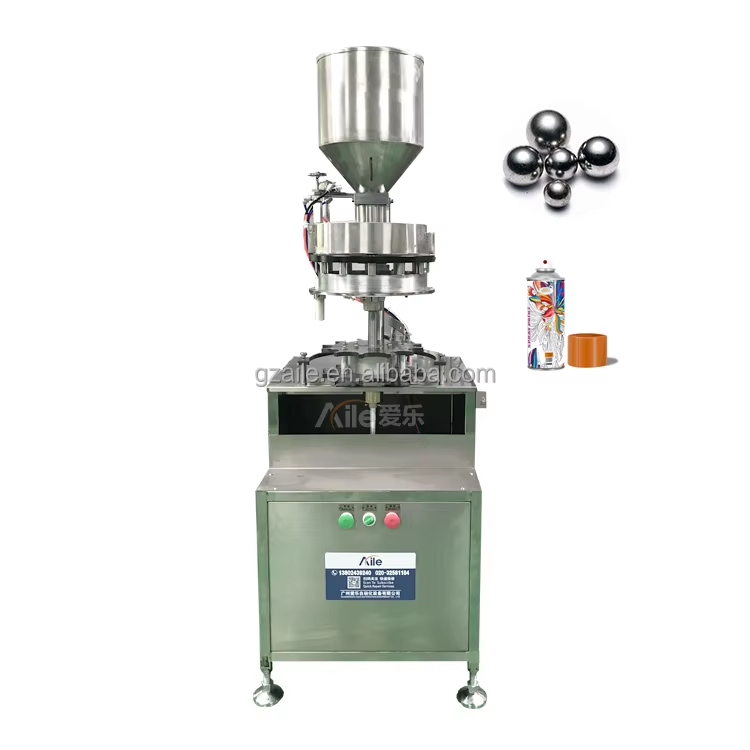
Core Operational Principle: How Pressure-Based Filling Enables Broad Compatibility
Aerosol filling machines that rely on pressure work by using compressed air to push products into containers, which means they can handle all sorts of different formulations without needing any hardware modifications. Gravity-fed systems just won't cut it when dealing with anything thicker than water really. Pressure-driven methods can manage everything from super thin solvents that measure around 1 centipoise right up to those really thick gels that hit about 50,000 centipoises. What's great about this approach is how it keeps products intact while filling them. Beverages stay properly carbonated, and those tricky pharmaceutical suspensions don't separate out their components. Operators simply tweak the air pressure settings and adjust valve timing to get things right. The same machine works perfectly whether filling fluffy hair mousse at 35 pounds per square inch or heavy duty industrial lubricants requiring 80 psi, always delivering accurate results. These systems aren't picky about what propellants they use either. They handle both LPG and DME just fine, meeting all the standards set forth in ISO 8317. For companies making cosmetics, packaged foods, or chemicals, this kind of versatility isn't just nice to have it's practically mandatory these days.
Formulation Flexibility: Handling Liquids, Gels, Foams, and Low-Pressure Propellants
Standard aerosol filling machines achieve formulation agility through precision pressure control and programmable logic controllers (PLCs), enabling seamless transitions between water-thin liquids and high-viscosity gels (>20,000 cP) without mechanical reconfiguration. Fill accuracy remains within ±1% across production runs.
Viscosity limits and calibration techniques for gels and foams without hardware modification
These systems manage viscosities from 50–50,000 cP using dynamic pressure compensation. For shear-sensitive foams, integrated flow dampeners suppress aeration, while automated viscosity sensors trigger real-time pressure adjustments. Calibration occurs via software-controlled orifice tuning—eliminating manual hardware changes and reducing changeover time by 70% versus mechanical retrofitting.
Real-world validation: Dual-product runs (air fresheners vs. lubricants) on standard aerosol filling machine setups
A production facility successfully alternated between 5 cSt lubricants and ethanol-based air fresheners using the same aerosol filling machine platform, completing changeovers in under 15 minutes. Both products achieved >99.2% fill accuracy across 10,000-unit batches—demonstrating operational versatility while maintaining compliance with ISO 9001 quality standards.
Regulatory-Ready Adaptability: Meeting FDA, EU Cosmetics, and Food-Safety Standards
Aerosol filling machines built to standard specifications generally satisfy regulatory requirements thanks to their specially designed construction materials and built-in cleaning processes. The parts that actually touch products during filling are made from 316L stainless steel, which doesn't react with chemicals and won't corrode over time. This helps prevent any unwanted substances from getting into the product. These surfaces also get sealed with materials approved by the FDA to maintain the integrity of formulations throughout production. Choosing these specific materials means manufacturers comply with important standards like FDA 21 CFR and EU Regulation (EC) No 1223/2009 when producing items for both cosmetic and food applications.
Material contact compliance (316L stainless steel, FDA-approved seals) and clean-in-place (CIP) readiness
Clean-in-place (CIP) systems offer a big advantage in food processing facilities because they can sanitize equipment without taking anything apart, which cuts down on the chance of contamination moving from one batch to another. These automated cleaning cycles work with controlled temperatures and approved cleaning agents that actually hit those strict FDA and EU standards for residue levels below 10 parts per million. When paired with materials that resist corrosion, manufacturers see something pretty impressive too. A study published last year in Food Safety Tech found these systems slash potential spots where microbes might hide by nearly 90% compared to when workers clean manually. What does all this mean practically? Facilities end up with complete records ready for inspections showing exactly what went into each batch and when everything got cleaned properly across industries that face heavy regulation.
Scalable Configuration Options: Matching Production Volume Without Sacrificing Versatility
Semi automatic aerosol filling machines give businesses better returns on investment and make switching between products much easier. Small scale manufacturers and new companies find these machines particularly valuable because they save money upfront. Compared to full automation setups, these semi auto systems cut initial costs anywhere from 40 to 60 percent. Plus, moving parts around manually lets operators switch formats quickly, sometimes in just 15 minutes or less. Think about changing from disinfectant sprays to beauty mousse formulas overnight. This kind of flexibility means getting back what was invested happens faster too. According to recent industry reports, companies working with five or fewer product types and making batches below 10 thousand units see their break even point come 28 percent sooner. What's really nice about these machines is how they grow with the business. A basic model that handles 1,200 cans per hour can be upgraded step by step to reach 4,000 cans per hour simply by adding extra components like feed systems and sealing units. This keeps everything versatile as operations expand without sacrificing quality or speed.
Frequently Asked Questions
What are the key advantages of pressure-based aerosol filling machines?
Pressure-based filling allows for handling diverse formulations without hardware modifications, ensures product integrity, accommodates varied propellants like LPG and DME, and meets ISO standards.
How do aerosol filling machines maintain fill accuracy across different viscosities?
These machines utilize programmable logic controllers (PLCs) and dynamic pressure compensation, achieving a fill accuracy within ±1% without mechanical reconfiguration.
Are these machines eco-friendly?
Yes, these machines use materials like 316L stainless steel and FDA-approved seals that resist corrosion. They also have clean-in-place (CIP) systems to sanitize equipment efficiently, reducing contamination risks.
What sizes or scales can semi-automatic aerosol filling machines handle?
They cater to small and medium-scale operations with 1,200 to 4,000 cans per hour, offering scalability as businesses grow without sacrificing quality or speed.
Table of Contents
- Core Operational Principle: How Pressure-Based Filling Enables Broad Compatibility
- Formulation Flexibility: Handling Liquids, Gels, Foams, and Low-Pressure Propellants
- Regulatory-Ready Adaptability: Meeting FDA, EU Cosmetics, and Food-Safety Standards
- Scalable Configuration Options: Matching Production Volume Without Sacrificing Versatility
- Frequently Asked Questions