
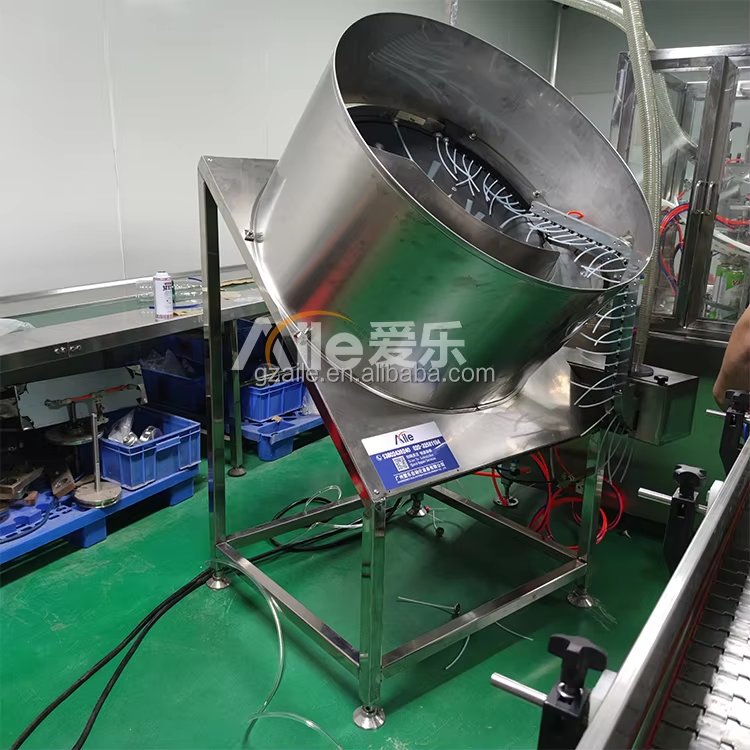
High-Volume Output Enabled by Full Automatic Bag on Valve Filling Machines
The global shift toward sustainable and precise packaging has accelerated demand for BOV (Bag on Valve) solutions across skincare, pharmaceuticals, and household products. Manufacturers now require a bag on valve filling machine that can keep pace with rising unit volumes without sacrificing quality or uptime. Full automatic systems meet this need by eliminating manual steps, reducing labor overhead, and enabling consistent output of thousands of units per hour—driven by consumer preference for eco-friendly aerosols and regulatory pressure for contamination-free filling in pharma applications.
Demand Drivers: Rising Global Adoption of BOV-Based Skincare, Pharma, and Household Products
Brands increasingly choose BOV technology because it isolates product from propellant, ensuring purity, extended shelf life, and precise metering. In skincare, this enables propellant-free application of serums and sunscreens. In pharmaceuticals, metered-dose inhalers and wound sprays benefit from sterile, leak-proof seals validated under USP <797> and ISO 13485 standards. Household products—including air fresheners and cleaning foams—leverage BOV for consistent spray patterns and reduced volatile organic compound (VOC) emissions. This convergence of regulatory compliance, consumer safety, and environmental performance is accelerating the adoption of full automation, where a single bag on valve filling machine sustains high throughput while meeting stringent hygiene and validation requirements.
Engineering Advantage: PLC-Synchronized Servo Motion and Dual-Station BOV Filling Architecture
Modern full automatic lines deliver required throughput through PLC-synchronized servo motors that coordinate bag insertion, propellant filling, valve crimping, and nitrogen flushing in one continuous cycle. The dual-station architecture multiplies efficiency: while one station fills the product, the other simultaneously crimps the valve—cutting cycle time nearly in half versus single-station designs. This approach reduces mechanical wear, improves repeatability, and supports real-time adjustments via a central HMI. As a result, manufacturers reliably achieve output rates exceeding 60 cans per minute with scrap rates below 0.2%, a critical advantage in high-volume production where even seconds of unplanned downtime impact yield and profitability.
Precision Filling Accuracy and Regulatory Compliance with BOV Technology
Critical Tolerance: Sub-50mg Fill Variance for Propellant and Product Integrity
Fill accuracy directly impacts product safety, dosage reliability, and brand reputation. For pharmaceutical and premium skincare applications, maintaining sub-50mg variance for both product concentrate and propellant is non-negotiable—deviations risk destabilizing spray performance, dose consistency, or chemical stability. FDA data from 2022 linked 98.7% of drug recalls to inaccurate fill volumes, underscoring the operational and compliance stakes. A high-performance bag on valve filling machine achieves this tolerance through integrated motion control and closed-loop feedback—not just as a specification, but as a validated, repeatable outcome across shifts and batches.
Closed-Loop Control: Servo Piston Dosing + Real-Time Weight Feedback Ensures ±0.3% Consistency
To sustain such precision at speed, leading systems combine servo piston dosing with in-line load cell verification. The servo motor governs piston stroke length and acceleration profile with micron-level repeatability, while weight sensors validate each fill in real time. Deviations trigger immediate correction—ensuring ±0.3% volumetric consistency across all cycles. Unlike pneumatic or cam-driven alternatives prone to thermal drift or mechanical hysteresis, this architecture eliminates cumulative error over long runs. The result is lower material giveaway, near-zero rejection due to fill deviation, and demonstrable alignment with ICH Q5C and FDA 21 CFR Part 211 requirements for consistent manufacturing.
Scalable Efficiency: Modular Bag on Valve Filling Lines Optimize Throughput and Changeover
Modular Design Benefits: 68% Faster Format Changeovers vs. Semi-Automatic BOV Systems
Modular bag on valve filling machine architectures support rapid adaptation without compromising speed—delivering throughput above 100 units/minute while enabling format changes in under 30 minutes. Standardized mechanical interfaces, PLC-controlled positioners, and servo-driven alignment mechanisms replace manual recalibration. Reusable pneumatic actuators maintain valve orientation across size variants, and RFID-triggered filler profiles auto-load viscosity, density, and fill parameters—reducing setup errors and cross-contamination risk during high-mix production. According to the Packaging Efficiency Report 2023, this modular approach cuts changeover time by 68% compared to semi-automatic BOV systems, recovering lost capacity that directly translates to higher annual output for contract manufacturers managing diverse SKUs.
Digital Twin Integration: Predictive Capacity Planning Across Multi-Shift Operations
Digital twin integration maps physical line behavior into virtual simulations—enabling pre-deployment validation of new configurations, lane expansions, or auxiliary modules like nitrogen flush skids. PLC-collected runtime data feeds cloud-based models that forecast yield impacts and flag potential bottlenecks before commissioning. Predictive OEE dashboards monitor equipment health in real time: when vibration thresholds at Station 3 exceed 90% of service limits, technicians receive prioritized alerts—allowing intervention before adjacent cappers degrade fill integrity. This proactive coordination reduces unscheduled downtime by up to 40% and synchronizes cleaning and maintenance cycles across 24/5 operations, ensuring resilience amid fluctuating order volumes and seasonal demand spikes.
Total Cost of Ownership: Justifying CAPEX for Automated Bag on Valve Filling Machines
ROI Analysis: Break-Even Achieved Within 22 Months at >15M Units/Year Volume
A full total cost of ownership (TCO) analysis reveals that automated bag on valve filling machines deliver compelling financial returns—not just technical capability. At annual volumes exceeding 15 million units, the combined savings from 70%+ labor reduction, 20% propellant waste mitigation via closed-loop dosing, and 35% fewer downtime-related losses drive break-even to just 22 months. These figures reflect real-world deployments validated by third-party auditors and align with ISO 50001 energy performance benchmarks. Rather than viewing automation as a capital expense, forward-looking manufacturers treat it as a high-yield asset—one that compounds value through improved yield, audit readiness, and scalable capacity without linear increases in headcount or floor space.
FAQs
Why is BOV technology significant for skincare and pharmaceutical products?
BOV technology isolates the product from the propellant, ensuring purity, extended shelf life, and precise metering. This is essential for sterile applications like metered-dose inhalers or skincare serums and sunscreens.
What makes full automatic BOV filling machines efficient?
Full automatic BOV filling machines employ PLC-synchronized servo motion and dual-station architecture, boosting efficiency by cutting cycle times and ensuring higher output rates with minimal scrap.
How does modular design benefit BOV production?
Modular designs enable faster format changeovers, streamline setup processes, and reduce setup errors during high-mix production, leading to optimized throughput.
What role does closed-loop control play in BOV filling accuracy?
Closed-loop control combines servo piston dosing and real-time weight feedback to maintain ±0.3% volumetric consistency, ensuring product safety and precision.
How quickly can manufacturers achieve ROI on automated BOV filling machines?
Manufacturers producing over 15 million units annually can achieve ROI within 22 months due to savings in labor, waste reduction, and minimized downtime.