
When formulating aerosol products, choosing the right propellant is critical for product performance, safety, and manufacturing efficiency. With the growing demand for eco-friendly alternatives to traditional VOCs (Volatile Organic Compounds), carbon dioxide (CO2) often comes up in discussions.
However, there is a fundamental misconception in the industry: while CO2 is used as a compressed gas propellant, liquid carbon dioxide is never used as an aerosol propellant in standard packaging.
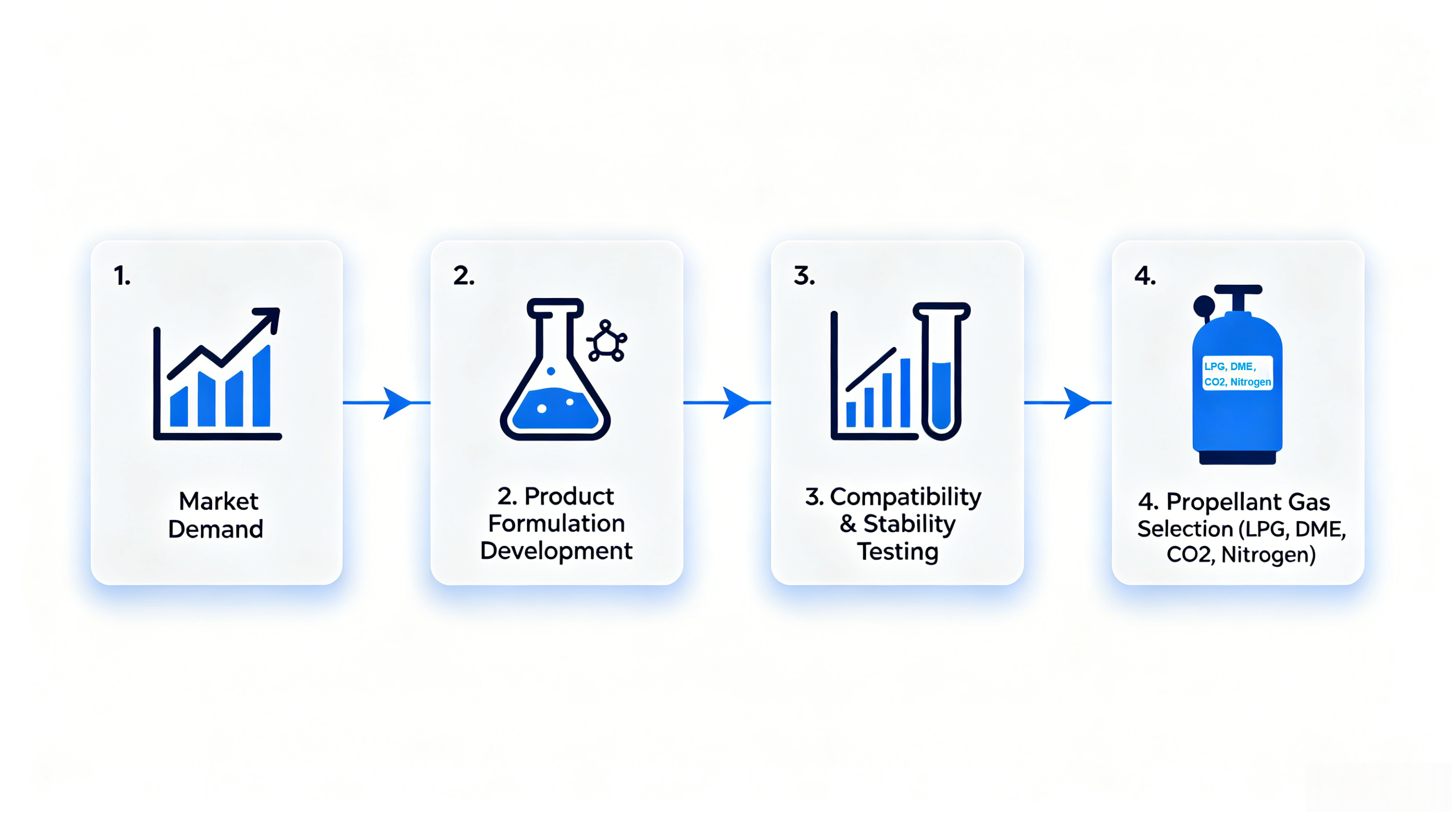
If you are an aerosol manufacturer optimizing your production line, understanding the physics behind propellants is essential for selecting the right aerosol filling machine and ensuring consumer safety. Here is the technical breakdown of why liquid CO2 is incompatible with standard aerosol packaging.
The Physics of CO2: The Extreme Pressure Problem
The primary reason liquid carbon dioxide cannot be used in traditional aerosol cans boils down to vapor pressure. For a gas to exist as a liquid at room temperature (around 70°F or 21°C), it must be kept under its specific vapor pressure.
| Propellant Type | Phase at Room Temp | Required Vapor Pressure |
|---|---|---|
| Traditional Liquefied (Butane, Isobutane, DME) | Liquid | 17 to 70 PSI |
| Liquid Carbon Dioxide (CO2) | Liquid | ~850 PSI (58 bar) |
Standard Aerosol Cans Cannot Withstand the Pressure
Standard tinplate or aluminum aerosol cans used in the cosmetic, household, and industrial sectors are engineered to handle internal pressures of about 90 to 180 PSI. The burst limit for most commercial cans is around 250 to 270 PSI.
If you were to inject liquid CO2 into a standard aerosol can, the internal pressure would immediately exceed the structural limits of the packaging. The can would buckle, deform, and ultimately rupture explosively on the aerosol filling line, posing a catastrophic safety hazard to operators and consumers.
Compressed Gas vs. Liquefied Propellant: What’s the Difference?
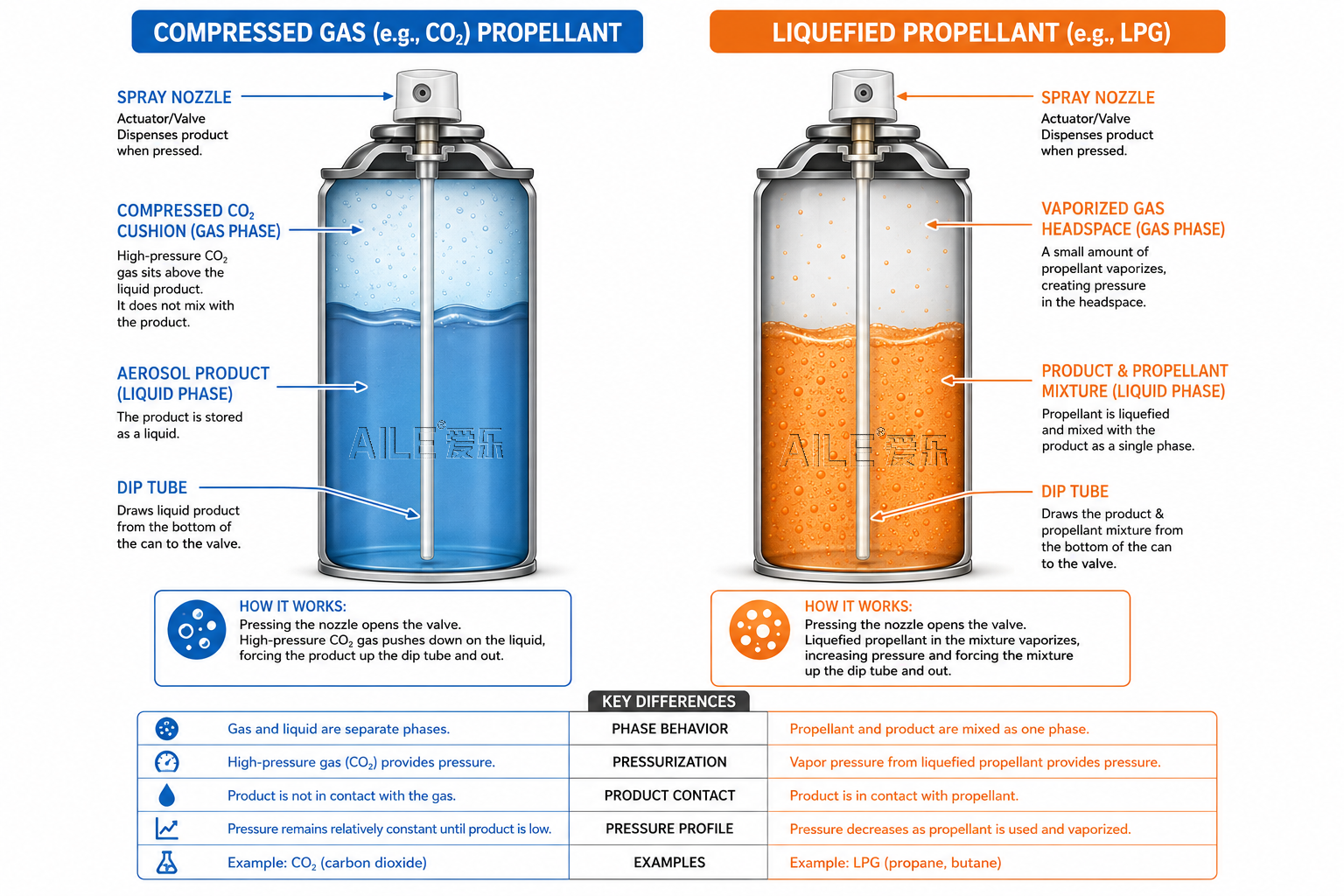
To use CO2 in aerosols, manufacturers must use it as a compressed gas, not a liquefied gas. Understanding this distinction is vital for optimizing your propellant filling process.
The Liquefied Propellant Advantage (LPG, DME, Fluorocarbons)
When a liquefied propellant (like LPG) is inside a can, it exists in two phases: liquid at the bottom (mixed with the product) and gas at the top. As the consumer sprays the product, the head space increases, and some of the liquid propellant instantly vaporizes to replace the lost gas. This ensures a constant, steady spray pressure from the first spray to the last drop.
The Compressed Gas Limitation (CO2, Nitrogen)
When CO2 is used, it is injected as a compressed gas that sits in the head space above the liquid product. It does not mix as a liquid.
- The Drawback: Because there is no liquid propellant reserve to vaporize and replace the expelled gas, the internal pressure drops every time the nozzle is pressed.
- The Result: A weaker spray pattern as the can empties, often leaving unused product at the bottom of the can.
While compressed CO2 is highly desirable for its non-flammability and zero VOC status (often used in hair sprays or automotive dusters), it requires highly precise gas filling equipment to inject the exact volume of gas without compromising the can's integrity.
How Propellant Choice Impacts Your Aerosol Filling Machine
Your choice of propellant directly dictates the engineering requirements of your aerosol packaging equipment.
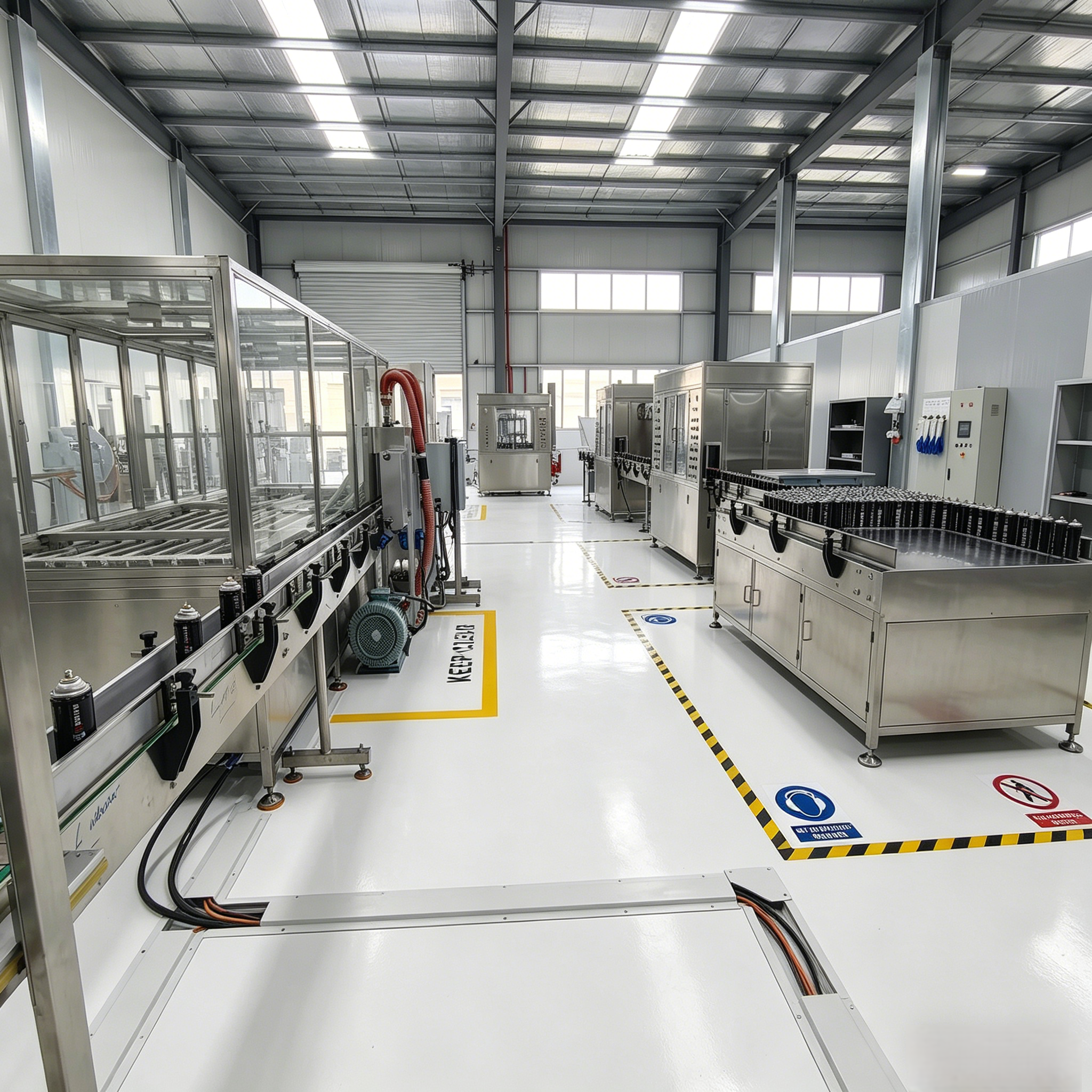
- Explosion-Proof Requirements: If you use traditional liquefied hydrocarbon propellants (LPG, Butane), your filling environment and aerosol filling machine must be strictly explosion-proof (pneumatic driven, ATEX certified).
- High-Pressure Gas Fillers: For compressed CO₂ or nitrogen, the filling system must be configured for high-pressure gas injection, with the filling head, gas supply and pressure control matched to the aerosol valve and required filling volume. For semi-automatic production, our semi-automatic aerosol propellant filling machine can be configured for CO₂, N₂, LPG and DME applications.
- Alternative Packaging (Bag-on-Valve): Because compressed gases like CO2 experience pressure drops, many manufacturers are switching to Bag-on-Valve (BOV) filling machines. In BOV systems, compressed air or nitrogen/CO2 is squeezed between the can and a product-filled bag, ensuring 99% product emptying and a continuous spray without the propellant mixing with the formula.
Upgrade Your Production with Precision Aerosol Equipment
Liquid CO₂ is not suitable as a liquefied propellant in standard aerosol cans, but compressed CO₂ can be used in properly designed aerosol systems. The filling equipment must be selected according to the propellant, aerosol valve, filling pressure and required dose.
If your product uses CO₂, N₂, LPG or DME, see our semi-automatic aerosol propellant filling machine for a compatible gas filling solution.
At Aile Automation Equipment, we specialize in designing and manufacturing world-class aerosol filling machines tailored to your specific formulation and propellant requirements. From laboratory-scale semi-auto fillers to high-speed, fully automated rotary lines, our equipment guarantees precision gas dosing, strictly compliant safety standards, and maximum production uptime.
Contact Our Technical Team Today