
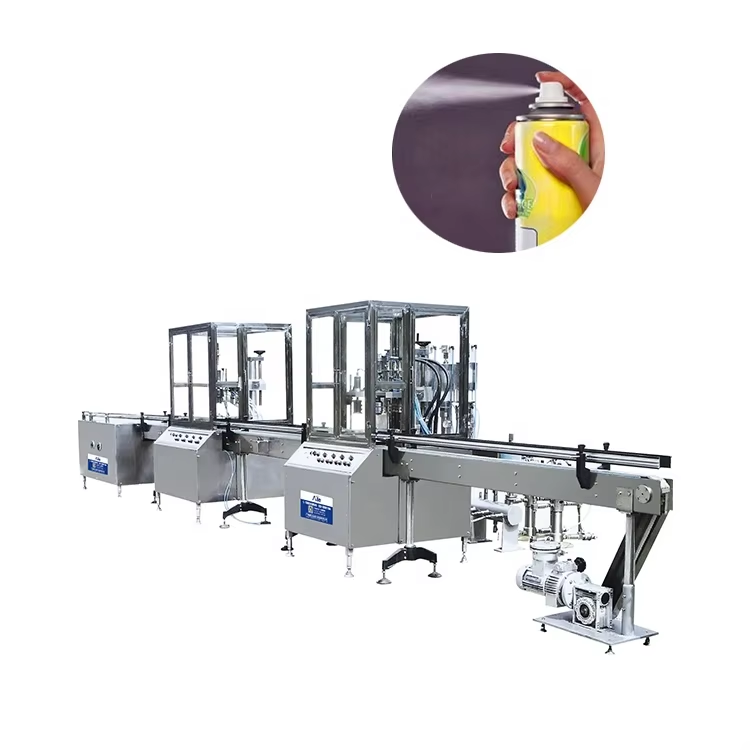
Understanding Aerosol Filling Machine Functionality and Operational Precision
How Aerosol Filling Machines Achieve Consistent Dosing Through Precision Engineering
The latest generation of aerosol filling equipment relies on advanced servo pistons paired with PLC control systems to keep dosage accuracy tight around +/- 0.5% throughout entire production batches. These machines feature closed loop monitoring that keeps an eye on both fill weights and pressures at all times, making automatic corrections when products get thicker or thinner during processing like what happens with hair sprays or industrial cleaners. According to Packaging Digest from last year, this kind of precision cuts down on wasted product by roughly 12 to 18 percent compared to older mechanical models. For manufacturers running large volume operations, these savings really add up over time while maintaining consistent product quality across different formulations.
Manual vs. Automated Filling: Addressing Variability Challenges in Packaging Accuracy
Filling stations operated manually tend to have around 5 to 7 percent variation in dosing amounts because operators get tired and their timing isn't always consistent. Automated systems tell a different story though they hit nearly perfect accuracy at 99.9 percent thanks to robots controlling valves and lasers guiding where containers go. A recent study from Packaging Digest back in 2023 showed something interesting too automation gets rid of that 2.3 second lag time humans naturally have when responding. This matters a lot for things like sealing products properly especially when dealing with those tricky volatile propellants that can be real pain if not handled right.
Core Principles of Precision in Aerosol Filling: Pressure, Volume, and Timing Control
Three interdependent factors govern filling accuracy:
- Pressure stabilization (maintained at 8–10 bar for uniform propellant integration)
- Volumetric consistency (achieved via microsecond-level valve control)
- Millisecond timing synchronization between filling heads and conveyor movement
Deviations exceeding 0.2 seconds during the 350ms filling window can result in 3–5% product loss from valve misalignment, underscoring the need for tightly coordinated control systems.
Case Study: Improved Filling Accuracy for Leading Cosmetic Brand Using Standard Aerosol Filling Machines
A global cosmetics manufacturer reduced fill errors by 40% after deploying PLC-controlled aerosol filling machines, achieving 99.4% fill weight consistency across 12 million units annually. The system's real-time pressure compensation prevented $740k in material waste during seasonal viscosity fluctuations, demonstrating how standardized equipment resolves batch-to-batch variability in temperature-sensitive formulations.
Key Mechanisms That Ensure Consistent Performance in Aerosol Filling Machines
Role of PLCs and Piston-Based Filling Systems in Maintaining Dosing Accuracy
PLCs keep those piston fillers running at about plus or minus half a percent accuracy when it comes to volume measurements. The system tweaks how far and how fast the pistons move depending on what's set in the programming, which helps deal with tricky factors like thick liquids and different container shapes. Less need for people to step in means consistent results most of the time. Some tests in packaging plants show around 98 out of every 100 runs come out pretty much the same way each time with this kind of automated control.
Weight and Pressure Feedback Systems for Real-Time Output Consistency
Dual-layer verification using load cells and pressure transducers validates every fill cycle. If a 300ml can deviates more than 1.2% from target specifications, the machine halts operations and adjusts nozzle pressure within 0.3 seconds. This closed-loop control maintains ±1% variance even at speeds of 60 cans per minute, preventing cascading errors.
Maintenance, Calibration, and Training: Sustaining Optimal Machine Performance
Importance of Regular Calibration for Maintaining Aerosol Filling Machine Accuracy
Getting regular calibration done matters a lot if we want to keep our dosing accuracy around that ±0.5% range. The truth is, over time those piston seals and valves start wearing down, which messes with how consistent the fill volumes stay. Most equipment makers suggest checking everything out every three months or so according to those ISO 9001 guidelines. This helps maintain proper pressure levels within about ±2 psi and keeps all those timing mechanisms synchronized down to the millisecond. Looking at what's happening across the industry, there are plenty of studies showing that machines which haven't been calibrated recently tend to create roughly 12 percent more waste compared to ones that get their routine maintenance checks. That kind of difference adds up pretty quickly when looking at production costs over time.
Preventive Maintenance Routines to Minimize Downtime and Ensure Consistency
Keeping machinery well maintained can add roughly 40% to its useful life on average. The main things to focus on? Lubricating those linear guides and pneumatic parts every week, checking filler nozzles and gaskets once a month, plus watching motor torque closely so we can spot potential bearing issues before they cause problems. Looking at actual data from around 200 different production lines shows something interesting too. Plants that stick to regular maintenance routines cut down unexpected shutdowns by about two thirds compared to those that don't. What's more, their product batches stay consistent at around 99% quality level throughout production runs. That kind of reliability makes all the difference when running tight manufacturing schedules.
Operator Training: Reducing Human Error in Aerosol Filling Line Operations
Even with all the automation these days, skilled operators still play a vital role in handling recipe adjustments and dealing with unexpected issues. Training programs that actually get people working hands-on with HMIs and emergency situations cut down setup mistakes by almost 80%. This matters a lot when changing between different container sizes from 35ml right up to 500ml containers, plus dealing with fluids ranging from water thin at 1cP to really thick stuff at 5000cP. Companies that invest in role specific certifications along with regular refreshers every six months see their techs become much better at reading system diagnostics and making necessary fixes. The result? About half as many quality problems caused by human error compared to those who don't maintain this kind of training regimen.
FAQ Section
Why are aerosol filling machines so precise?
Aerosol filling machines use advanced servo pistons and PLC control systems to maintain dosage accuracy within +/- 0.5%, making automatic corrections based on product thickness.
What are the benefits of automated aerosol filling over manual filling?
Automated systems significantly reduce dosing variability, provide nearly perfect accuracy at 99.9%, and eliminate natural human lag time.
How does pressure stabilization affect aerosol filling precision?
Maintaining pressure stabilization at 8–10 bar ensures uniform propellant integration, crucial for accurate dosing.
Table of Contents
-
Understanding Aerosol Filling Machine Functionality and Operational Precision
- How Aerosol Filling Machines Achieve Consistent Dosing Through Precision Engineering
- Manual vs. Automated Filling: Addressing Variability Challenges in Packaging Accuracy
- Core Principles of Precision in Aerosol Filling: Pressure, Volume, and Timing Control
- Case Study: Improved Filling Accuracy for Leading Cosmetic Brand Using Standard Aerosol Filling Machines
- Key Mechanisms That Ensure Consistent Performance in Aerosol Filling Machines
- Maintenance, Calibration, and Training: Sustaining Optimal Machine Performance
- FAQ Section