
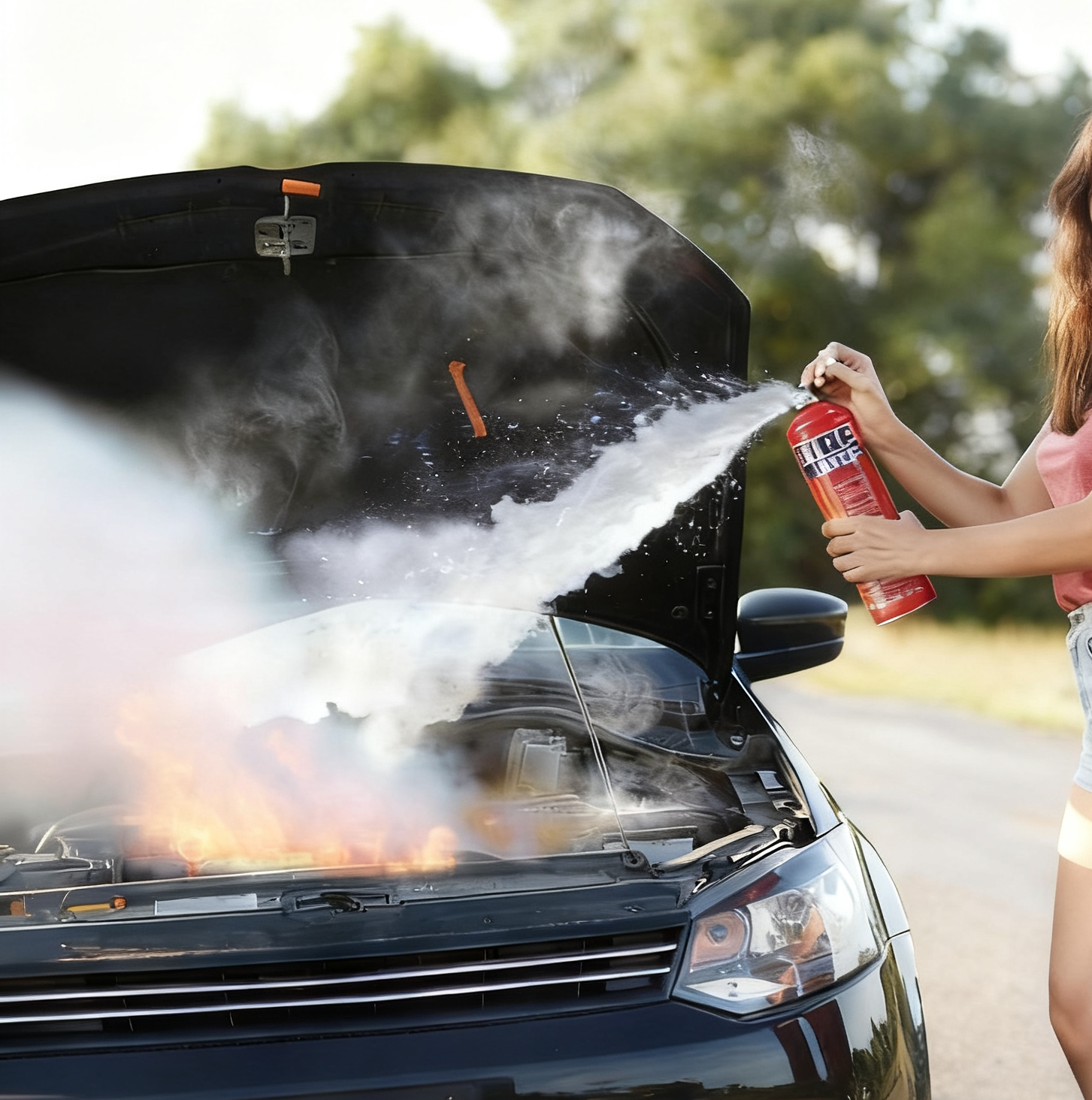
Aerosol fire suppression products can refer to very different technologies. For manufacturers planning a filling project, this distinction needs to be made before any equipment is selected.
This page focuses on portable spray-type fire suppression products packaged in pressurized aerosol cans that can be manufactured using aerosol filling equipment.
They should not be confused with fixed condensed aerosol fire suppression generators, which use an aerosol-forming compound to generate extinguishing particles after activation and involve a fundamentally different manufacturing process.
For spray-can products, the correct filling solution depends not simply on the words “fire extinguisher” or “fire suppression spray,” but on the complete product design: formulation, package, valve, pressurizing medium, filling volume, pressure requirements and production capacity.
AILE therefore evaluates the actual product and packaging parameters before recommending a filling machine or production line.
Common Packaging Formats for Fire Suppression Sprays
Spray-type fire suppression products can use different aerosol packaging systems. The two configurations most relevant to filling-equipment selection are:
Traditional Aerosol Packaging
In a conventional aerosol package, the product and propellant are contained within the aerosol can according to the final formulation and packaging design. A typical production configuration may involve:
Liquid filling → valve placement → crimping → gas filling → leakage inspection → actuator and cap assembly.
The actual propellant, pressure and filling method must be confirmed according to the customer's formulation and valve system.
Bag-on-Valve Packaging
In a Bag-on-Valve, or BOV, package, the formulation is contained inside a flexible bag attached to the valve, while the pressurizing medium remains outside the bag. This changes both the packaging structure and the filling sequence.
Some water-based or specialty fire suppression formulations may be candidates for BOV packaging, but being water-based does not automatically mean that BOV is required or preferable. The formulation, bag, valve, required discharge characteristics and pressure system must be evaluated together.
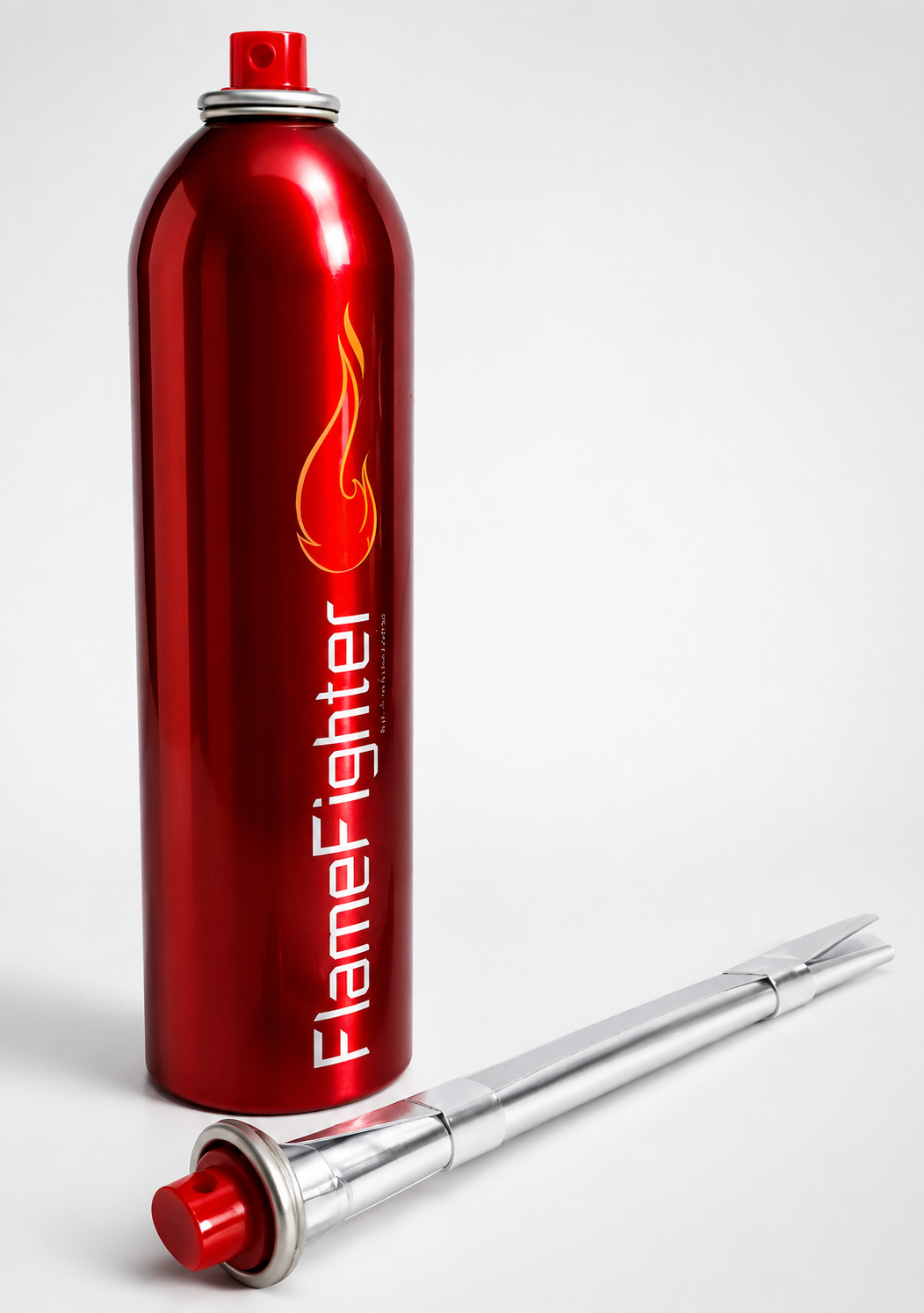
Aerosol Can Material and Format
Depending on the product design and market requirements, aerosol packages may use aluminum or tinplate cans. Can material alone is not enough to determine the equipment configuration. The manufacturer should also confirm:
- can diameter
- can height
- neck and valve specification
- filling volume
- working pressure
- actuator design
- package compatibility with the formulation
These parameters affect machine tooling, conveying, crimping, filling and changeover requirements.
Product Information Required Before Selecting Filling Equipment
Two products both marketed as “aerosol fire suppression sprays” can require very different filling configurations. Before selecting equipment, manufacturers should define the following information.
| Parameter | Why It Matters |
|---|---|
| Formulation | Determines liquid-handling and material-compatibility requirements |
| Filling volume | Determines filler dosing range and production cycle |
| Can diameter | Affects machine tooling, guides and conveying |
| Can height | Affects filling-head and handling adjustment |
| Can material | Needs to match the intended handling and crimping configuration |
| Valve | Determines crimping and filling compatibility |
| Actuator | Affects downstream assembly and discharge design |
| Propellant / compressed gas | Determines the gas-filling configuration |
| Required pressure | Influences filling and testing requirements |
| Required output | Determines suitable production capacity and automation level |
| Number of SKUs | Influences changeover and line flexibility |
For this reason, a reliable equipment recommendation normally begins with a product specification rather than a machine model.
Key Filling Considerations
Formulation Viscosity
Liquid-filling equipment needs to handle the actual flow characteristics of the formulation. A low-viscosity liquid and a thicker formulation may require different filling parameters or filling-head configurations. The formulation should therefore be evaluated before the dosing system is finalized.
Foaming During Filling
Some formulations may foam during liquid filling. Excessive foaming can affect filling speed, product control and production consistency. When this occurs, the machine configuration and filling parameters should be selected according to actual sample behavior rather than theoretical filling volume alone.
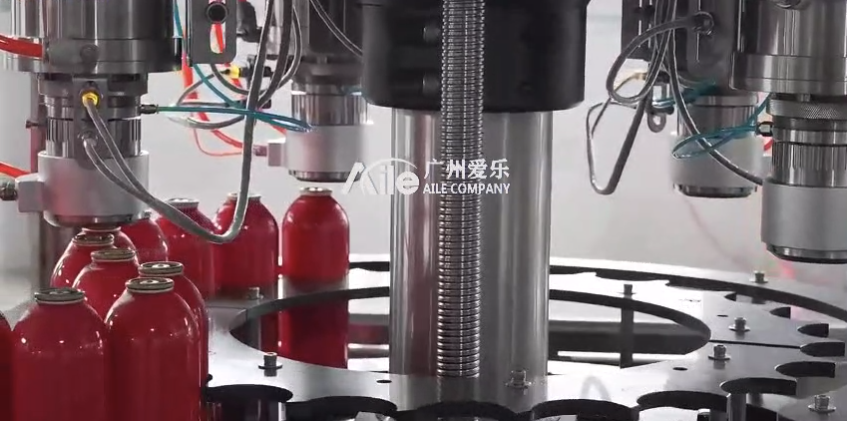
Corrosiveness and Material Compatibility
The formulation must be compatible with all relevant product-contact components. Standard stainless-steel configurations may be appropriate for many aerosol products, while more demanding formulations may require different contact materials, seals or customized construction. Material selection should be based on the customer's formulation or compatibility information rather than the application name alone.
Filling Accuracy
Consistent filling affects product quality, production control and material consumption. The required accuracy should therefore be evaluated together with: formulation, filling volume, machine configuration, production speed, and dosing principle.
Manufacturers with multiple product sizes should also consider how accurately the line can be adjusted between formats.
Can and Valve Compatibility
The aerosol can, valve and crimping system function as one packaging system. Before production, the actual can and valve should be checked against the proposed equipment configuration. Important information includes: can dimensions, valve specification, crimp dimensions, valve material, product filling method, and required discharge characteristics. Where possible, actual packaging samples should be provided for machine testing.
Propellant or Compressed Gas
The gas-filling system should be selected only after the actual pressurizing medium is confirmed. Different products may use different propellant or compressed-gas strategies. The equipment configuration therefore depends on: gas or propellant type, required filling quantity, required pressure, aerosol valve, production capacity, and gas-supply conditions.
The production environment must also be engineered according to the properties of the materials being handled and applicable local requirements.
Pressure & Leakage Control
Pressure is a packaging-system parameter rather than a number that should be assumed from the words “fire suppression spray.” The required pressure must come from the validated product and package design. It affects valve selection, gas filling, packaging compatibility and quality-control procedures.
A pressurized aerosol package relies on correct sealing between the can and valve. Production control therefore needs to consider: crimp consistency, valve sealing, filling-pressure consistency, visible defects, and appropriate validated leakage-testing procedures. The testing method should be selected according to the product, package and applicable market requirements.
Explosion-Proof and Production Safety Requirements
The production environment must be evaluated according to the formulation and pressurizing medium being handled. For projects involving flammable materials, appropriate engineering measures may be required for the filling area, equipment and supporting utilities. These requirements should be determined through the actual factory design and relevant local regulations rather than assumed from the product category alone.
Recommended Aerosol Fire Suppression Filling Solutions
There is no single “fire extinguisher filling machine” that fits every aerosol fire suppression product. AILE generally configures the solution according to the product, package and production target.
Semi-Automatic Aerosol Filling Solution
A semi-automatic filling system is often suitable for: new production projects, pilot manufacturing, small and medium batches, manufacturers with several SKUs, factories that require flexible changeovers, and projects with a lower initial capacity requirement.
A typical semi-automatic aerosol setup can combine: liquid filling, valve handling, crimping, and gas filling. Depending on the specific AILE machine configuration, production of approximately 700–900 cans per hour can be practical for relevant semi-automatic stations.
Automatic Aerosol Filling Line
Automatic filling is generally more suitable for: established manufacturers, continuous production, higher daily production targets, standardized packaging formats, reduced manual handling, and projects requiring integration of downstream equipment.
A complete automatic project can integrate filling operations with equipment such as:
can feeding → valve handling → liquid filling → crimping → gas filling → inspection → actuator/cap assembly → packing preparation.
BOV Filling Solution
For products designed around Bag-on-Valve packaging, a dedicated BOV filling process is required. The process and machine configuration differ from conventional aerosol production because the formulation is filled into the bag while the pressurizing medium is kept outside it.
Customized Filling Solution
Customized engineering may be required when a project involves: special aerosol valves, non-standard can dimensions, unusual filling volumes, corrosive formulations, special material requirements, special pressure requirements, multiple package formats, unusual actuators, integration with existing factory equipment, or high-speed production.
Aerosol Fire Suppression Production Process Overview
For a conventional aerosol-can fire suppression product, the overall manufacturing sequence may include:
- Raw Material Preparation
- Liquid Filling
- Valve Placement
- Crimping
- Gas / Propellant Filling
- Leakage and Quality Inspection
- Actuator / Cap Assembly
- Coding and Packing
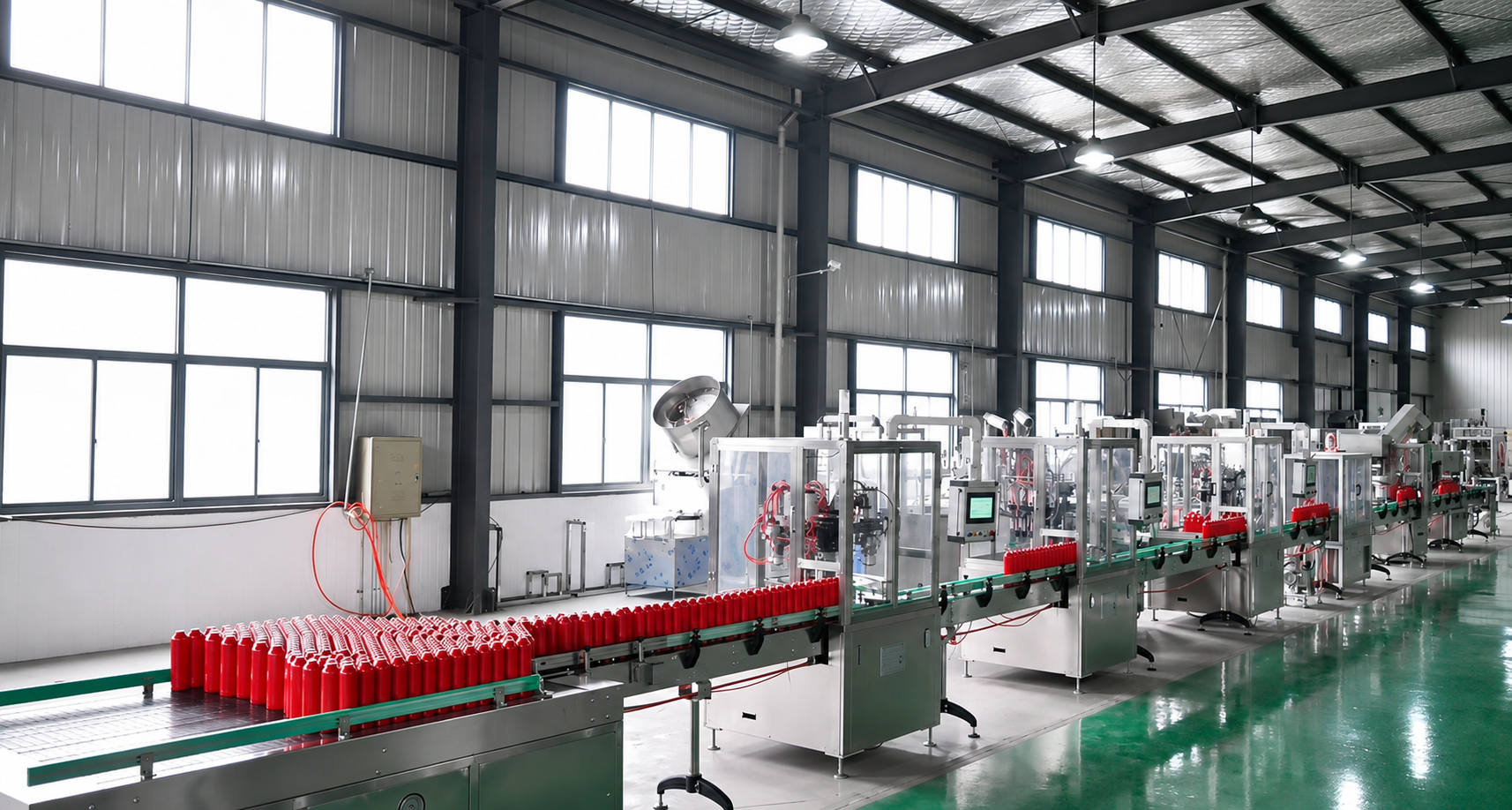
Related AILE Aerosol Filling Equipment
- Semi-Automatic Aerosol Filling Machine: Suitable for flexible small- and medium-scale aerosol production. Explore Semi-Automatic Aerosol Filling Machine
- Automatic Aerosol Filling Line: Designed for manufacturers requiring higher output and continuous aerosol production. Explore Aerosol Filling Lines
- Aerosol Gas Filling Machine: Used for filling compatible propellants or compressed gases through the aerosol valve. Explore Semi-Automatic Aerosol Propellant Gas Filling Machine
- Aerosol Crimping Machine: Used to crimp the aerosol valve onto the can and establish the required package seal. Explore Aerosol Crimping Machine
- Leakage Testing Equipment: Leakage testing can form part of the quality-control stage for pressurized aerosol packages. Explore Water Bath Leakage Testing Machine
- Bag-on-Valve Filling Machine: Used for aerosol products designed with a BOV packaging system. Explore BOV Filling Machine
FAQ
Can a standard aerosol filling machine produce fire suppression sprays?
It may be suitable for some spray-can fire suppression products, but the final configuration must be confirmed from the actual formulation, can, valve, pressurizing medium, filling volume and required pressure.
Is an aerosol fire extinguisher the same as a condensed aerosol fire suppression system?
No. In this application, aerosol fire extinguisher refers to a pressurized spray-can product. Fixed condensed aerosol systems typically use aerosol-generating compounds and require a different manufacturing technology.
Should a water-based fire suppression spray use BOV?
Not automatically. BOV suitability depends on the formulation, valve, bag, pressure and required discharge characteristics.
What information is required to recommend a filling machine?
At minimum, manufacturers should provide the product or formulation type, filling volume, can diameter and height, valve specification, gas or propellant, required production capacity and any special pressure or material requirements.
Plan Your Aerosol Fire Suppression Filling Project
The correct filling solution starts with the product rather than the machine. To evaluate your project, please provide your product specifications and required production capacity to AILE for a customized aerosol filling solution.